Rhyming skills development Normal Phonics Worksheets for Ages 4-9
4 filtered results
-
From - To
Boost rhyming skills in children aged 4-9 with our expertly crafted Normal Phonics Worksheets. Designed to foster phonics and early reading abilities, these engaging printables help kids recognize and produce rhyming words through fun, interactive exercises. Ideal for young learners, our worksheets encourage language development and enhance listening skills. Each activity is carefully created to be age-appropriate and enjoyable, making learning feel like play. Perfect for parents and educators, our rhyming worksheets are a foundational resource for building strong literacy skills. Start your child’s phonics journey today with our comprehensive and effective worksheets!
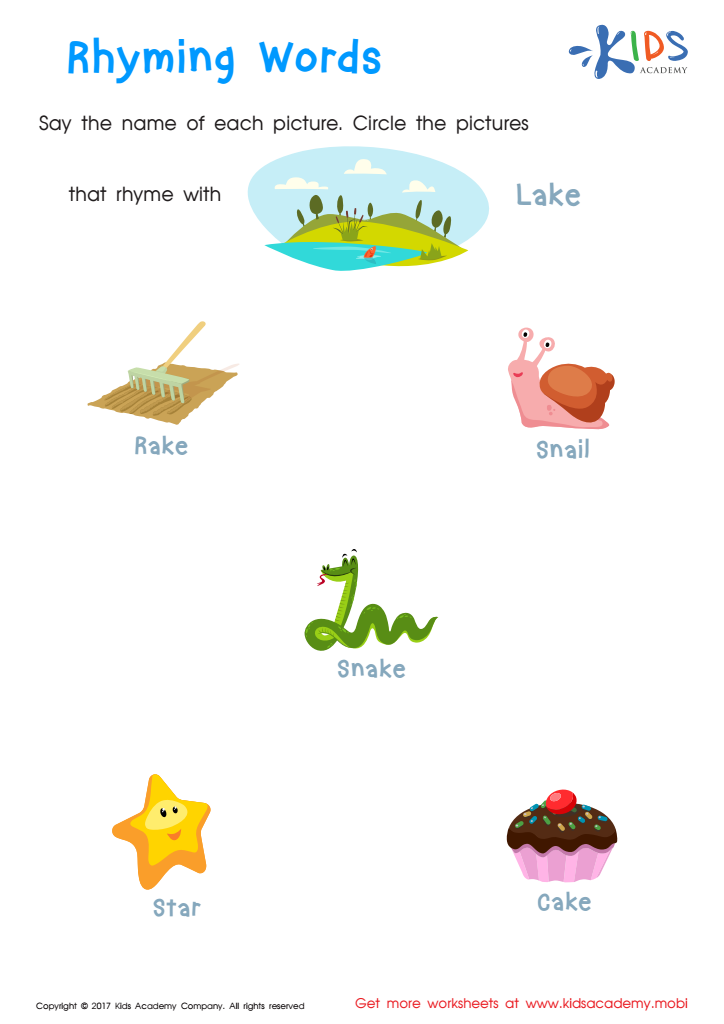
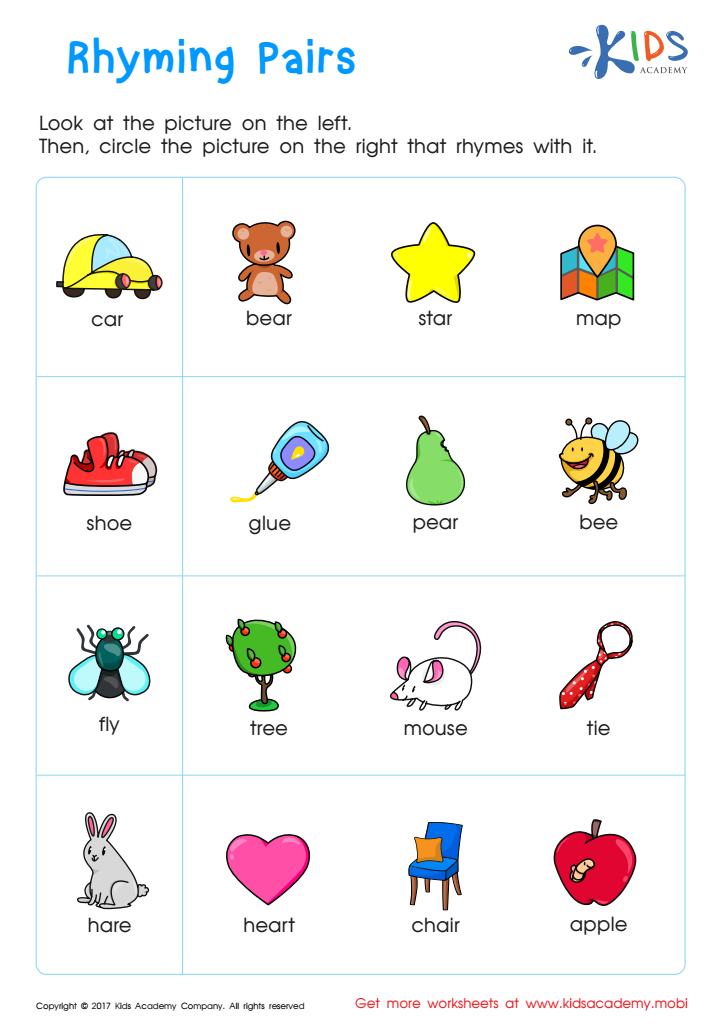
Rhyming Words Rhyming Worksheet
 Assign to My Students
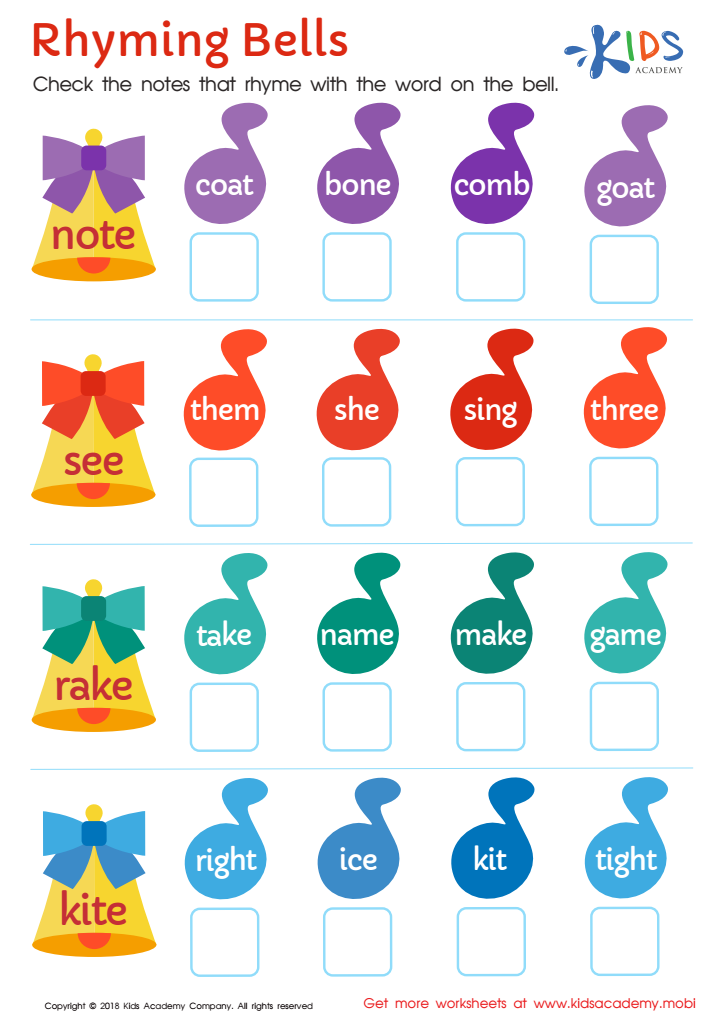
Rhyming Bells Worksheet
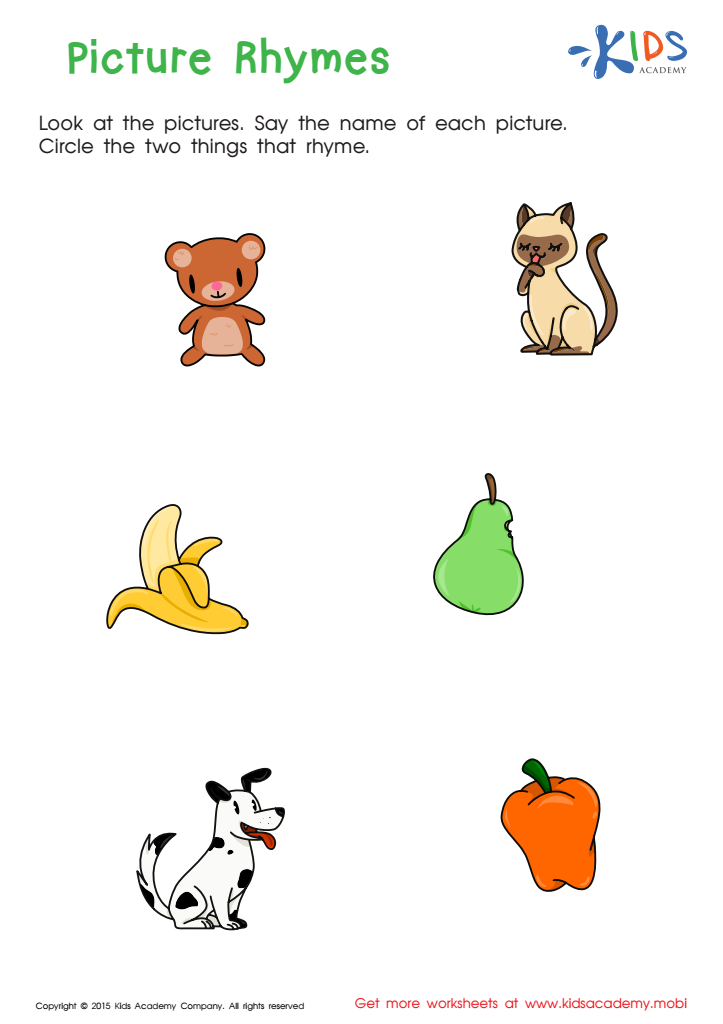
First Words: Picture Rhymes Worksheet








Rhyming skills development is an essential part of early literacy for children aged 4-9, acting as a building block for normal phonics growth. When children engage with rhymes, they learn to hear and recognize sound patterns, which substantially enhances their phonemic awareness—the ability to hear, identify, and manipulate individual sounds in words. This skill is crucial for decoding words when reading and encoding them when writing.
Understanding how sounds work together through rhyming enables children to predict how unfamiliar words are pronounced, giving them confidence and a sense of achievement. Rhyming also improves memory, language predictions, and vocabulary, all contributing to a child's reading fluency and overall comprehension. For instance, recognizing that "cat" rhymes with "hat" helps children learn to spell and read similar words by following familiar patterns.
Moreover, rhyming reinforces the musical and rhythmic elements of language, making learning engaging and enjoyable, fostering a positive attitude toward reading and learning. This motivational boost is vital at a young age, as engaging lessons create dedicated lifelong learners.
In addition, collaborative rhyming activities can enhance social skills, while individual practice promotes cognitive skills, like attention to detail and auditory discrimination. Therefore, rhyming is not just linguistic training; it's a multifaceted tool that supports comprehensive early childhood development.







