Explore our engaging Word Identification Normal Phonics Worksheets designed specifically for children ages 4-9! These worksheets provide a fun and interactive way for young learners to enhance their phonics skills while developing essential word identification techniques. Featuring colorful illustrations and age-appropriate activities, each worksheet helps children recognize familiar words, decode new terms, and build their vocabulary. Perfect for homeschoolers, educators, or parents looking to reinforce phonics fundamentals, our worksheets support early literacy in a stimulating and enjoyable format. Inspire a love for reading and language in your little ones today with our exciting collection of phonics worksheets!

Check out this FREE Trial Lesson on Phonics for age 4-9!

Identify Prefixes, Suffixes, and Base Words

Favorites
With answer key
Interactive
  • 4-9
  • Word identification
  • Phonics
  • Normal
Open Syllables Worksheet

Open Syllables Worksheet

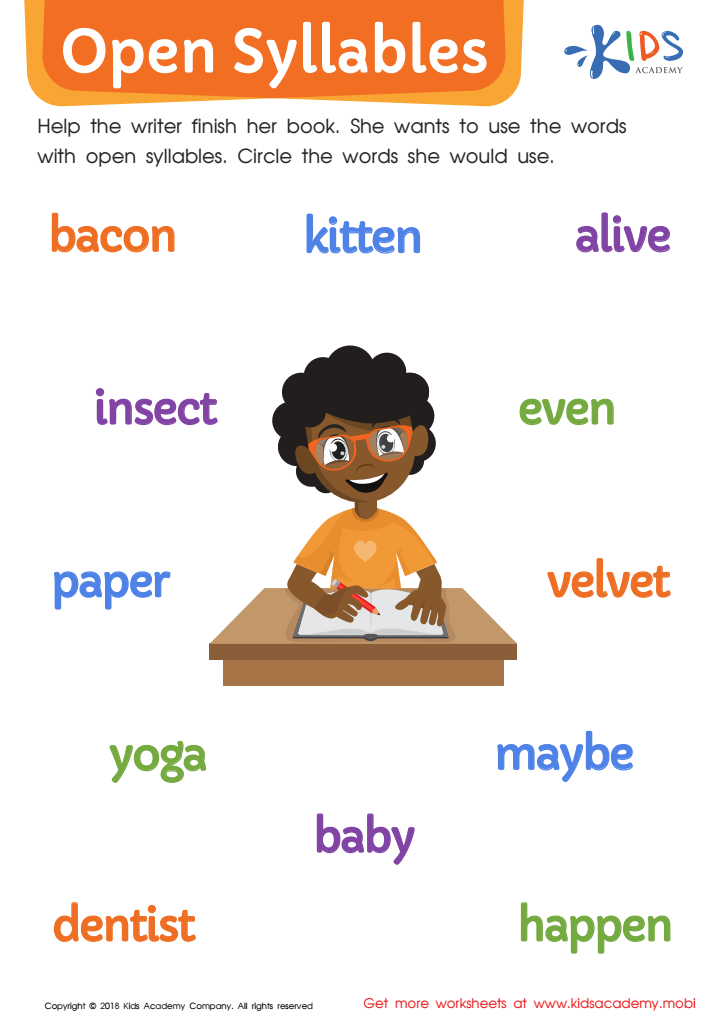
Before beginning this worksheet, make sure your child knows what open syllables are. If not, take time to teach them with examples. Then, help the writer finish her book by circling words with open syllables. She needs your child's help!
Open Syllables Worksheet
Worksheet
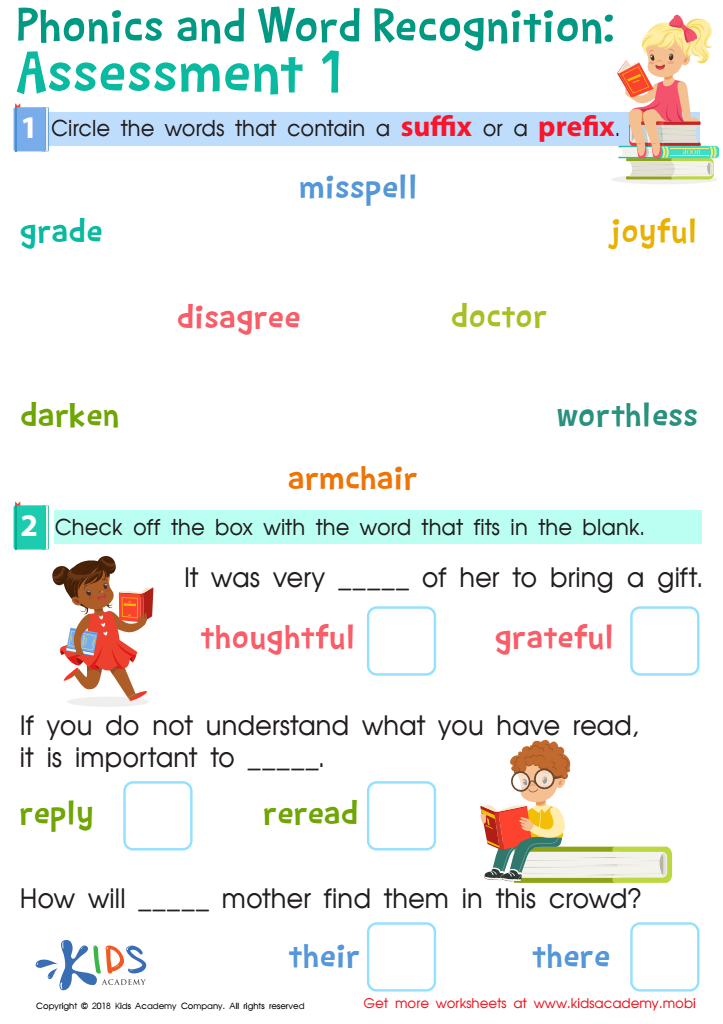
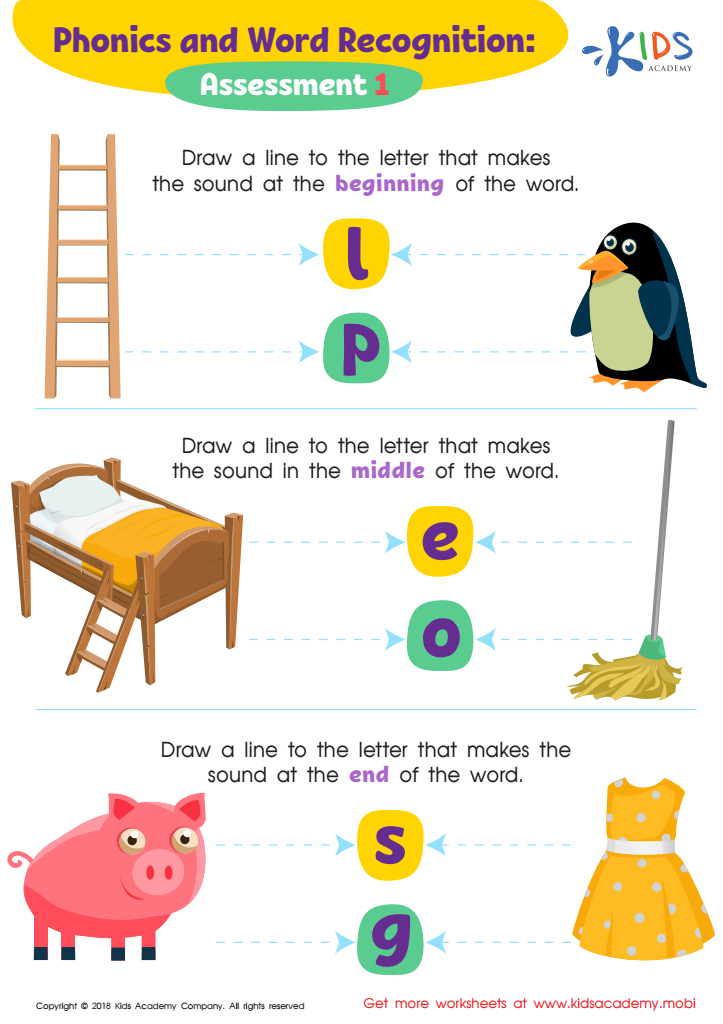
Phonics and Word Recognition: Assessment 1 Worksheet

Phonics and Word Recognition: Assessment 1 Worksheet

Explain prefixes (words added to start of another word to give it a new meaning) and suffixes (added to end of word to change its meaning) to your kids with examples like 'unhappy' (prefix) and 'forgetful' (suffix). Now, help your child complete this worksheet, including circling words and checking boxes.
Phonics and Word Recognition: Assessment 1 Worksheet
Worksheet
Reading: Prefix Search Worksheet

Reading: Prefix Search Worksheet

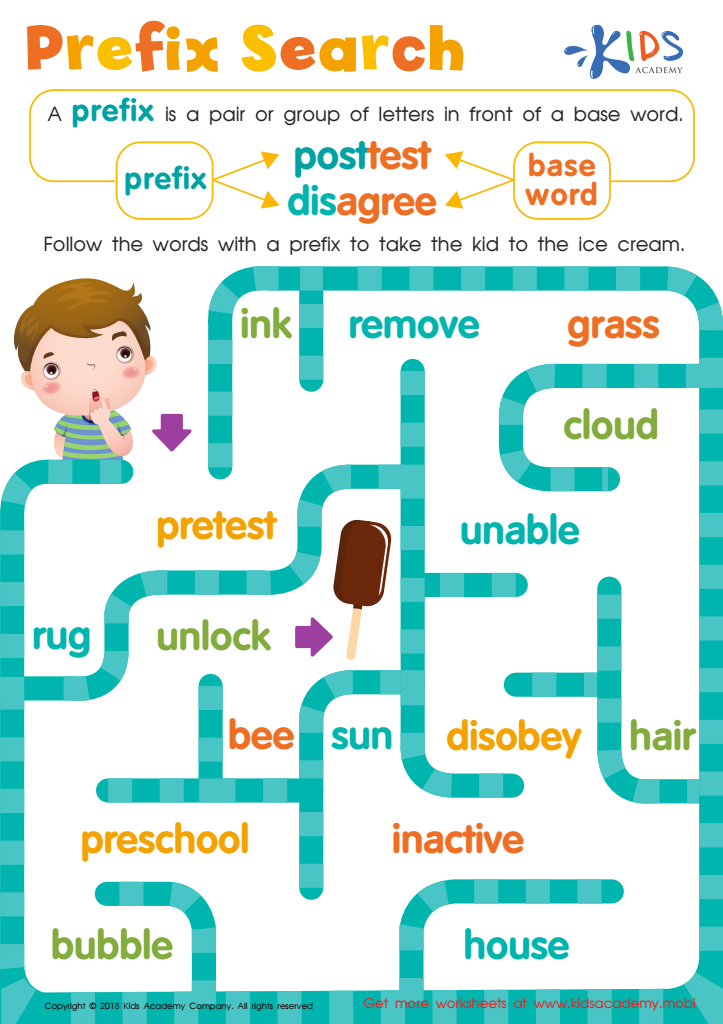
Maze your way through prefixes! This worksheet helps students practice reading new words with a prefix and figuring out the base word. An understanding of prefixes gives students the skills to comprehend new words. A fun and useful activity for the reading classroom!
Reading: Prefix Search Worksheet
Worksheet
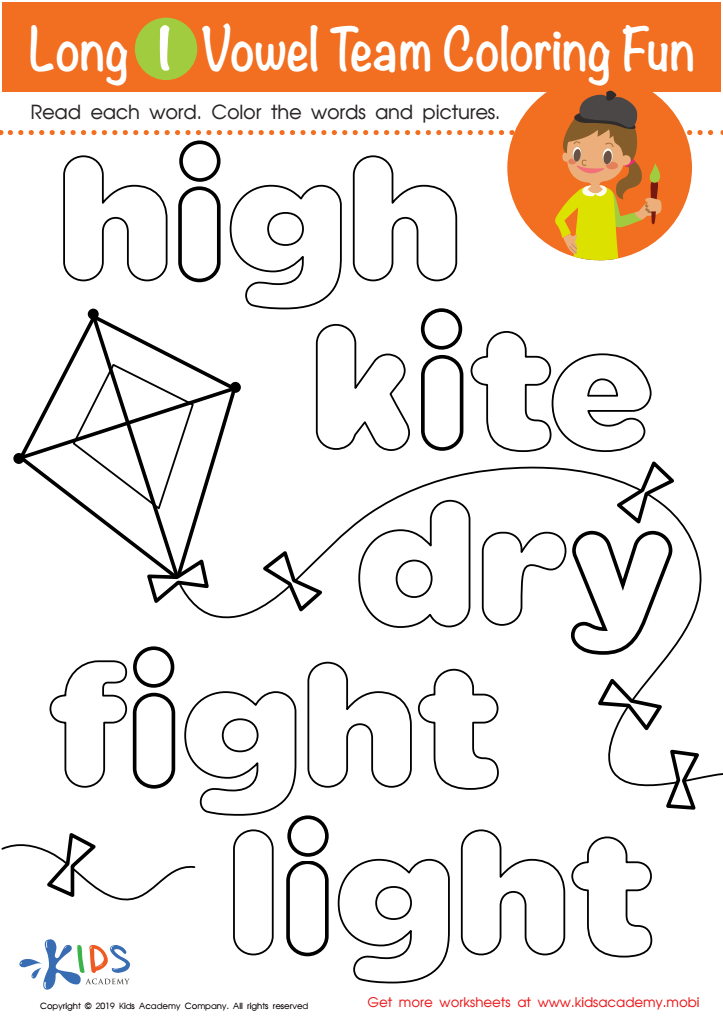
Long I Vowel Team Coloring Worksheet

Long I Vowel Team Coloring Worksheet

This worksheet provides practice with letter combinations that make the long "i" sound while enhancing creativity and motor skills with a fun coloring activity. Unknowingly, new readers learn key phonics skills while having fun!
Download (PDF)
Assign to My Students
Long I Vowel Team Coloring Worksheet
Worksheet
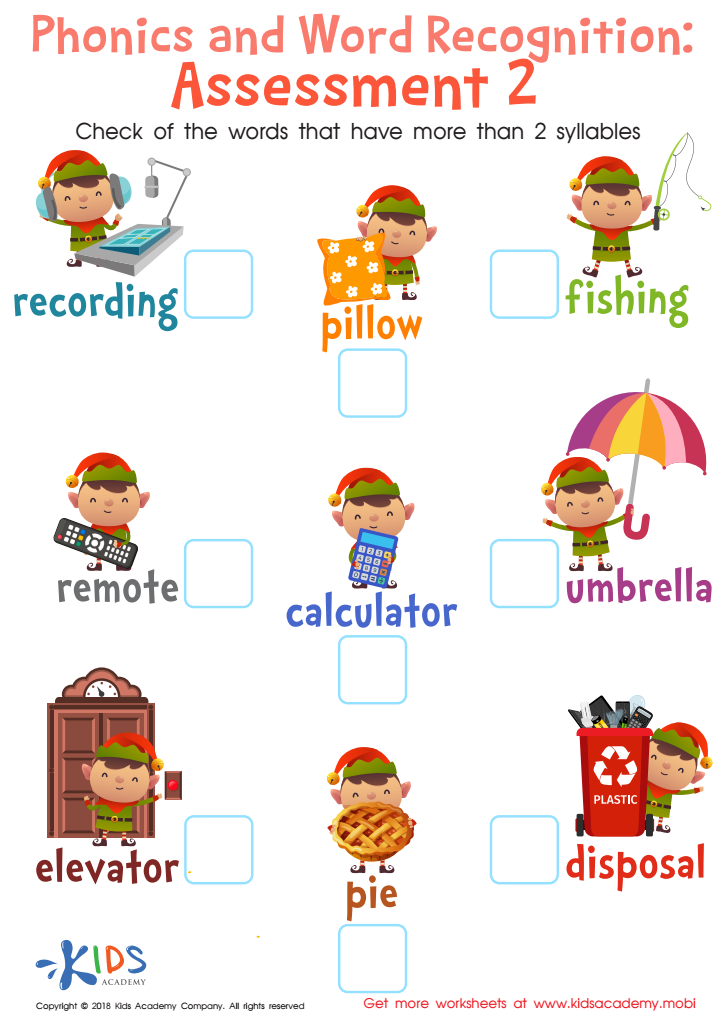
Phonics and Word Recognition: Assessment 2 Worksheet

Phonics and Word Recognition: Assessment 2 Worksheet

Help your kids learn proper pronunciation by counting syllables. Most words they'll encounter have 1-3 syllables, making them simple to say. Have them repeat the words in your worksheet after you. Focus on longer words with more than two syllables.
Phonics and Word Recognition: Assessment 2 Worksheet
Worksheet
Phonics and Word Recognition: Assessment 1 ELA Worksheet


Phonics and Word Recognition: Assessment 1 ELA Worksheet

This fun worksheet tests your child's sound recognition skills for each part of a word. Ask your child to name each image and trace the line to match it with the corresponding letter. Listen for beginning sounds on 1st, middle sounds on 2nd, and ending sounds on 3rd. Encourage learning with this colorful and interactive activity!
Phonics and Word Recognition: Assessment 1 ELA Worksheet

Worksheet


Parents and teachers should care about Word Identification Normal Phonics for ages 4-9 because it forms the foundation of reading and literacy development in young children. At this critical stage, children are beginning to understand how letters and sounds work together to create words. Effective phonics instruction helps them decode unfamiliar words, promotes confidence in reading, and enhances comprehension skills.

Phonics teaching strategies encourage children to recognize patterns in words, which is essential for building their vocabulary. This is especially important for early readers who may struggle with complex texts; knowing phonics equips them to tackle these challenges. Furthermore, strong phonics skills often lead to improved academic performance across all subjects, as reading is a fundamental skill used throughout education.

Additionally, phonics fosters a love for reading. When children feel capable of reading independently, they are more likely to engage with books and develop a lifelong interest in literacy. For parents and teachers, investing in phonics instruction results in better learning outcomes and prepares children for future academic success. Overall, focusing on Word Identification Normal Phonics is vital for nurturing skilled, enthusiastic readers who can advance confidently in their educational journeys.