Vowel Recognition Normal Vowels and Consonants Worksheets for Ages 4-9
6 filtered results
-
From - To
Discover our engaging "Vowel Recognition Normal Vowels and Consonants Worksheets" tailored for children aged 4-9. These interactive worksheets help young learners differentiate between vowels and consonants, laying the foundation for essential literacy skills. Through colorful activities and fun exercises, children will practice recognizing, tracing, and writing vowel sounds in an enjoyable and supportive way. Designed by educators, our resources promote learning through play, keeping kids motivated as they master the alphabet. Ideal for home or classroom use, these worksheets not only enhance phonetic understanding but also build confidence in reading and writing. Start your child's phonics journey today!
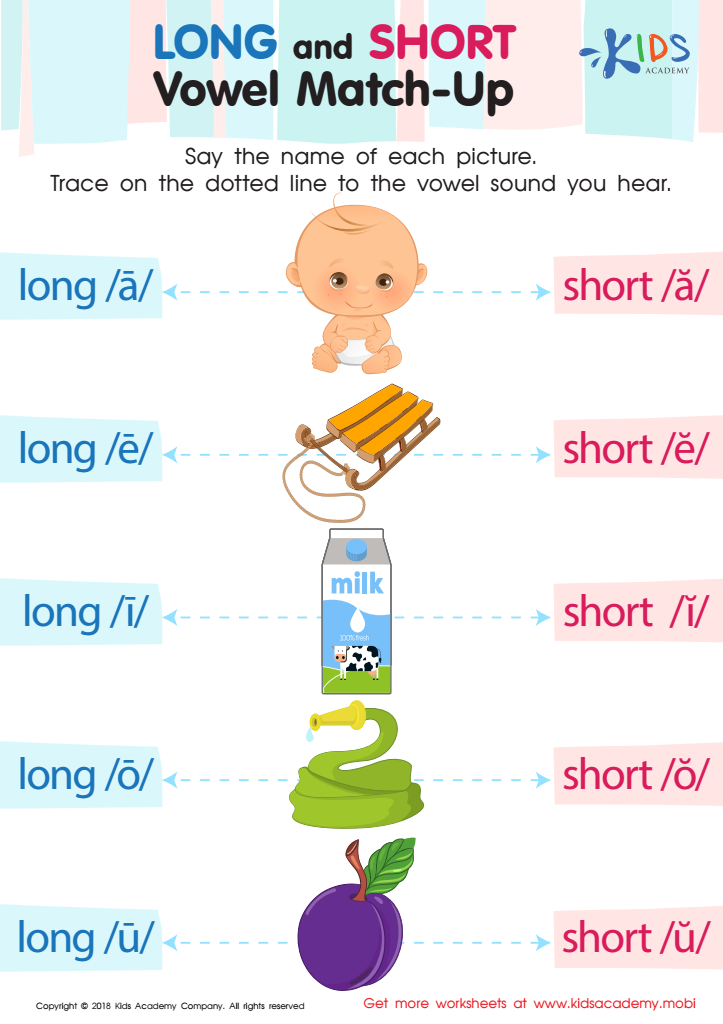
Long and Short Vowel Match up Reading Worksheet
 Assign to My Students
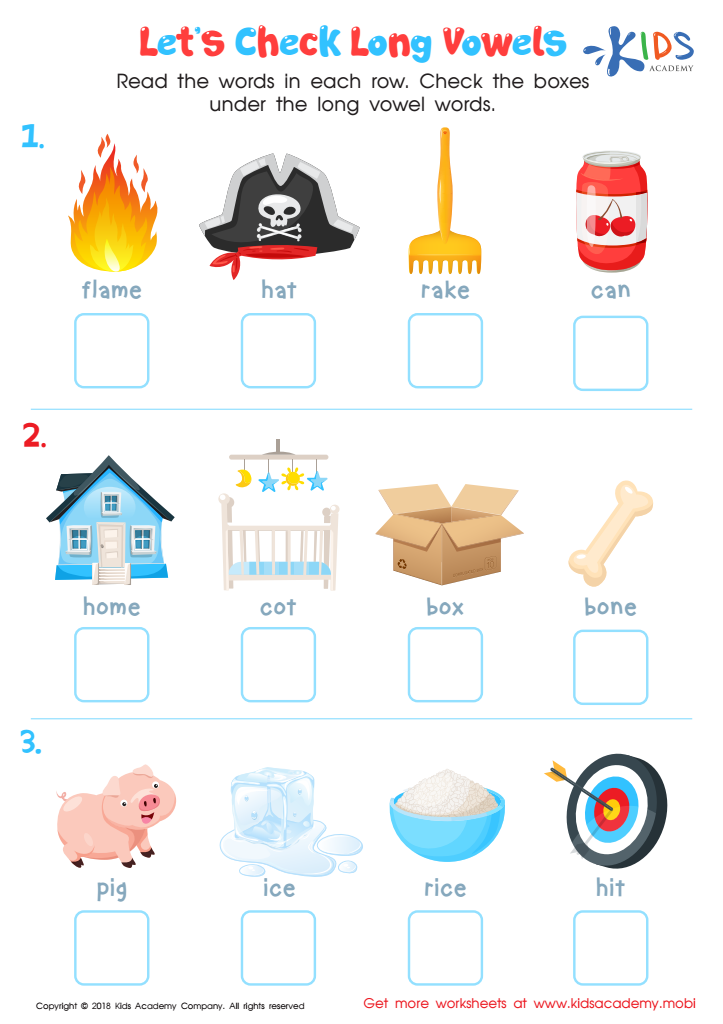
Let's Check Long Vowels: Assessment Worksheet
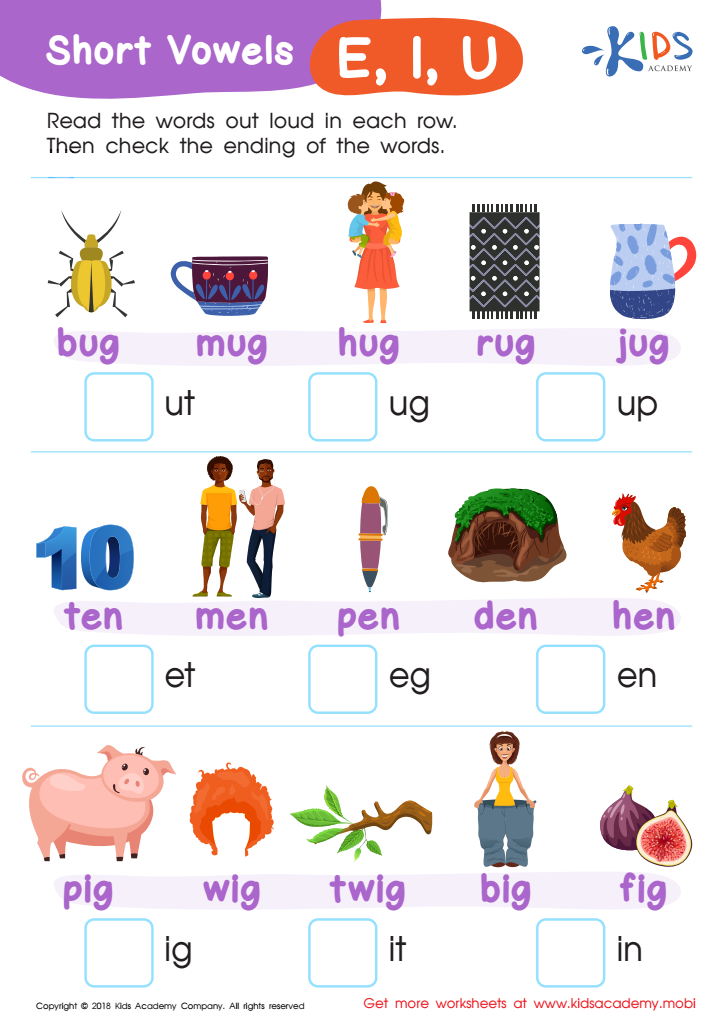
Short Vowels /e/, /i/, and /u/ Worksheet
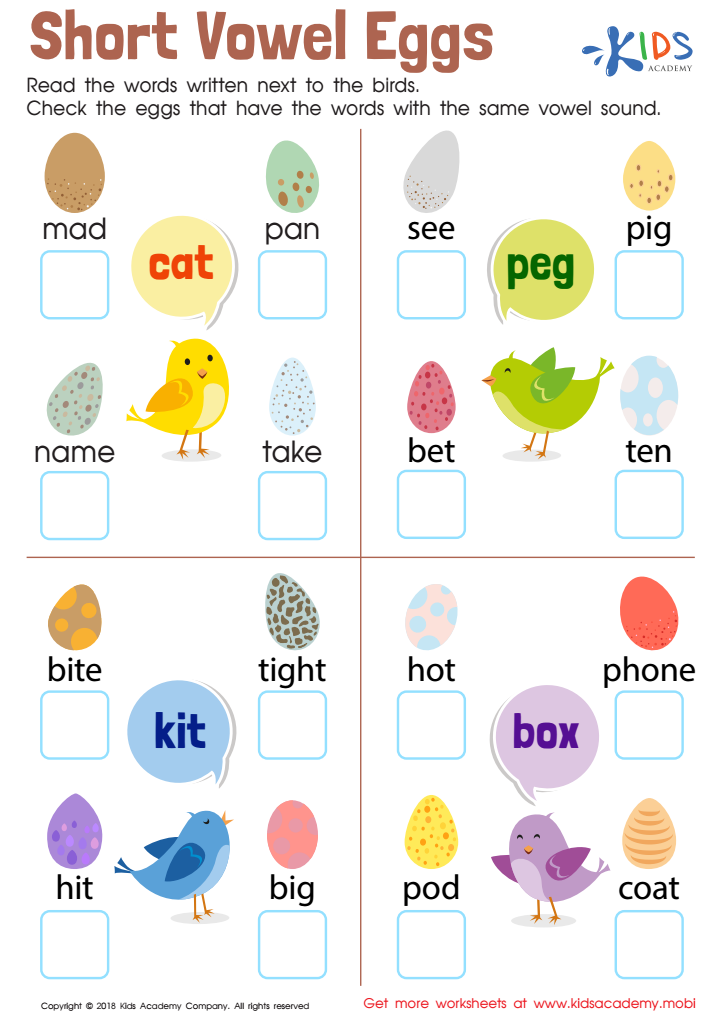
Short Vowel Eggs Worksheet
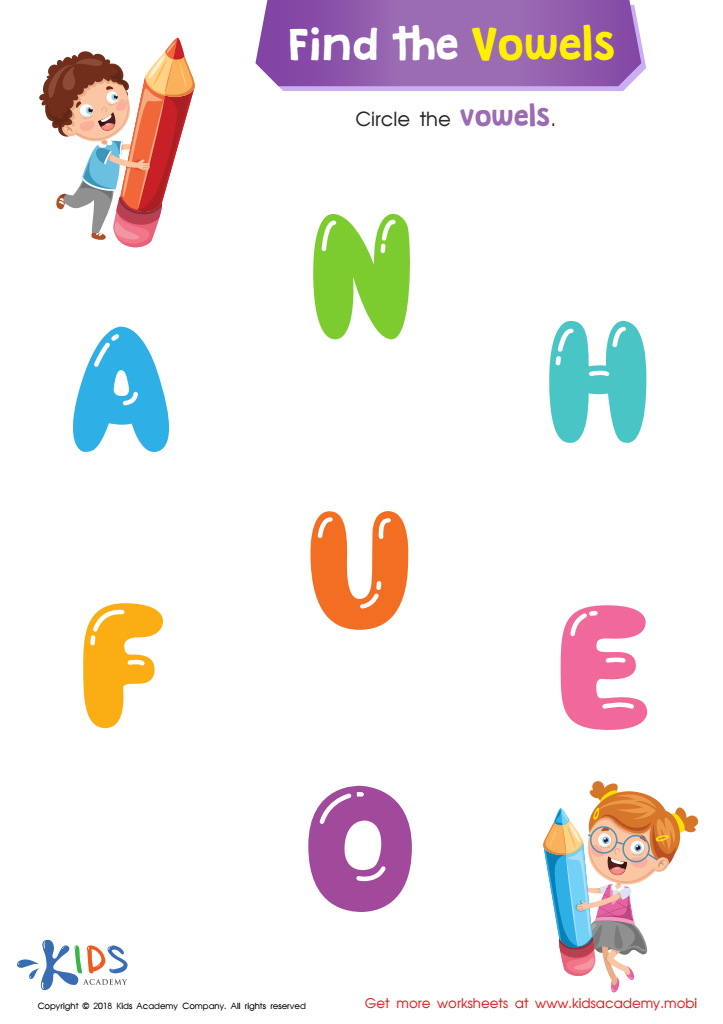
Find the Vowels Reading Worksheet
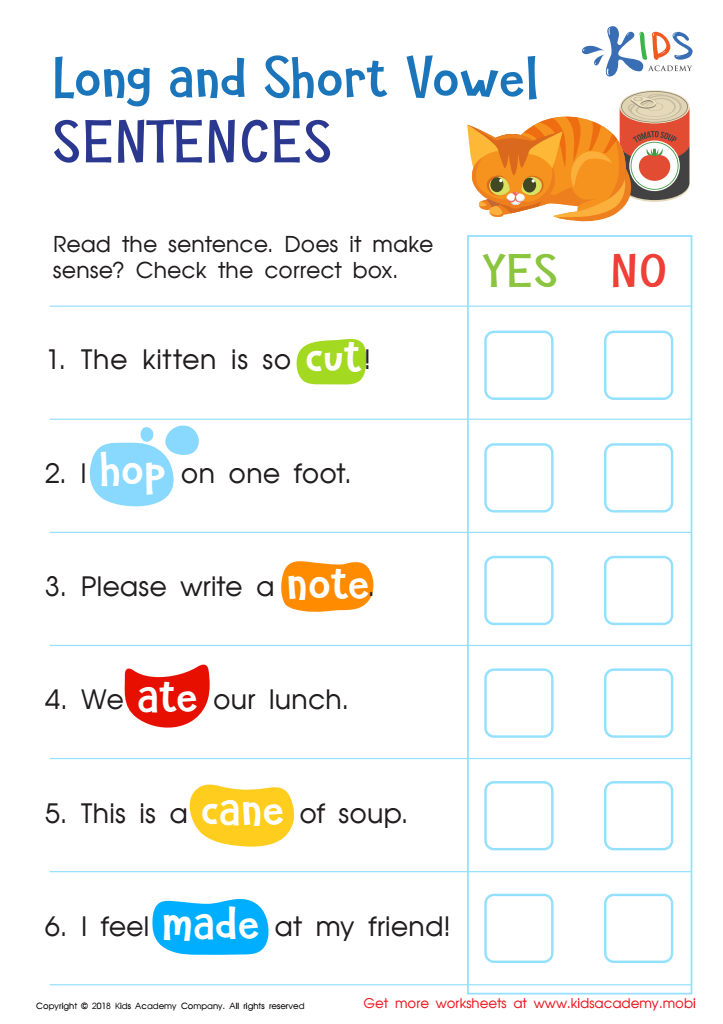
Long and Short Vowel Sentences: Assessment Worksheet



Vowel recognition, alongside consonant identification, is foundational in developing early literacy skills for children aged 4-9. Understanding vowels and consonants helps young learners decode words effectively, paving the way for successful reading and writing. As the building blocks of language, vowels are critical because they appear in nearly every word and often determine the word's sound and meaning.
For parents and teachers, emphasizing vowel recognition strengthens phonemic awareness—a crucial skill necessary for reading fluency. When children can identify short and long vowel sounds and differentiate them from consonants, they're better equipped to sound out words, engage with texts, and build their vocabulary.
Additionally, early mastery of vowels and consonants boosts children's confidence in language arts, encouraging them to participate in reading activities, which leads to improved comprehension skills. This foundational knowledge forms part of broader literacy development, embracing not just phonics but also language enrichment and expression.
Moreover, teaching these concepts early allows for addressing potential learning gaps, ensuring students stay on track with their peers. Ultimately, with strong vowel and consonant recognition, children arrive at later learning activities more prepared for complex literacy tasks, fostering a lifelong love for reading and writing.






