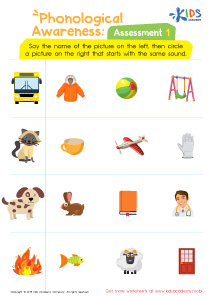
Reading Improvement Normal Vowels Worksheets for Ages 4-9
5 filtered results
Difficulty Level
Grade
Age
-
From - To
Subject
Activity
Standards
Explore our engaging "Reading Improvement Normal Vowels Worksheets," designed specifically for children ages 4-9. Our resources target essential vowel recognition and usage skills, helping young learners enhance their reading proficiency in a fun and interactive way. Featuring vibrant illustrations and age-appropriate activities, these worksheets reinforce fundamental concepts such as short and long vowel sounds. Kids will enjoy completing exercises that promote literacy through phonics, word puzzles, and reading comprehension tasks. Ideal for both classroom and at-home use, these worksheets empower children to build confidence and grow their love for reading. Start your child’s journey to reading success today!
Favorites
With answer key
Interactive
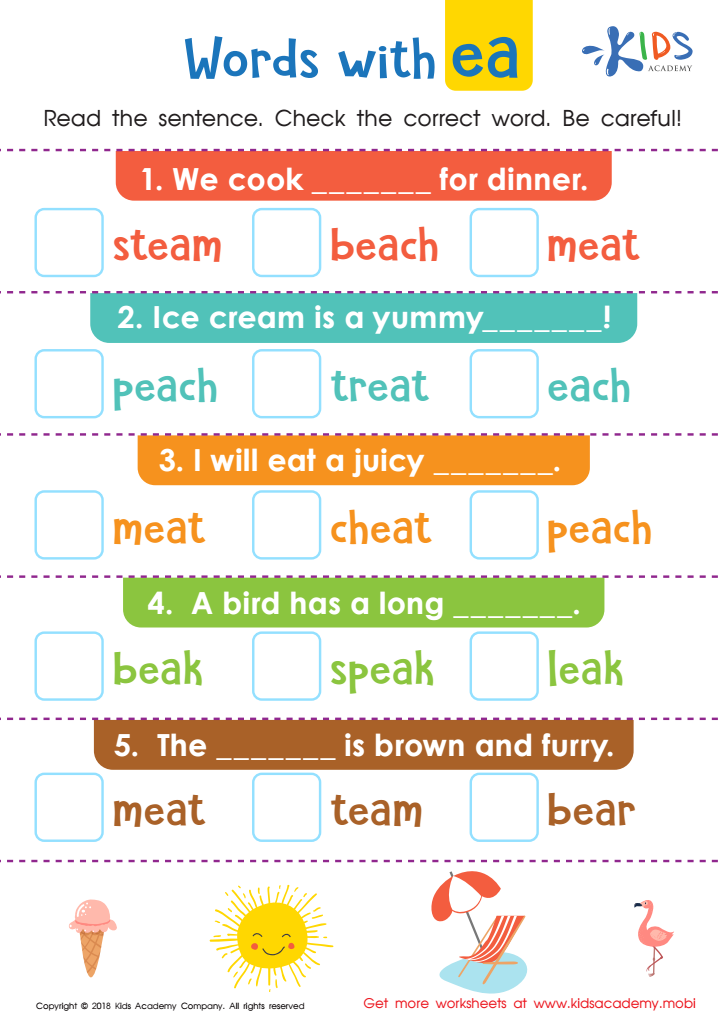
Words with ea Worksheet
Beginning readers may struggle with -ea vowel digraphs, which can have multiple sounds and be tricky to decode. This cheerful worksheet helps kids practice reading sentences with missing -ea words, using context clues to fill in the blanks. They'll also be exposed to various -ea sound examples, and build their sight word knowledge.
Words with ea Worksheet
Worksheet
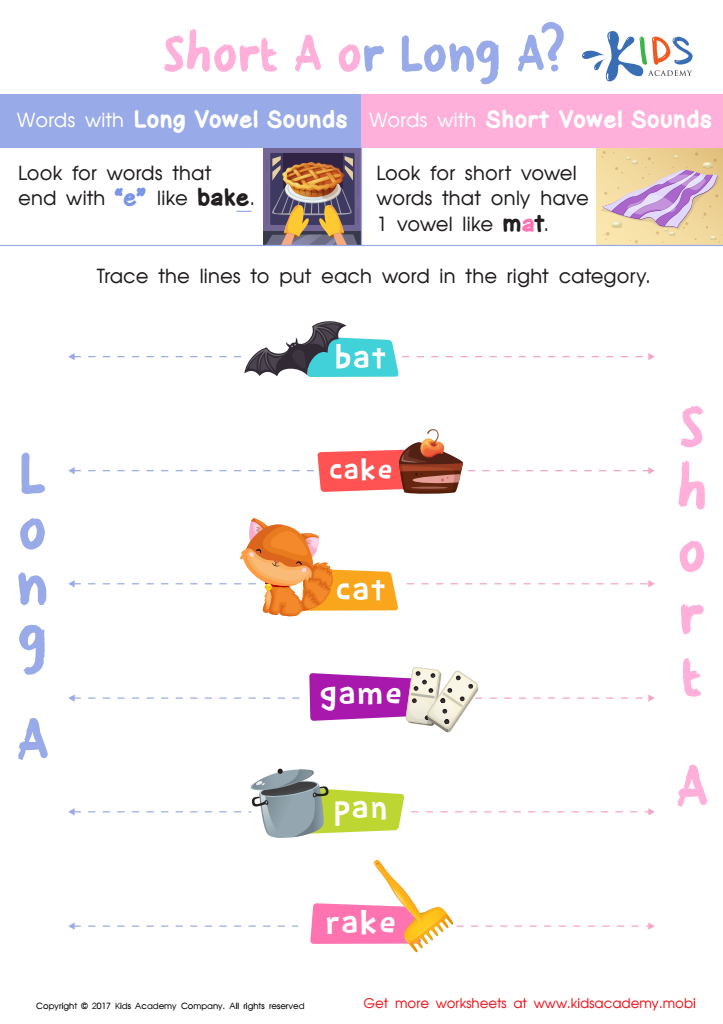
Short /a/ or Long /a/? Worksheet
Phonetics and its sounds can be tricky for kids. They can read and spell, but long and short vowels might be difficult. Use this phonetic worksheet to teach them to identify words with the short /a/ or long /a/ sound. Kids have to find the words ending with 'e' (long sound) and words with one vowel (short sound, e.g. 'mat'). Colourful printout makes it fun and easy to learn!
Short /a/ or Long /a/? Worksheet
Worksheet
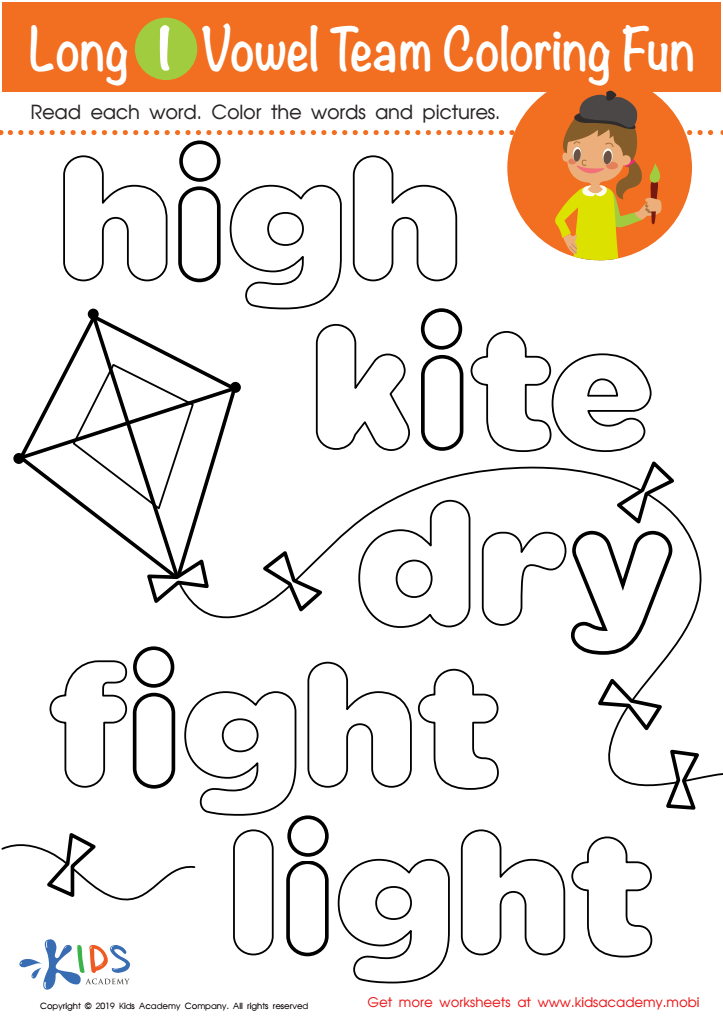
Long I Vowel Team Coloring Worksheet
This worksheet provides practice with letter combinations that make the long "i" sound while enhancing creativity and motor skills with a fun coloring activity. Unknowingly, new readers learn key phonics skills while having fun!
Download (PDF)
 Assign to My Students
Assign to My Students
Long I Vowel Team Coloring Worksheet
Worksheet
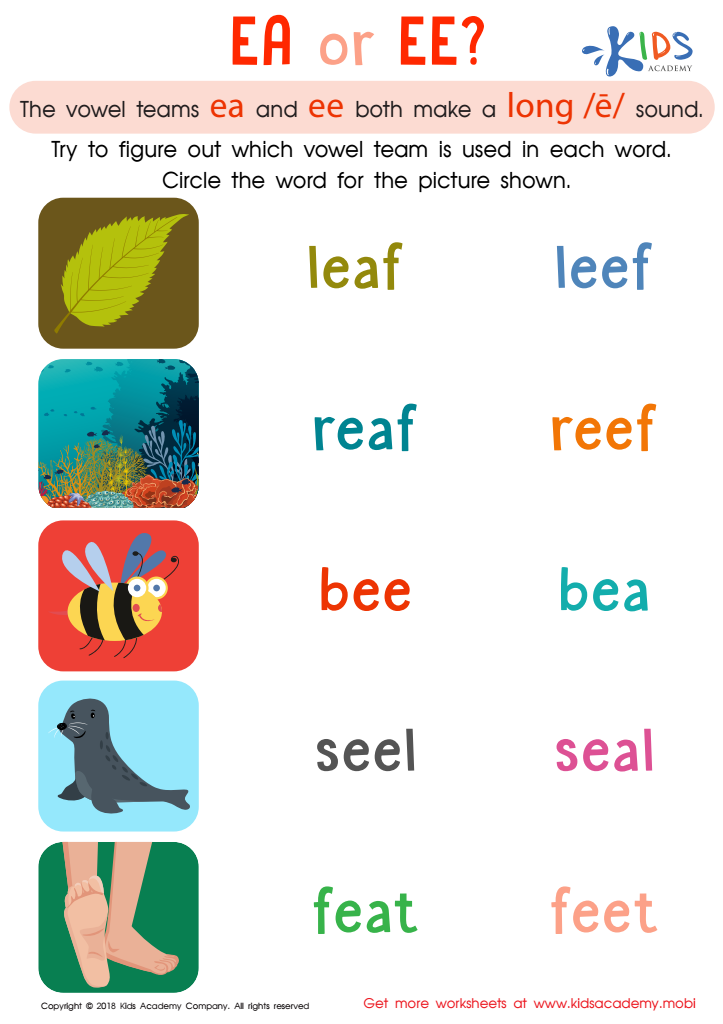
Reading: EA and EE Worksheet
Confused by the long E sound's varying spellings? Give students practice with this printable. It will improve their reading and spelling skills by helping them identify the correct spellings for words with the /ee/ and /ea/ vowel teams. Clear up the confusion and sharpen their skills.
Reading: EA and EE Worksheet
Worksheet
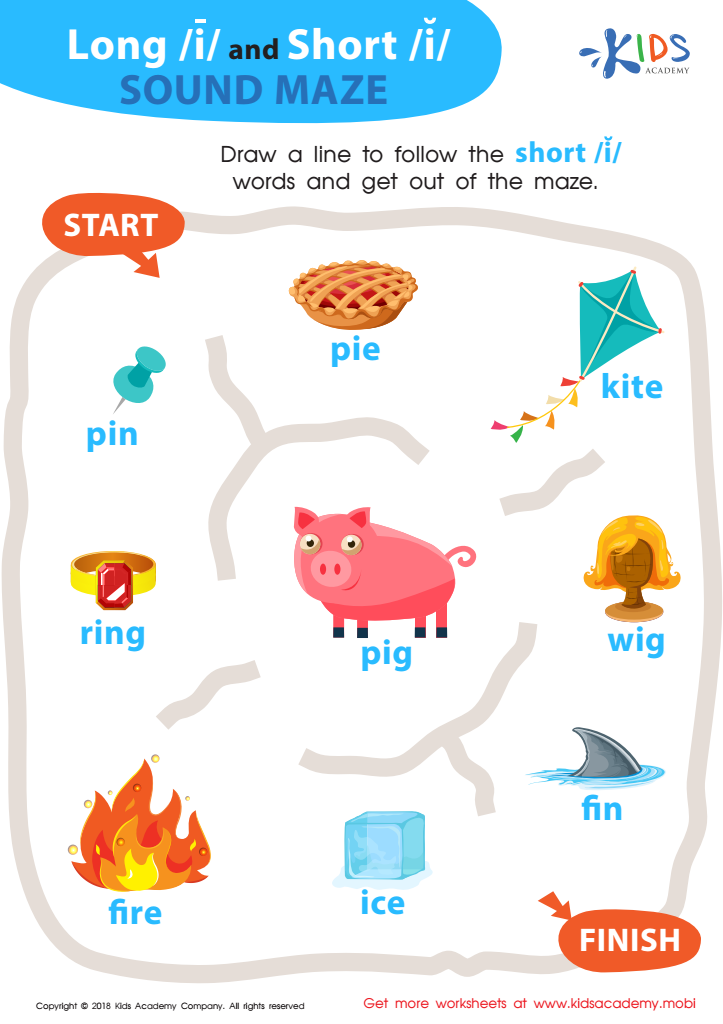
Reading: Long I and Short I Sound Maze Worksheet
Question your students if the worksheet is entertaining. They may respond negatively! Nonetheless, this activity will bring satisfaction while learning the distinction between a long and short I sound. Students read the words in the maze and only follow the words with the short I sound to finish the exercise. Grasping the difference between long and short vowels is demanding, but this worksheet helps students understand this reading skill.
Reading: Long I and Short I Sound Maze Worksheet
Worksheet
Join Kids Academy for Free
Who is primarily going to use this learning content?





Reading Improvement through understanding normal vowels is crucial for young learners aged 4-9, as it lays the foundation for their literacy development. Early exposure to vowels helps children recognize phonetic sounds, fostering their ability to decode words and enhancing their reading fluency. When parents and teachers prioritize vowel instruction, they equip children with essential tools to build vocabulary and comprehend written language, essential for academic success.
Furthermore, children who struggle with reading often experience frustration and diminished self-esteem, impacting their overall learning experience. By focusing on vowels, educators can develop targeted interventions that cater to individual needs, ensuring that all students have equitable access to reading proficiency. Engaging parents in this process also reinforces learning at home, creating a supportive environment that encourages practice and enthusiasm for reading.
Moreover, research demonstrates that phonemic awareness—specifically with vowels—correlates strongly with later reading achievement. By emphasizing vowel recognition and manipulation, parents and teachers can bolster children's confidence and passion for reading, leading to enhanced cognitive skills throughout their schooling and beyond. Ultimately, prioritizing reading improvement strategies focused on normal vowels is an investment in students' academic future and love for learning.