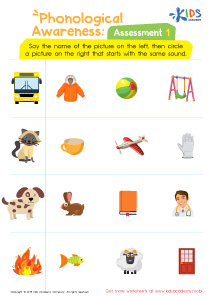
Sound differentiation Normal Vowels Worksheets for Ages 4-9
3 filtered results
-
From - To
Discover our engaging Sound Differentiation Normal Vowels Worksheets designed specifically for children ages 4-9. These interactive resources help young learners clearly distinguish between short and long vowel sounds, enhancing their phonetic awareness. With a variety of fun activities, including matching games, coloring sheets, and tracing exercises, kids can explore different vowel sounds in a playful and educational manner. These worksheets are perfect for both classroom settings and home learning, providing opportunities for kids to practice important language skills at their own pace. Foster your child's reading and writing development today with our exciting vowel sound differentiation activities!
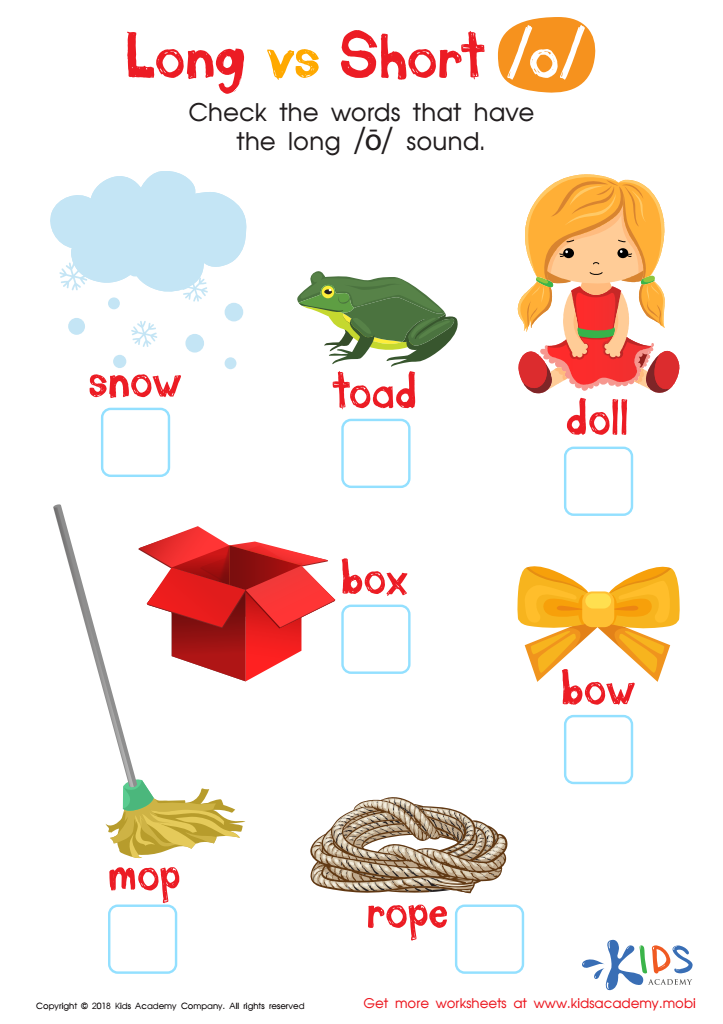
Long vs Short O Reading Worksheet
 Assign to My Students
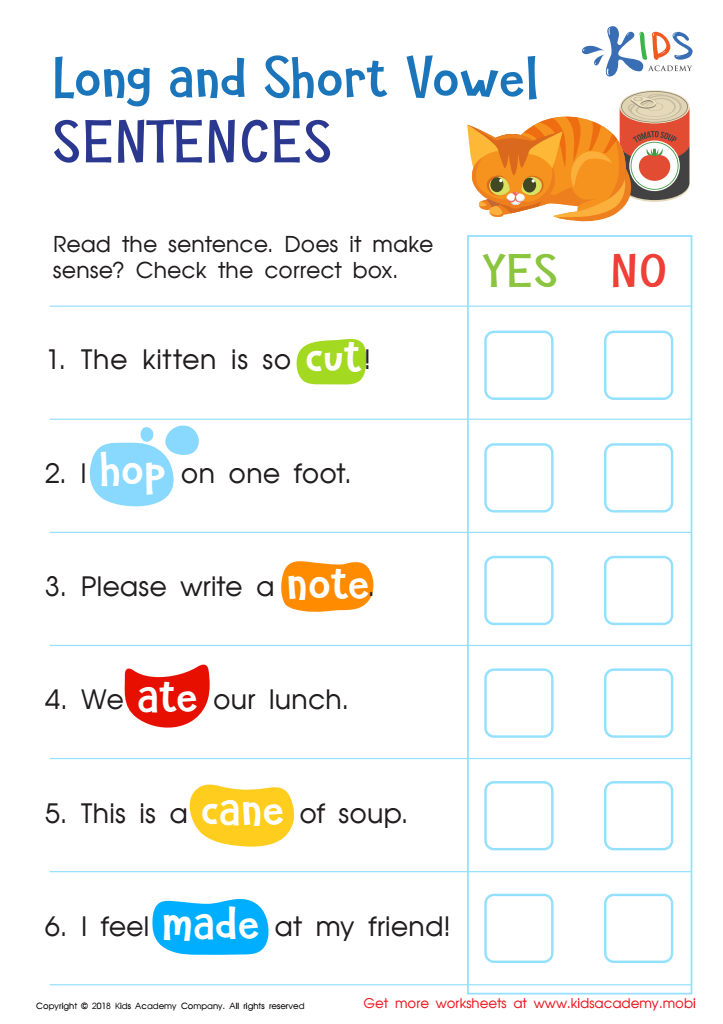
Long and Short Vowel Sentences: Assessment Worksheet
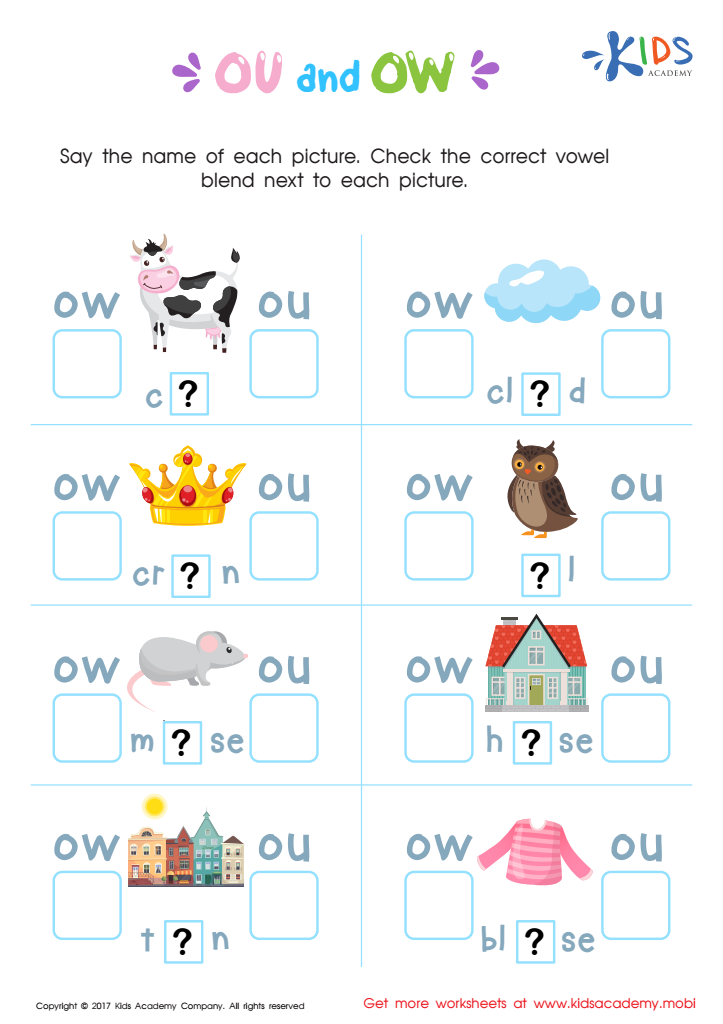
OU and OW Words Worksheet





Sound differentiation of normal vowels is a crucial aspect of early literacy development for children aged 4-9. Understanding and distinguishing vowel sounds is fundamental in reading, spelling, and phonemic awareness. When children learn to identify and differentiate between long and short vowel sounds, they enhance their ability to decode words accurately.
For parents and teachers, focusing on vowel sound differentiation fosters phonetic skills essential for reading fluency. It aids in the recognition of patterns in language and enhances vocabulary acquisition. Children who grasp vowel sounds are more likely to tackle unfamiliar words successfully, boosting their confidence and motivation in reading activities.
Moreover, early intervention in sound differentiation can help identify and address potential reading difficulties, laying a strong foundation for future academic success. Engaging children in fun and interactive activities that target vowel sounds—such as songs, games, and rhymes—makes learning enjoyable and effective.
Ultimately, parental and teacher involvement in promoting sound differentiation not only supports cognitive development but also gives children the necessary tools to become proficient readers and communicators, shaping their overall educational journey and love for learning. By prioritizing this skill, we empower young learners to thrive in their academic adventures.