Categorizing animals Normal Worksheets for Ages 4-9
3 filtered results
-
From - To
Welcome to our "Categorizing Animals Normal Worksheets for Ages 4-9"! Designed to enhance young learners' understanding of the animal kingdom, these engaging worksheets help children identify and categorize various animals based on different characteristics, such as habitat, diet, and type. By using fun visuals and interactive activities, these worksheets encourage critical thinking and promote cognitive development in early education. Perfect for classroom or at-home learning, these resources aim to spark curiosity about nature while reinforcing essential concepts in an enjoyable manner. Help your child become a budding biologist today with our captivating animal categorization worksheets!
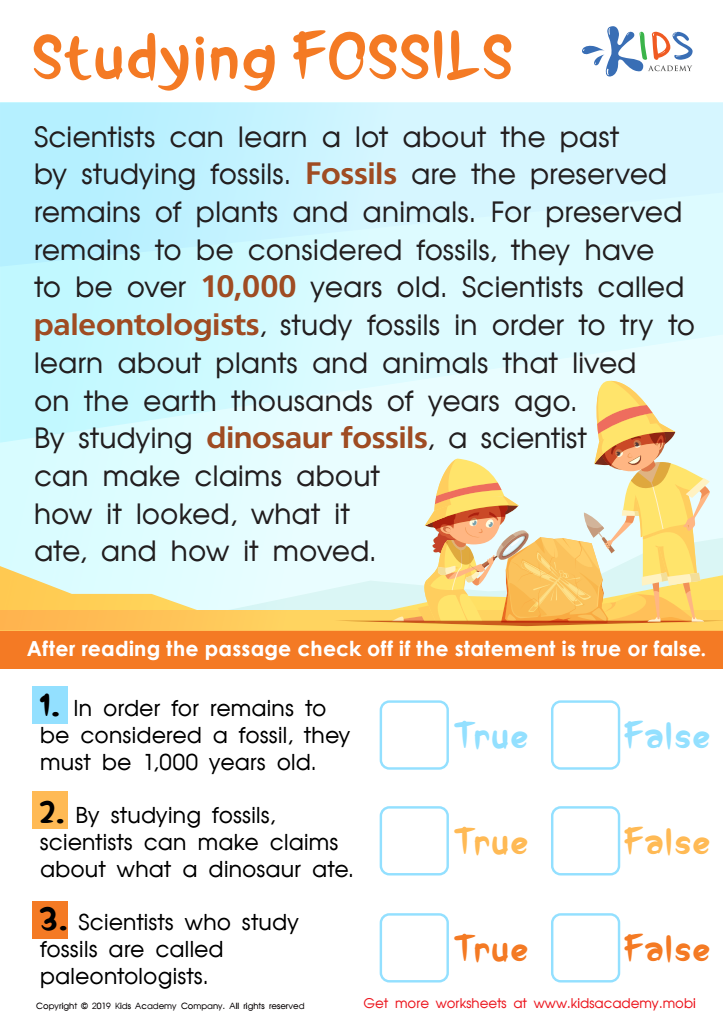
Studying Fossils Worksheet
 Assign to My Students
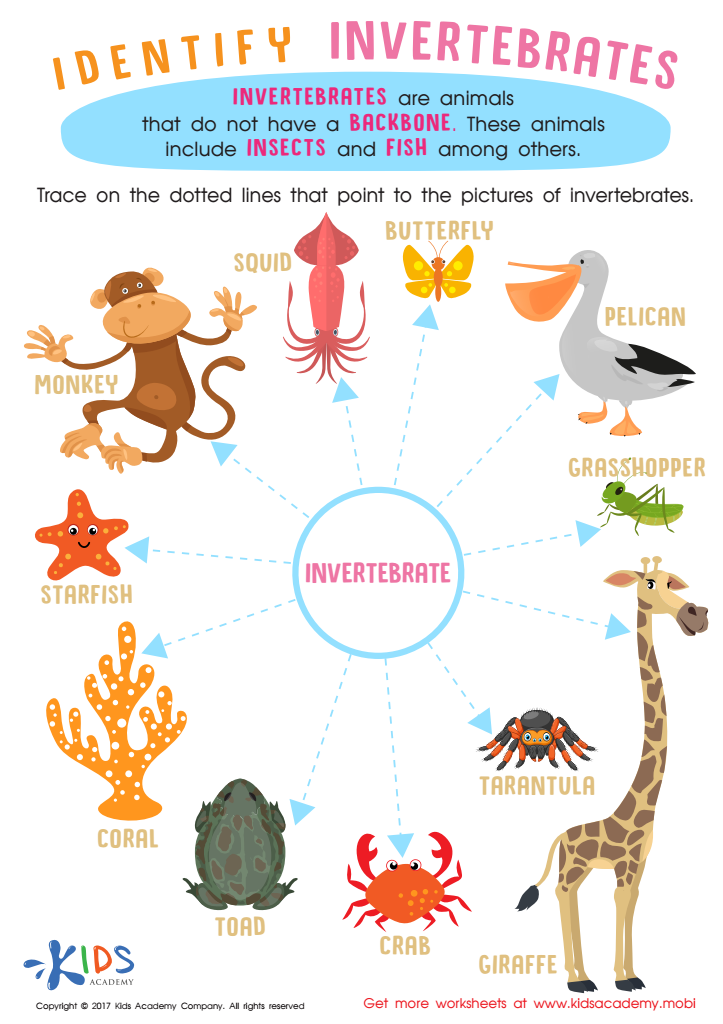
Invertebrates Worksheet for Grade 3
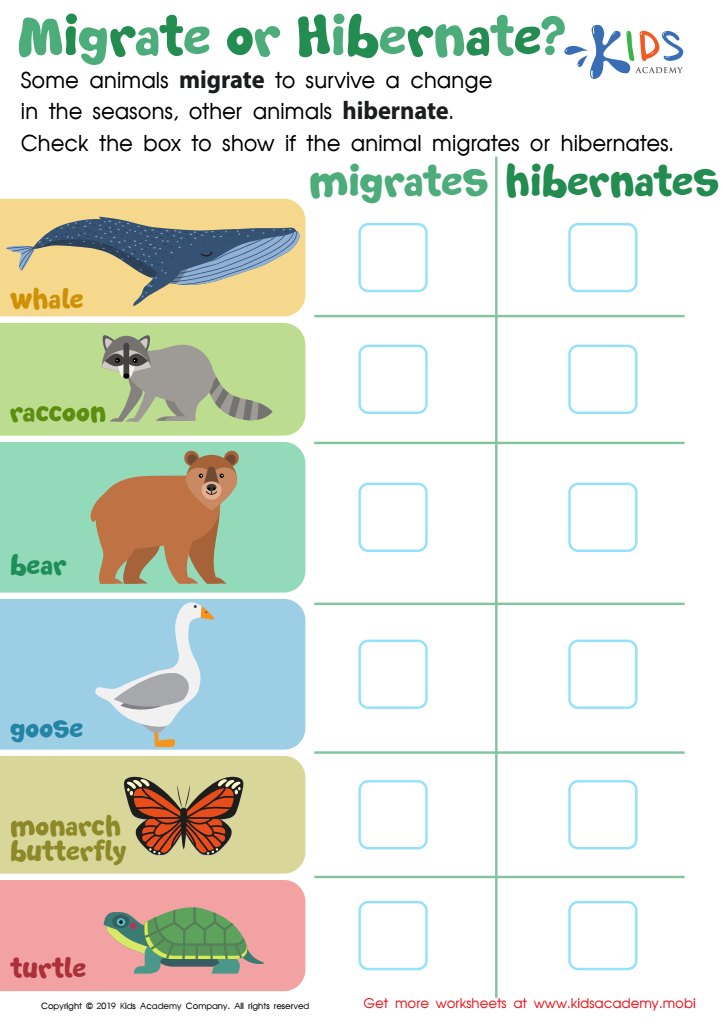
Migrate or Hibernate? Worksheet






Categorizing animals is an essential educational activity for children aged 4-9, as it lays the foundation for their understanding of the natural world. Engaging in this process encourages critical thinking, enhances vocabulary, and sparks curiosity. By discovering the various classifications—such as mammals, birds, reptiles, and insects—children learn to appreciate the diversity of life and the characteristics that define different animal groups.
From a developmental standpoint, categorizing animals supports cognitive growth. Young children are naturally inclined to group objects and experiences, and this skill is fundamental to early learning. It helps in refining their ability to classify and think logically, contributing to scientific reasoning later in education.
Moreover, understanding animal categories can foster a sense of empathy and responsibility towards nature. As children learn about different species and their habitats, they build awareness of environmental issues and the importance of conservation.
Teachers and parents play a crucial role in this process by providing resources, encouraging playful exploration, and integrating interactive activities. This engagement not only makes learning fun but also creates a strong bond between children, their families, and the natural environment they inhabit, promoting respect for all living things.








