Color Identification Normal Worksheets for Ages 4-9 - Page 2
26 filtered results
-
From - To
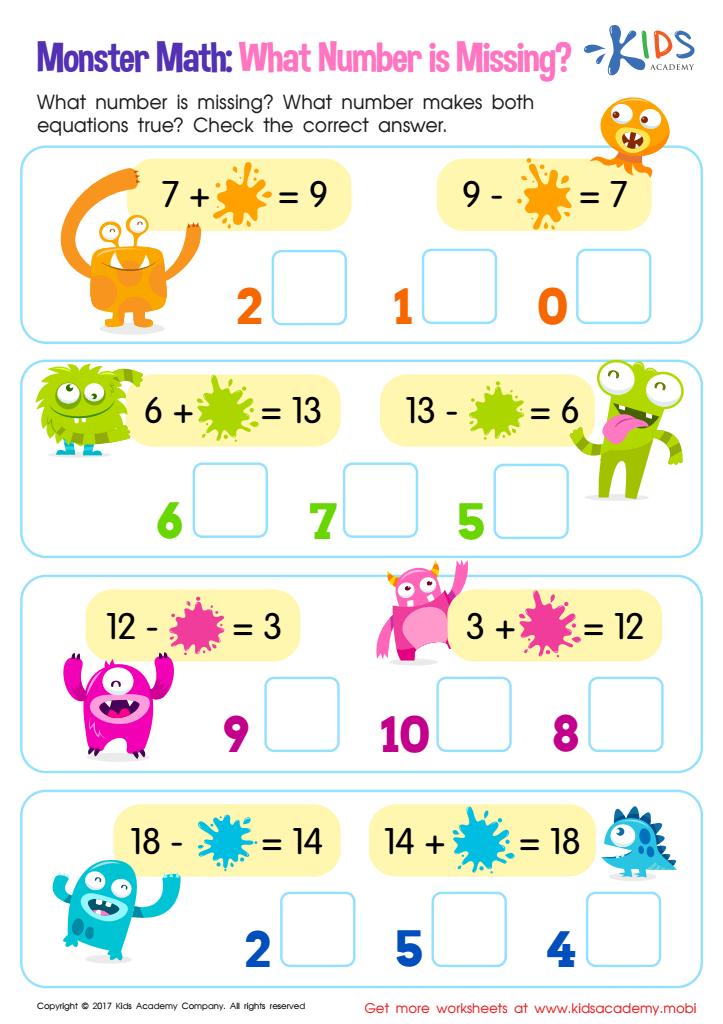
Missing Number: Monster Math Worksheet
 Assign to My Students
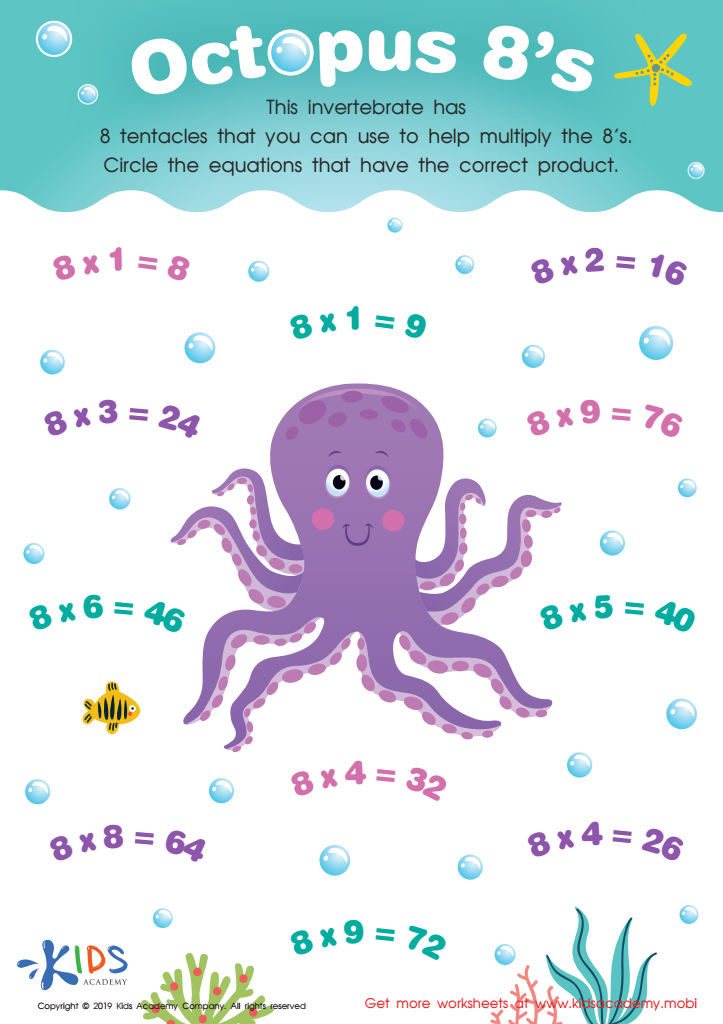
Octopus 8’s Worksheet


%20(1).jpg)





Color identification is a fundamental skill crucial for children aged 4-9 as it lays the groundwork for various cognitive, social, and emotional developments. During these formative years, children are not just learning to recognize colors; they are expanding their language skills, enhancing their memory, and fostering their cognitive abilities. Mastery of color identification helps children categorize objects and make sense of their environment, which in turn supports analytical thinking and problem-solving skills.
Moreover, color identification aids in social interactions. When children can name colors, they can effectively engage in conversations, express preferences, and collaborate in group activities. Additionally, color identification is often linked to emotional expression; certain colors can evoke feelings or concepts, allowing children to share their thoughts and emotions more easily.
For teachers, incorporating color activities into the curriculum means creating a dynamic learning experience that can be seamlessly integrated with subjects like art, science, and even math. Furthermore, parents can utilize color recognition as an interactive and fun way to bond with their children. Overall, supporting color identification in early development not only enriches children's learning but also helps lay a strong foundation for future academic success.








