Comparing objects Normal Worksheets for Ages 4-9
4 filtered results
-
From - To
Our "Comparing Objects Normal Worksheets for Ages 4-9" are designed to help young learners enhance their observational and critical thinking skills. Through engaging activities, kids can compare sizes, shapes, lengths, and weights of everyday items, promoting early math and science proficiency. Each worksheet encourages interaction and hands-on learning, giving children the chance to analyze differences and similarities in a fun, educational format. Perfect for classroom or at-home use, our resources cater to various developmental stages, fostering a love for learning and building a solid foundation for future academic success. Empower your child with these dynamic, skill-building worksheets today!
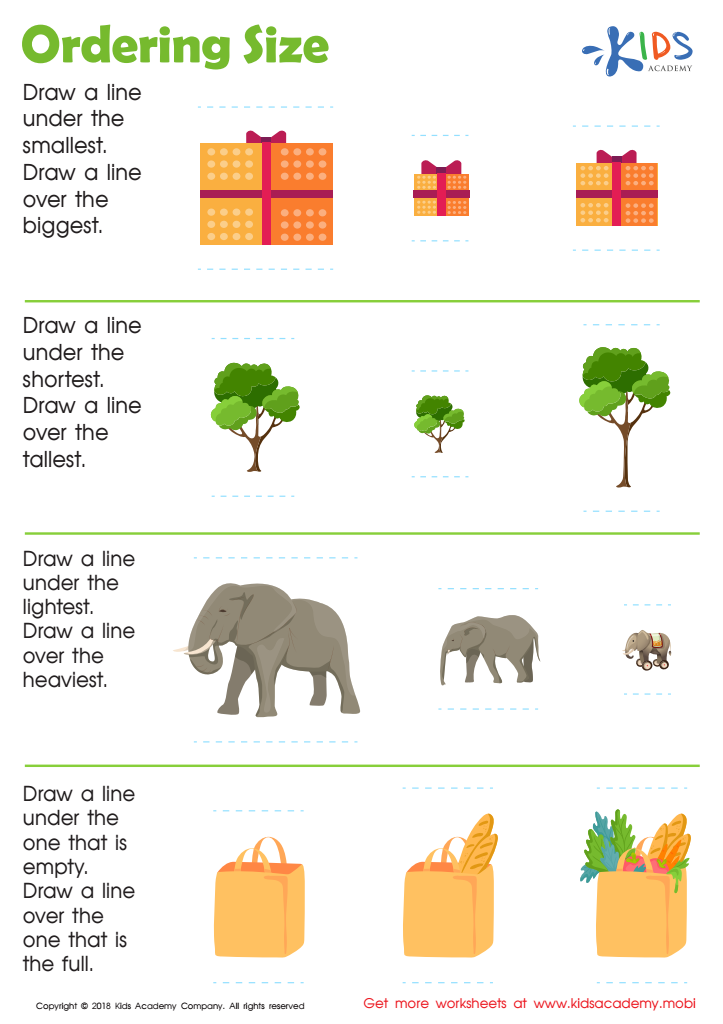
Ordering Size Worksheet
 Assign to My Students
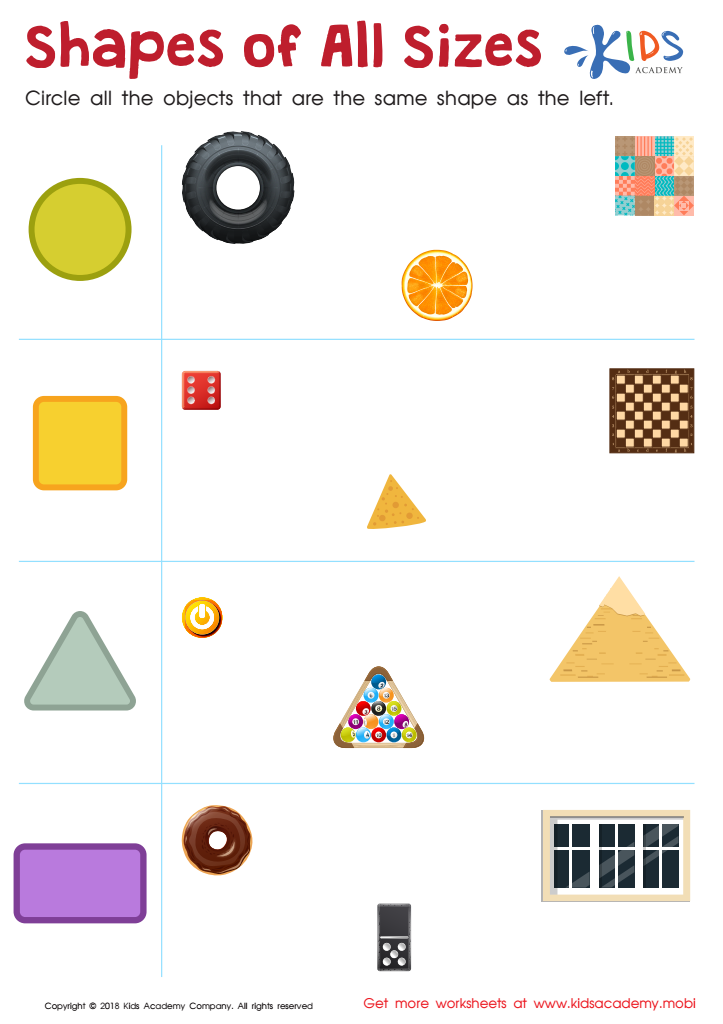
Shapes of All Sizes Worksheet
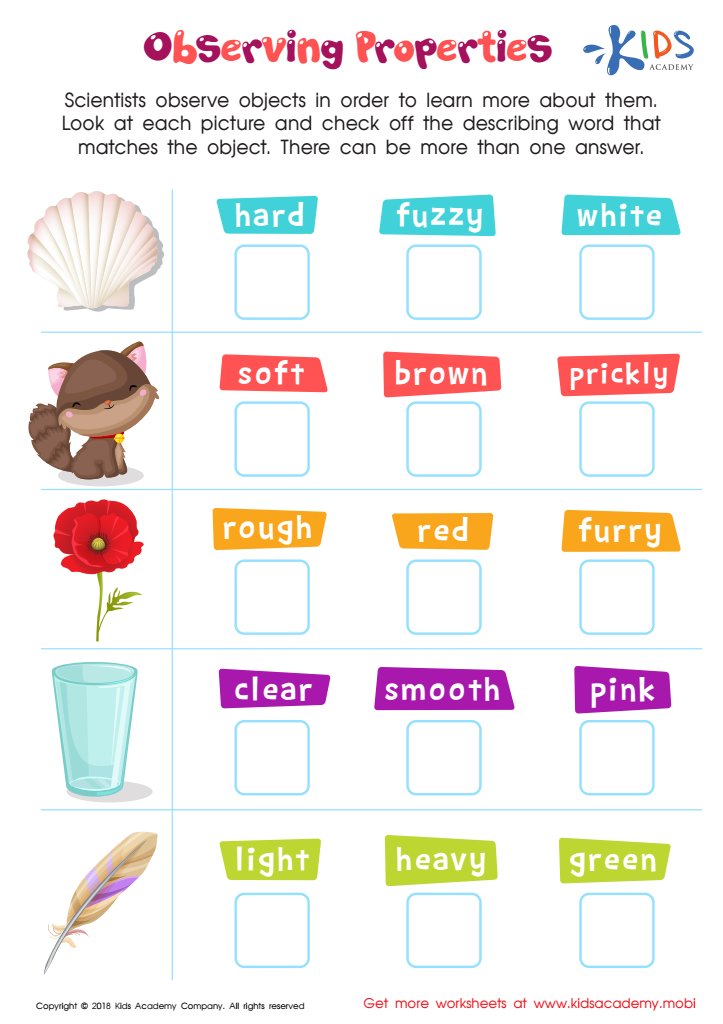
Observing Properties Worksheet
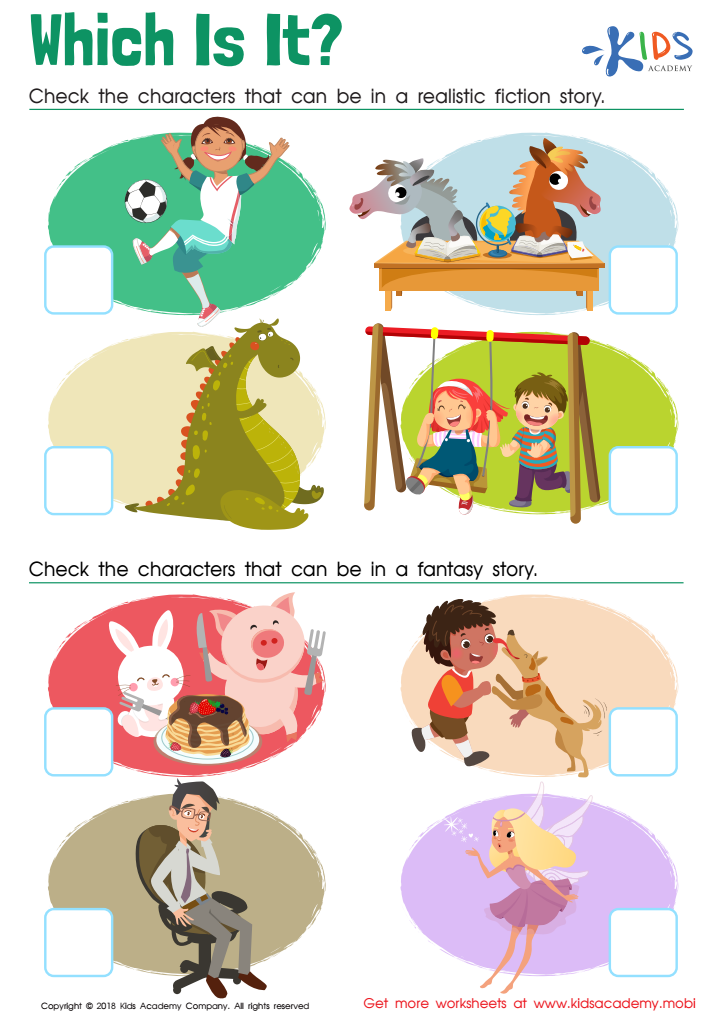
Which Is It? Worksheet




Comparing objects is a crucial skill for children ages 4-9 as it lays the foundation for mathematical understanding and cognitive development. At this young age, children are naturally curious and love exploring their environment. When they compare objects based on size, shape, color, and other attributes, they develop critical observational skills and vocabulary.
For instance, parents and teachers can encourage kids to identify which of two blocks is taller or to sort buttons by color. These activities are not just fun; they help children categorize and organize information, fostering logical thinking and analytical skills. Understanding similarities and differences is fundamental for grasping basic math concepts such as measurement, volume, and numbers.
Moreover, comparing objects enhances language development. Descriptive language including terms like "smaller," "larger," "heavier," and "lighter," helps broaden a child’s vocabulary and improves communication skills. Additionally, these comparison activities promote social interaction and cooperative play, important for emotional development.
Empowering children to make comparisons also nurtures their problem-solving abilities. They learn to make decisions based on evidence, draw conclusions, and understand their environment better.
Overall, encouraging young children to compare objects can have long-lasting benefits not just academically but also socially and intellectually, making it an essential focus for both parents and teachers.








