Developing problem-solving abilities Normal Worksheets for Ages 4-9
4 filtered results
-
From - To
Enhance your child's critical thinking with our "Developing Problem-Solving Abilities Normal Worksheets" designed for ages 4-9. These engaging worksheets encourage young learners to tackle challenges creatively while honing their analytical skills. Through a variety of fun exercises and puzzles, children will explore logical reasoning, pattern recognition, and basic mathematics, all tailored to their developmental stage. Parents and educators will appreciate the well-structured activities that not only boost cognitive abilities but also foster independence and confidence in problem-solving. Start your child on the path to becoming a confident thinker with our carefully crafted, printable worksheets today!
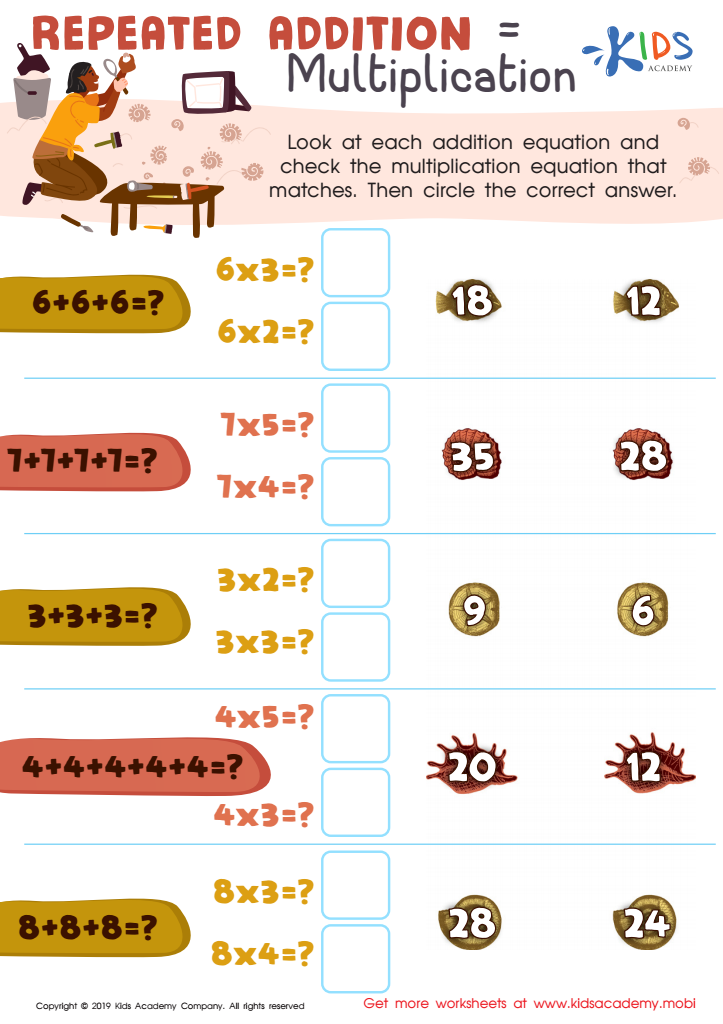
Repeated Addition = Multiplication Worksheet
 Assign to My Students

Landforms: Pirate Maze Printable
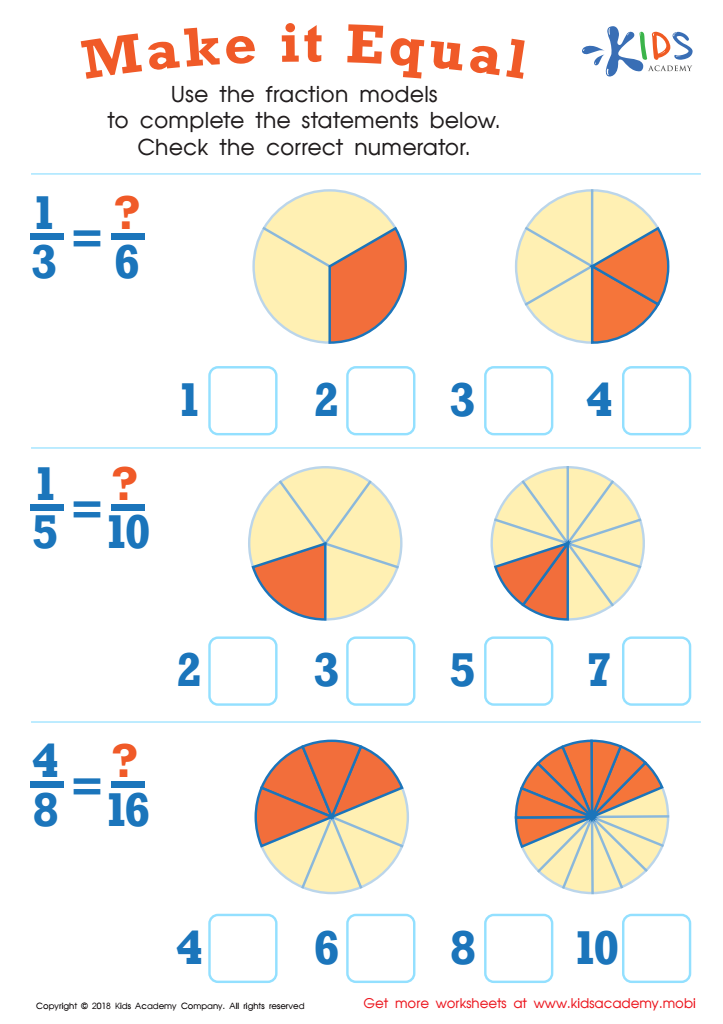
Make It Equal Worksheet
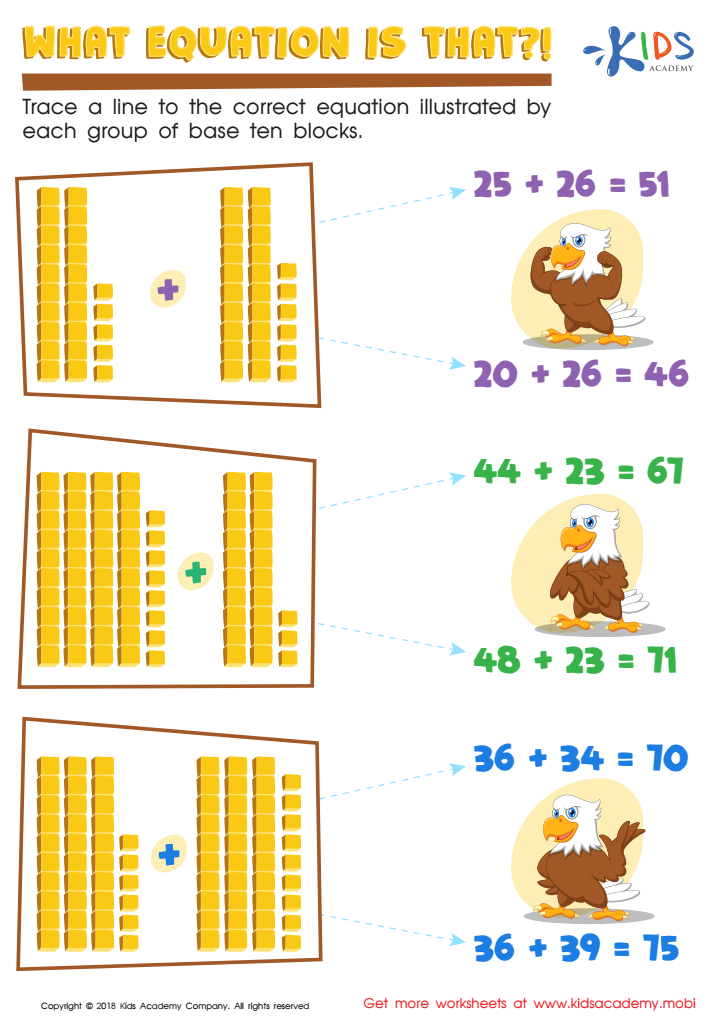
What Equation Is That? Worksheet








Developing problem-solving abilities in children aged 4-9 is crucial for their overall growth and future success. At this age, children are naturally curious and eager to explore their environments. By nurturing their problem-solving skills, parents and teachers enable them to ask questions, think critically, and create effective solutions in various situations. These skills foster independence and resilience, allowing children to tackle challenges rather than shy away from them.
Problem-solving opportunities can arise in everyday interactions, whether it’s figuring out how to share a toy or navigating a new game. Addressing these moments helps children learn to analyze their choices and understand the consequences, laying the groundwork for sound decision-making.
Furthermore, strong problem-solving abilities enhance academic performance. Children who can think critically and approach problems creatively find it easier to grasp complex concepts and excel in subjects like math and science. Emotionally, problem-solving builds confidence and self-esteem, encouraging kids to view mistakes as learning opportunities instead of setbacks.
In summary, fostering problem-solving skills in young children is vital for their emotional and cognitive development, paving the way for lifelong learning and adaptability in an ever-changing world.








