Fine motor development Normal Worksheets for Ages 4-9
4 filtered results
-
From - To
At Kids Academy, our Fine Motor Development Worksheets for ages 4-9 are carefully designed to enhance your child's dexterity, control, and coordination. These printable activities provide enjoyable, hands-on experiences that boost critical fine motor skills necessary for handwriting, dressing, and other everyday tasks. From tracing and cutting to more complex tasks, our worksheets grow with your child’s abilities, making learning both progressive and fun. Each exercise not only fosters physical development but also encourages cognitive growth, ensuring a well-rounded foundation for future success in school and life. Start your child’s journey to fine motor mastery with Kids Academy today!
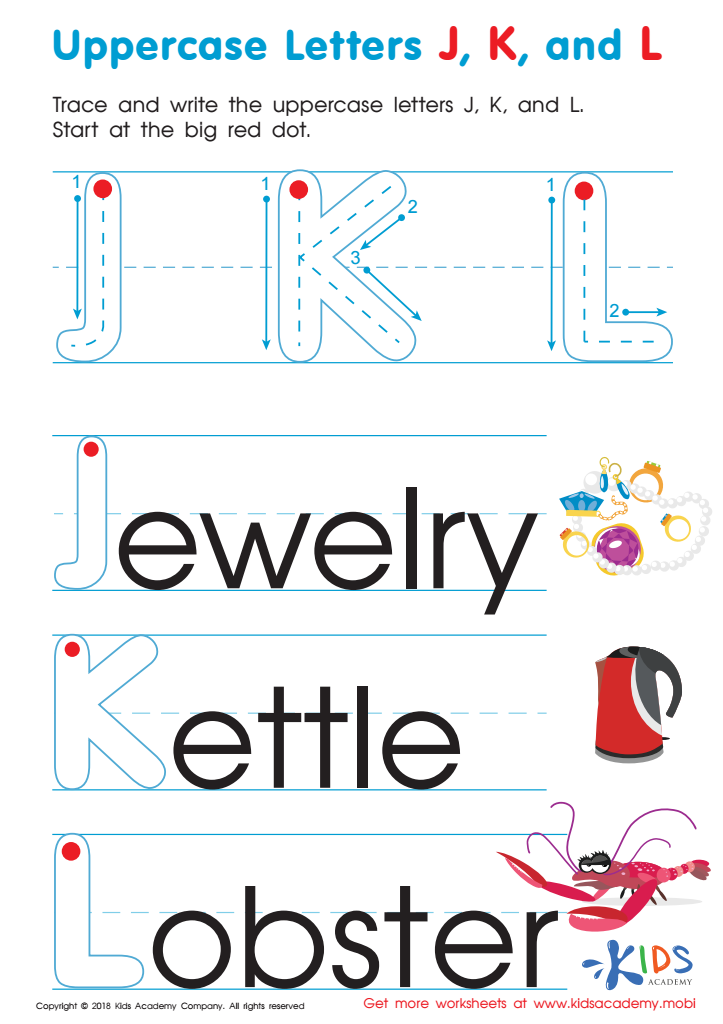
Uppercase Letters J, K, and L Worksheet
 Assign to My Students
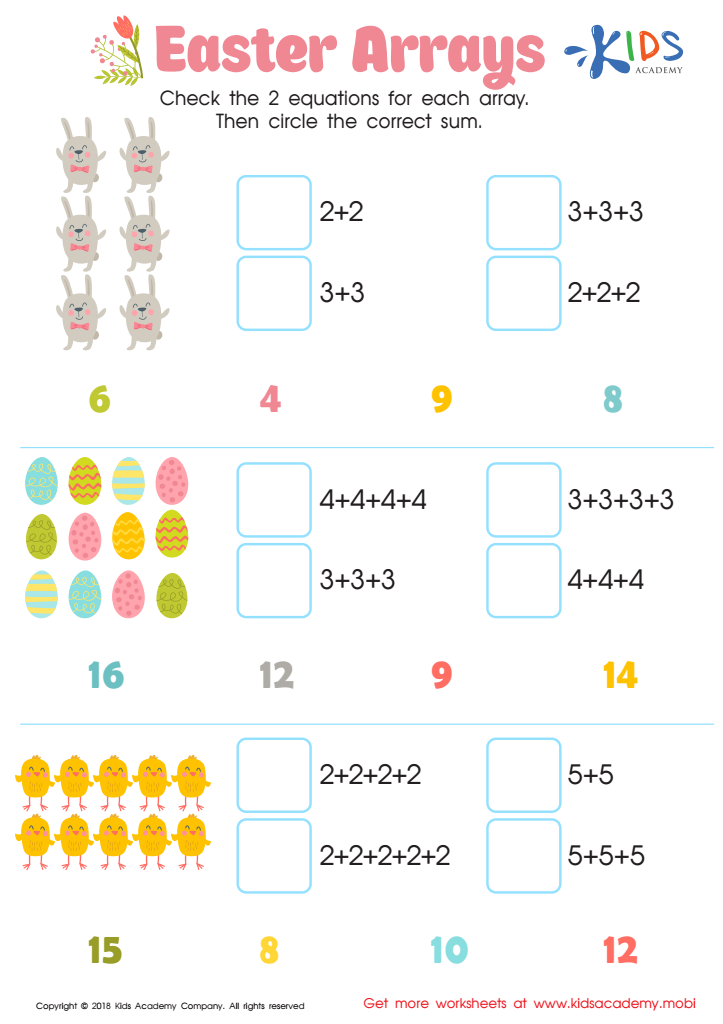
Easter Arrays Worksheet

Check Bingo Worksheet
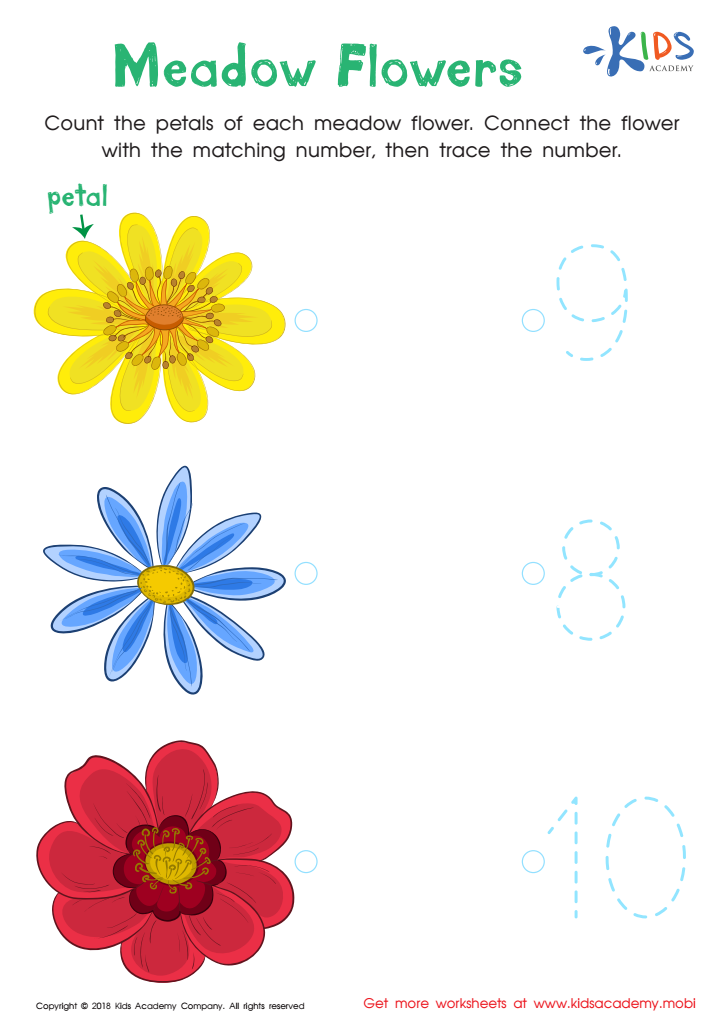
Kindergarten Number Tracing: Medow Flowers Worksheet








Fine motor development is crucial for children aged 4-9 as it directly impacts their ability to perform essential tasks and fosters overall development. At this stage, children are refining their hand-eye coordination, dexterity, and control over small muscles in their fingers, hands, and wrists. Tasks such as writing, buttoning clothes, tying shoelaces, and using utensils are all dependent on fine motor skills. Successful execution of these tasks not only promotes independence but also builds children's confidence and self-esteem.
Furthermore, fine motor skills are foundational for academic success. Proficiency in handwriting, for example, improves legibility and speed, which are essential for note-taking and completing assignments efficiently. Engaging in activities like drawing, cutting with scissors, and manipulating small objects enhances cognitive development by reinforcing concepts such as shapes, numbers, and spatial relationships.
Moreover, fine motor development is intertwined with social and emotional growth. Skills such as coloring within lines or building intricate LEGO structures can promote patience, concentration, and perseverance. Parents and teachers who actively support fine motor skill development foster a positive learning environment, helping children experience success across different areas. Simple activities like playing with clay, threading beads, and providing hands-on learning opportunities can make a significant difference in a child’s developmental trajectory.








