
Logical reasoning development Normal Worksheets for Ages 4-9
3 filtered results
Difficulty Level
Grade
Age
-
From - To
Subject
Activity
Standards
Enhance your child's logical reasoning skills with our engaging worksheets designed for ages 4-9! Our selection of normal worksheets focuses on critical thinking and problem-solving strategies, helping young learners develop essential reasoning abilities. Each worksheet features a variety of fun and interactive exercises that encourage children to analyze patterns, solve puzzles, and make connections. Perfect for home learning or as supplementary practice in the classroom, these worksheets foster curiosity and promote cognitive growth. Whether your child is starting to explore logical concepts or refining their skills, our resources provide an enjoyable path to mastering logical reasoning. Encourage a love of learning today!
Favorites
With answer key
Interactive
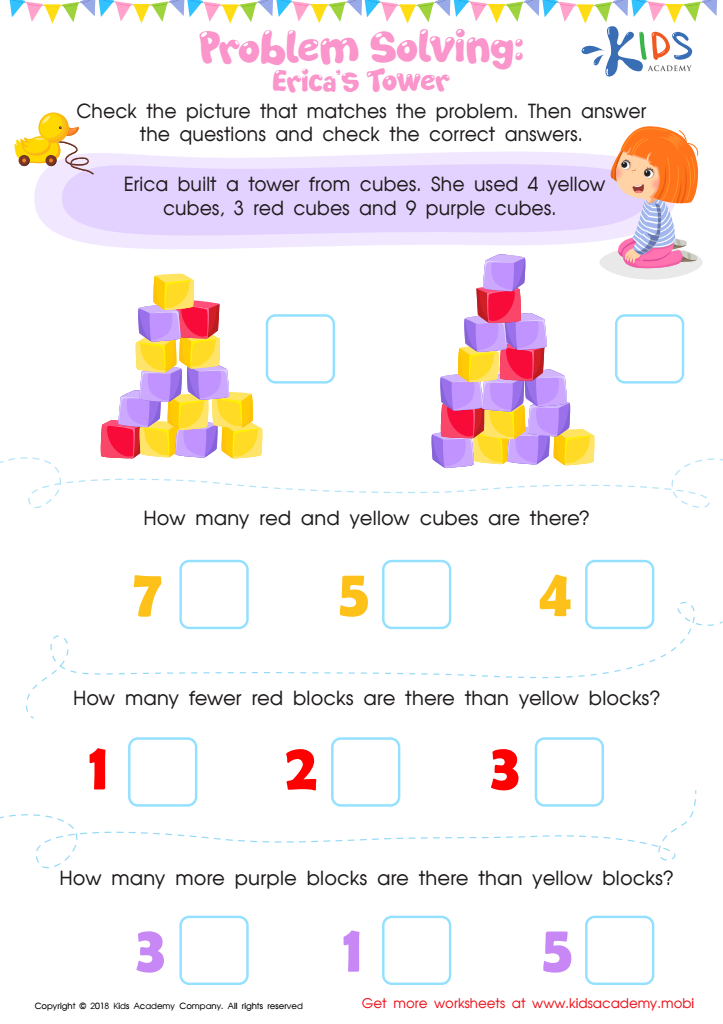
Problem Solving: Erica's Tower Worksheet
Sweet Erica needs your math student's help! Download the PDF worksheet and have your little math whiz read the word problems, match the pictures and solve basic addition/subtraction problems with two/three addends, minuends and subtrahends. They'll be having fun while strengthening their math fact skills!
 Assign to My Students
Problem Solving: Erica's Tower Worksheet
Worksheet
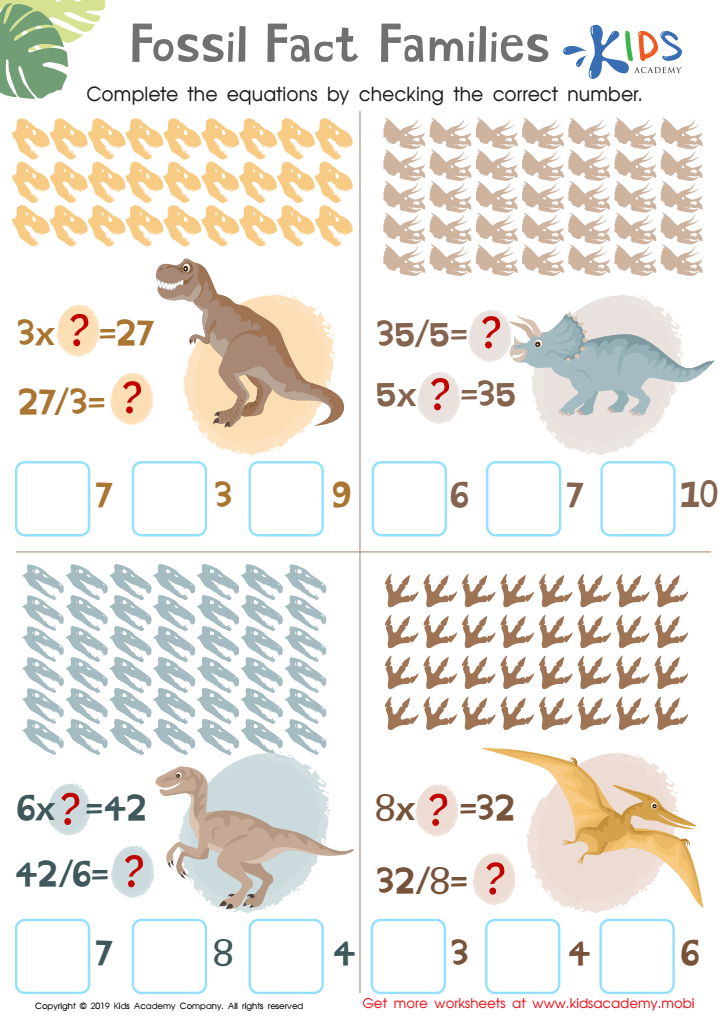
Fossil Fact Families Worksheet
Kids love dinosaurs, so why not learn about fact families with some fun prehistoric friends? This PDF worksheet uses picture arrays to help kids understand the relationships between multipliers and dividends. It helps them build automaticity with multiplication facts so they can quickly solve division problems and see the relationships between the two fact families.
Fossil Fact Families Worksheet
Worksheet
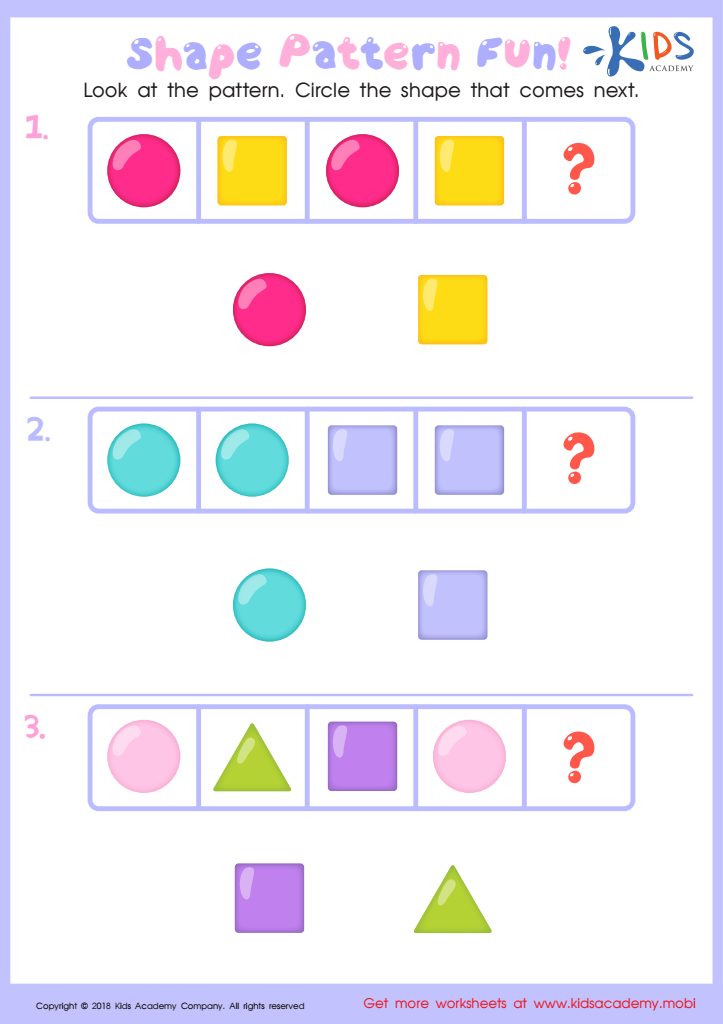
Shape Pattern Fun Worksheet
Challenge your kids to look at the pictures and identify colors, shapes and patterns. Ask them to circle the shapes that follow the sequence. See if they can spot the pattern and stick to it!
Shape Pattern Fun Worksheet
Worksheet
Join Kids Academy for Free
Who is primarily going to use this learning content?




.jpg)



Logical reasoning development in children aged 4-9 is crucial for several reasons. At this formative stage, children start to build foundational cognitive skills that support their ability to think critically, solve problems, and make decisions. Logical reasoning fosters a child’s ability to understand cause-and-effect relationships, which is crucial not only in academic settings but also in everyday life.
Parents and teachers should prioritize logical reasoning as it lays the groundwork for more advanced reasoning skills needed in mathematics, science, and reading comprehension. Through structured play, discussions, and activities that encourage questioning and exploration, children can develop these skills naturally.
Moreover, strong logical reasoning abilities contribute to a child’s emotional and social development. They help children negotiate challenges, understand different perspectives, and navigate complex social situations. In turn, this fosters resilience and adaptability – essential skills in our rapidly changing world.
By supporting logical reasoning development early on, parents and teachers equip children with the tools they need to succeed academically and socially, nurturing lifelong learners who can engage thoughtfully with the world around them. Investing in logical reasoning now has far-reaching implications for children’s future achievements and well-being.








