Map reading Normal Worksheets for Ages 4-9
3 filtered results
-
From - To
Our Map Reading Normal Worksheets for ages 4-9 provide an engaging introduction to essential map reading skills. Designed to captivate young learners, these worksheets cover fundamental concepts such as identifying landmarks, understanding directions, and using simple grids and legends. Perfect for early grade students, our materials not only boost cognitive skills but also foster an adventurous spirit through fun activities and colorful illustrations. Empower your child with geographical knowledge that will ignite their curiosity about the world around them. Download today to unlock a treasure trove of educational adventures tailored specifically for kids aged 4-9!
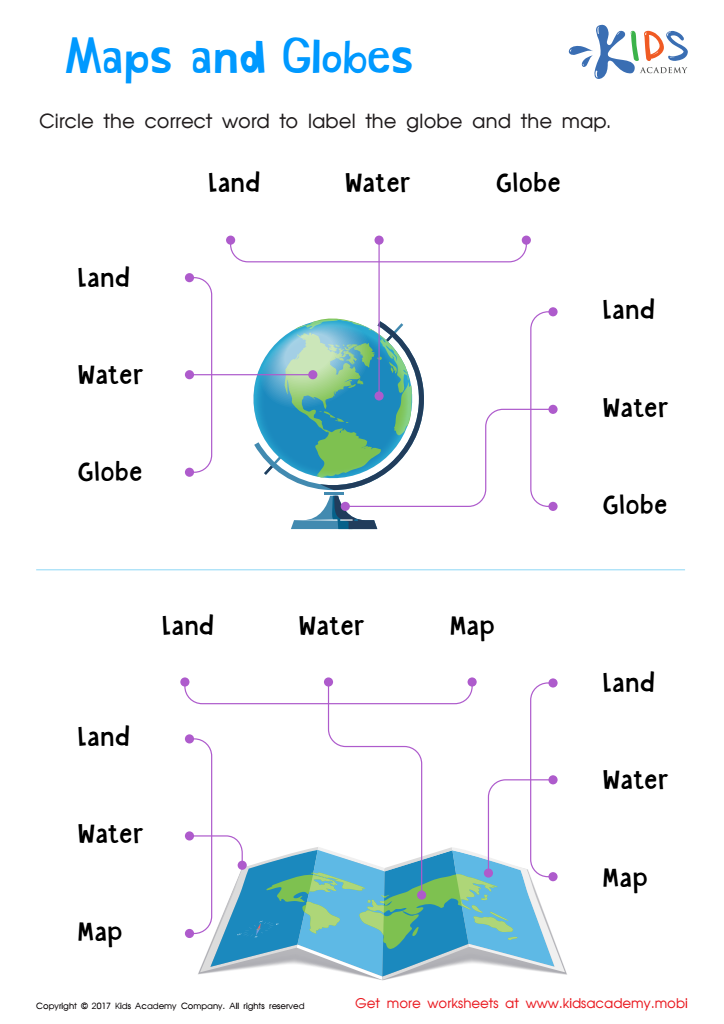
 Assign to My Students
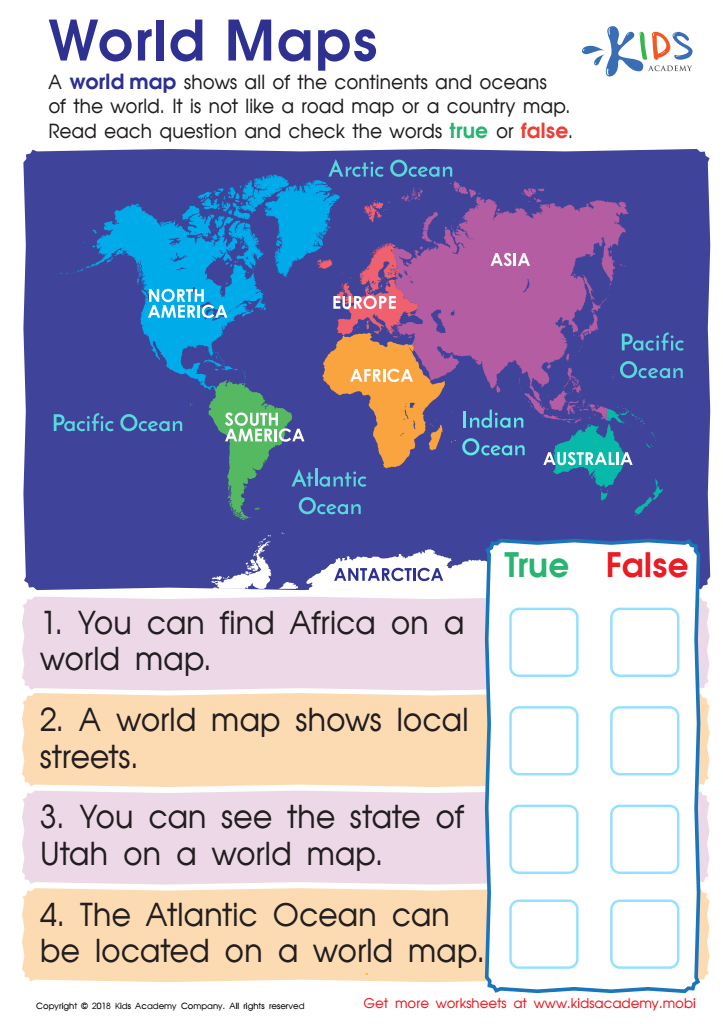
World Maps Worksheet
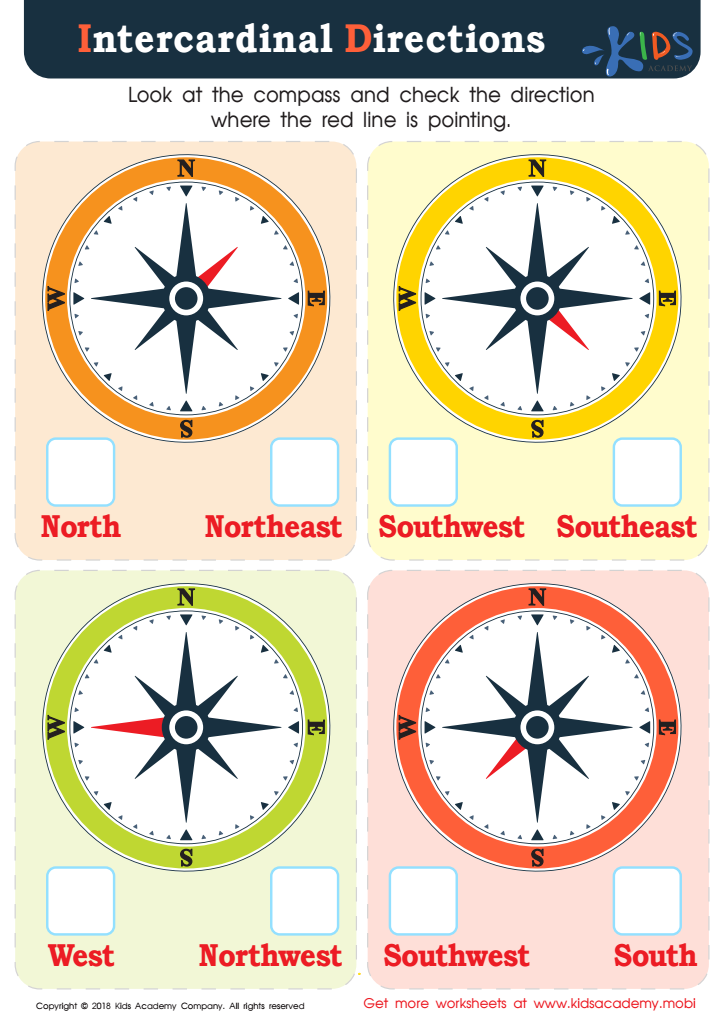
Intercardinal Directions Worksheet







Map reading is an essential skill that cultivates spatial awareness, critical thinking, and problem-solving abilities in young children. For ages 4-9, this seemingly basic activity can significantly impact cognitive development. When children learn to read maps, they are effectively engaging in decoding symbols and understanding relationships between locations, which enhances their ability to think abstractly.
Parents and teachers supporting map-reading skills provide youngsters with a sense of direction and improve their geographical knowledge, making them more aware of the world around them. Additionally, map reading integrates beautifully with subjects like math (understanding scales and distances) and literacy (interpreting map legends and labels), thus bolstering interdisciplinary learning.
Moreover, in an age dominated by digital navigation, proficiency in traditional map reading ensures that children develop a balanced, holistic picture of navigation and geography. The practical applications extend beyond academic pursuits; map reading fosters independence and confidence in young children, enabling them to navigate new environments, whether on a family hike, at a theme park, or in unfamiliar cities.
For ages 4-9, early map reading experiences become building blocks for advanced cognitive processes. The joy of discovery and the sense of accomplishment derived from accurately navigating a map can inspire lifelong curiosity and explorative learning. Thus, integrating map reading into early education benefits children's cognitive and practical development immensely.








