
Noun identification Normal Worksheets for Ages 4-9
4 filtered results
Difficulty Level
Grade
Age
-
From - To
Subject
Activity
Standards
Discover engaging Noun Identification Normal Worksheets designed for children ages 4-9! These worksheets, suitable for early learners, provide a fun and interactive way to grasp the concept of nouns. Children will differentiate between people, places, and things through exciting activities that incorporate colorful images and relatable examples. Ideal for both home and classroom use, these worksheets support literacy development and enhance vocabulary skills. With varied exercises, your child will practice identifying nouns, fostering a strong foundation for their language journey. Download our printable worksheets today and inspire a love of learning in your young ones while they master noun identification!
Favorites
With answer key
Interactive
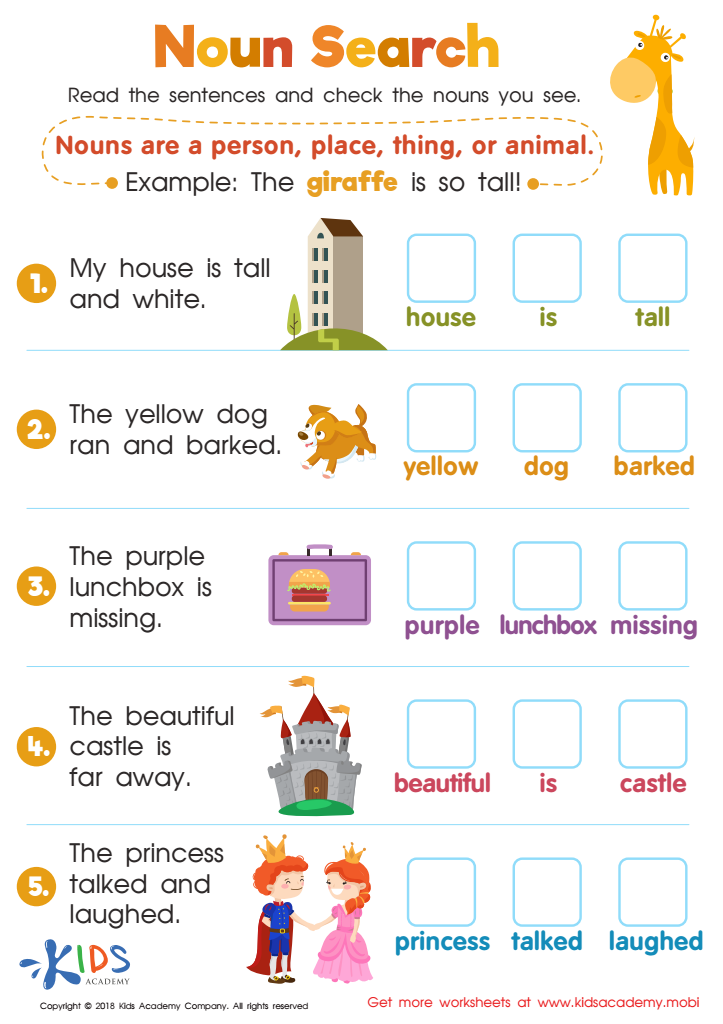
Noun Search Worksheet
Ask your kids what a noun is. If needed, remind them a noun is a name for a person, animal, place or thing. Give examples like 'dog', 'Sara', 'USA' and 'book'. Ask for more examples, then read the sentences in this worksheet and ask kids to check for nouns.
 Assign to My Students
Noun Search Worksheet
Worksheet
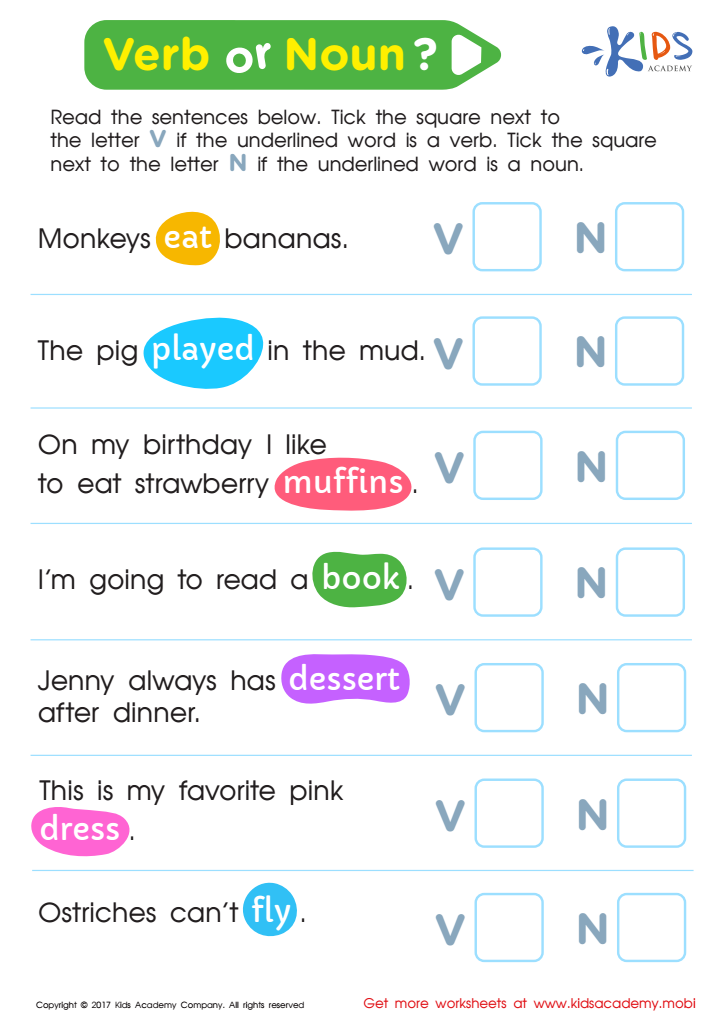
Verb or Noun Worksheet
This worksheet will help your child identify verbs and nouns quickly. With colorful highlights and simple sentences, they'll master parts of speech in no time! Get ahead of the game with this incredible worksheet.
Verb or Noun Worksheet
Worksheet
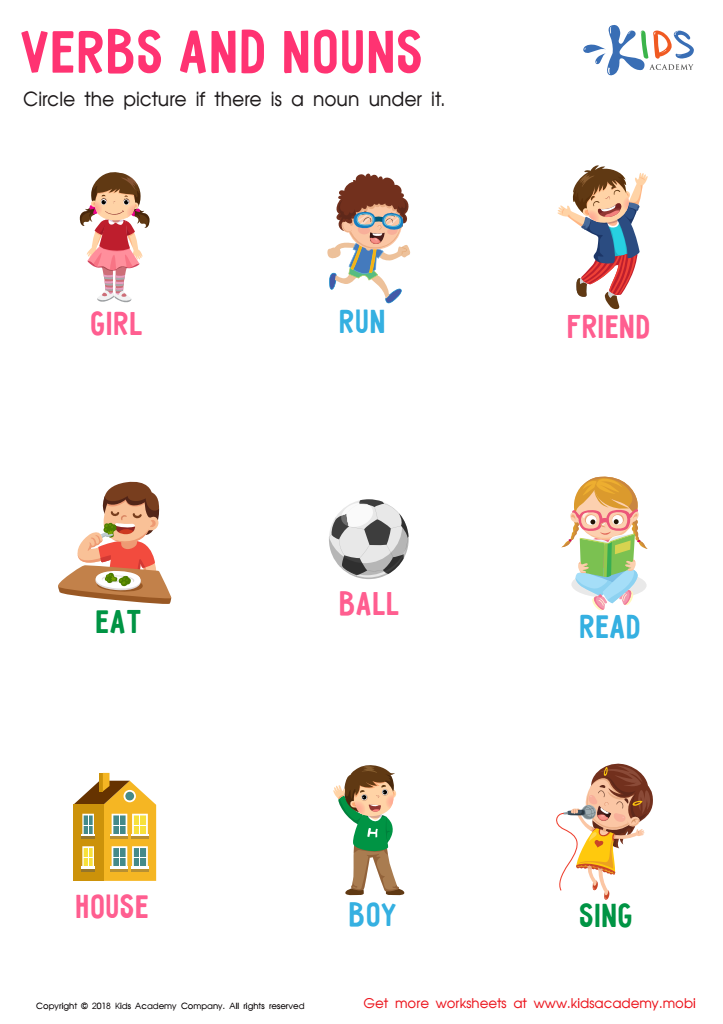
Verbs and Nouns Worksheet
Your child should have basic knowledge of verbs and nouns before starting this worksheet. Go through it with them and ask them to circle the pictures with nouns under them. This way, they'll become more familiar with parts of speech.
Verbs and Nouns Worksheet
Worksheet
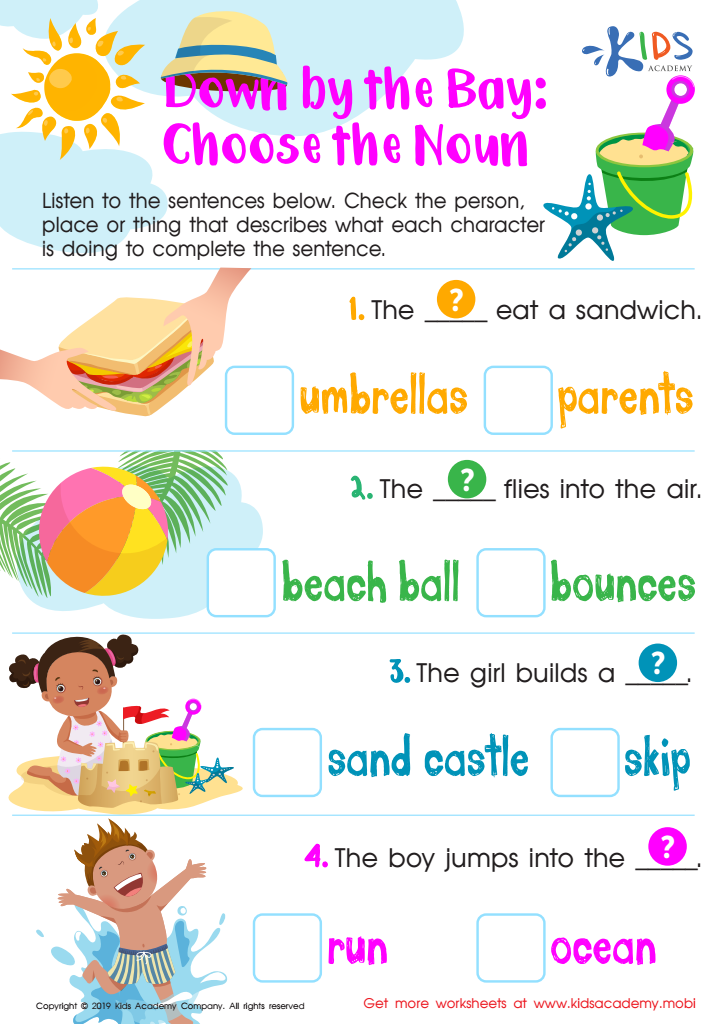
Down by the Bay: Choose the Noun Worksheet
Teach your child the basics of speaking and constructing English, like the parts of speech. Nouns are especially important; they are names of people, animals, objects, places, or things. Go through this worksheet with your kids and have them identify the nouns in the sentences. This exercise will help them understand the concept better.
Down by the Bay: Choose the Noun Worksheet
Worksheet
Join Kids Academy for Free
Who is primarily going to use this learning content?




.jpg)


Noun identification is a fundamental skill for children aged 4-9, as it lays the groundwork for effective communication and literacy development. Understanding nouns — words that name people, places, things, or ideas — is essential for language acquisition. Mastery of this concept enables children to begin crafting meaningful sentences and expressing themselves clearly.
Parents and teachers should prioritize noun identification because it plays a vital role in vocabulary expansion. A rich vocabulary enhances comprehension, which is critical for academic success across subjects. When children can identify nouns in their reading and writing, they become more adept at making sense of texts, facilitating better learning outcomes.
Furthermore, recognizing different types of nouns (common, proper, collective) fosters critical thinking and categorization skills. These skills are not only pivotal in language arts but also in math, science, and social studies, where identifying and classifying objects and concepts is frequently required.
Engaging children in interactive activities that promote noun identification, such as games, storytelling, and visual aids, makes learning fun and memorable. By investing in this foundational skill, parents and teachers empower children to become confident communicators and lifelong learners, steering them toward a brighter academic future.








