Phonics skills development Normal Worksheets for Ages 4-9
6 filtered results
-
From - To
Enhance your child's reading foundation with our "Phonics Skills Development Normal Worksheets" designed for ages 4-9. These engaging and educational worksheets are tailored to improve essential phonics skills, including sound recognition, letter blending, and word decoding. Focused on fun and interactive learning, our resources foster a love for reading while building confidence in young learners. Each worksheet encourages practice through diverse activities, ensuring children stay motivated and excited about their phonics journey. Perfect for home or classroom use, these thoughtfully crafted worksheets will set your child on the path to phonetic mastery and lifelong literacy success!
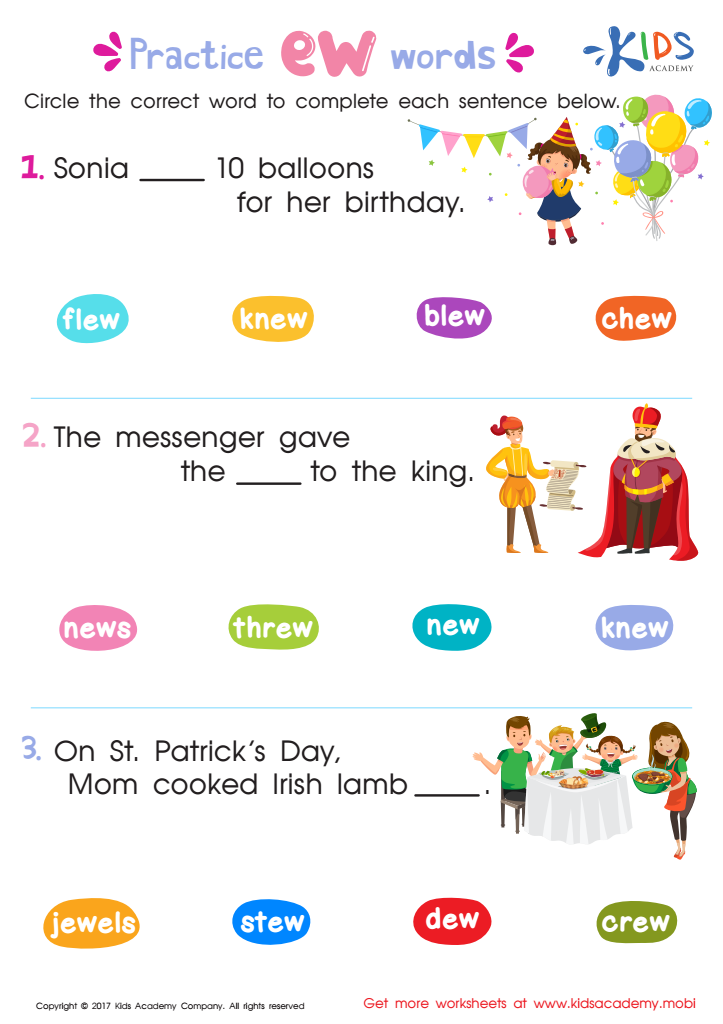
EW Words Worksheet
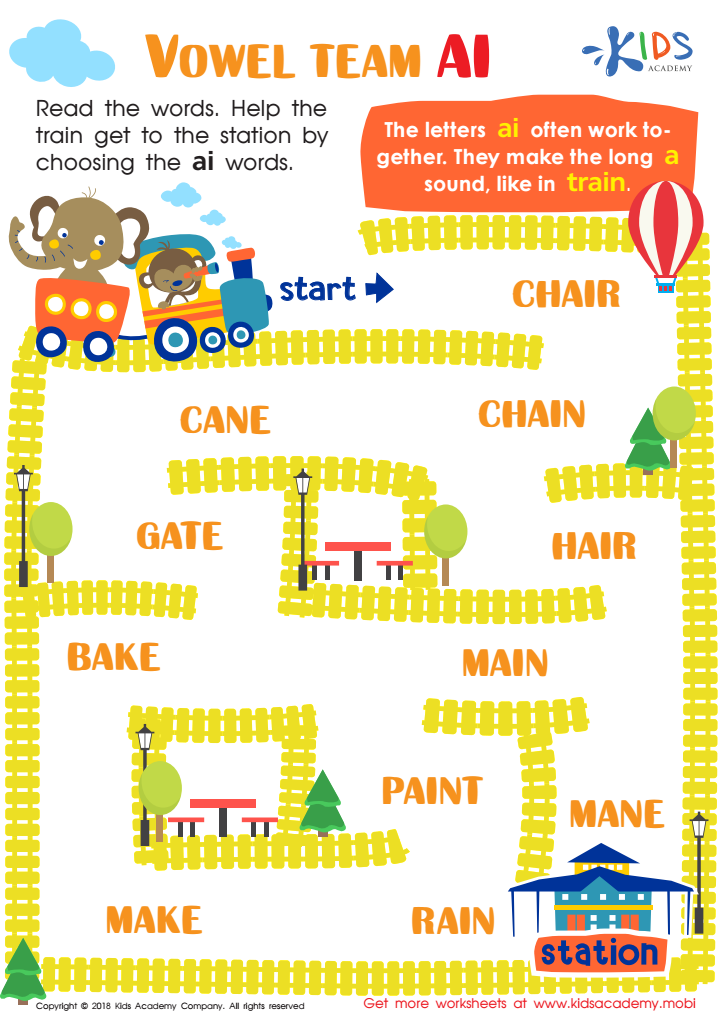
Vowel team ai Worksheet
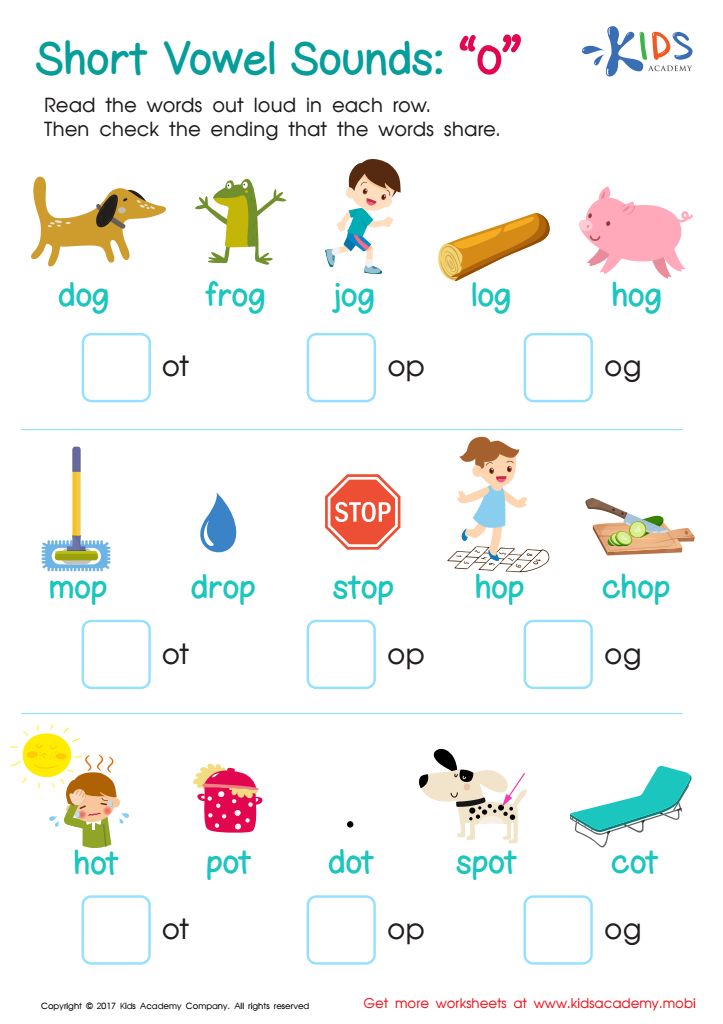
Short vowel Sounds "o" Spelling Worksheet
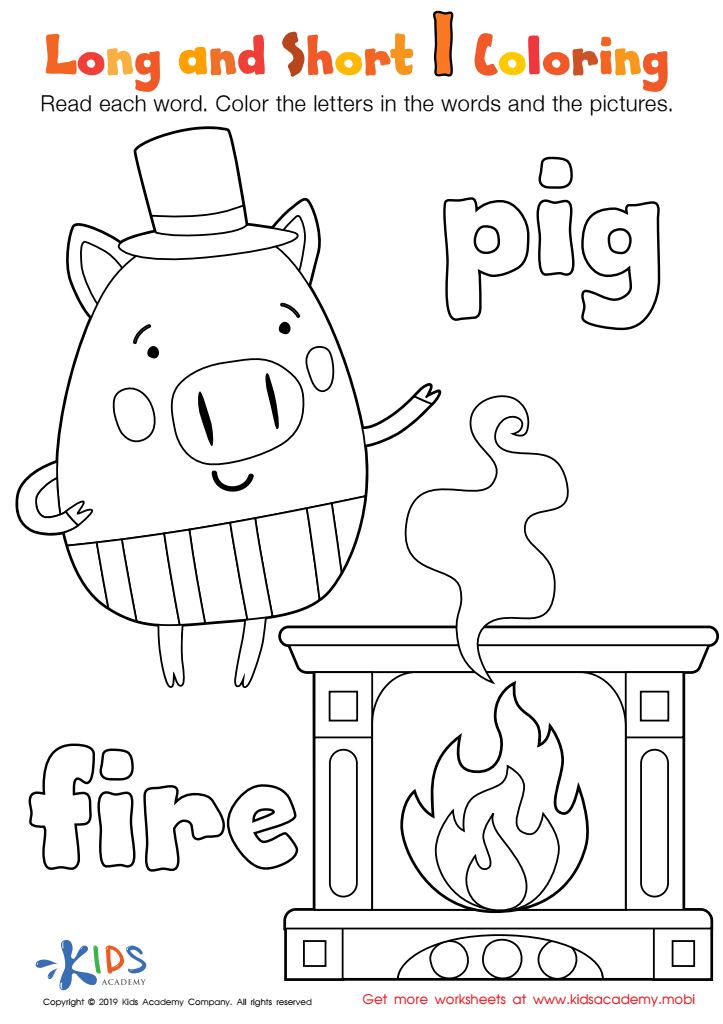
Long and Short I Worksheet
 Assign to My Students
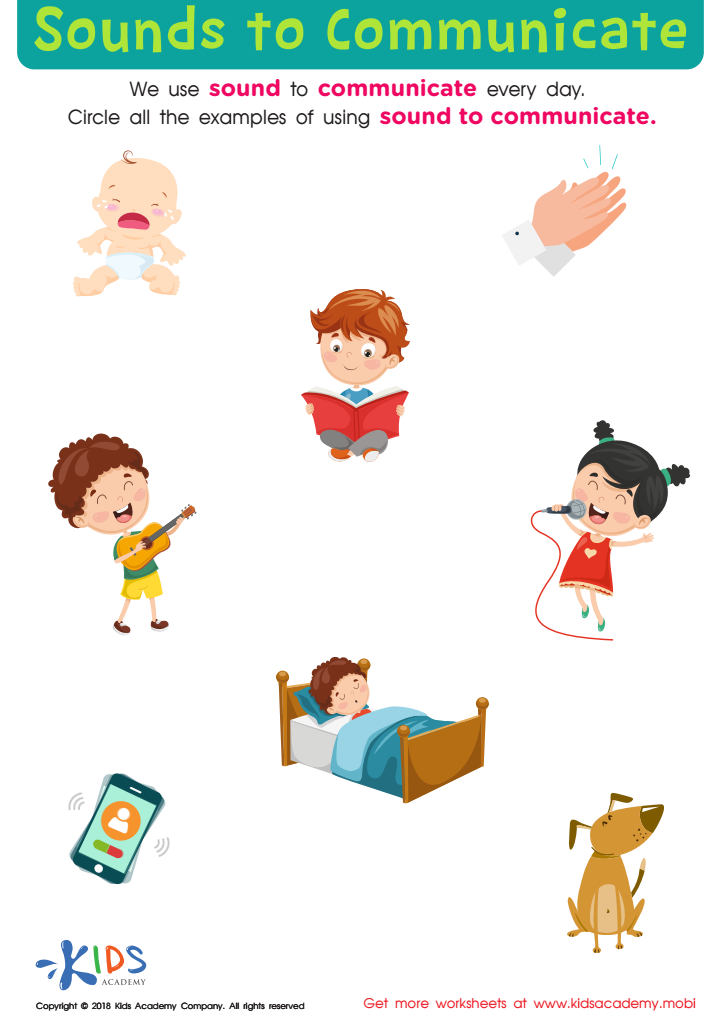
Sounds to Communicate Worksheet
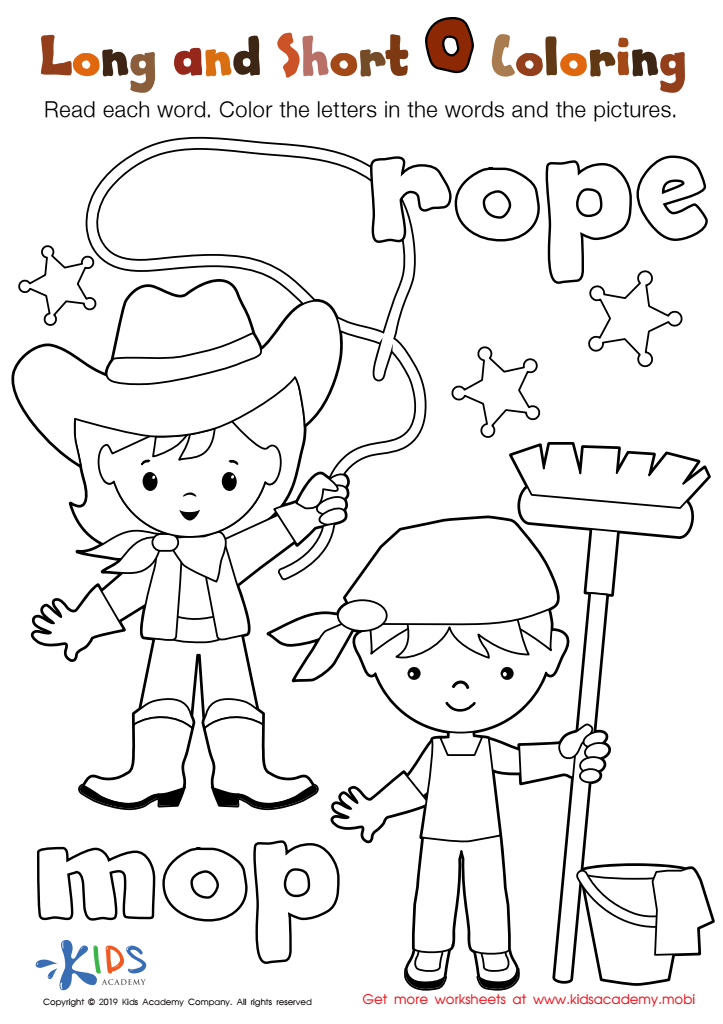
Long and Short O Worksheet
Assign to My Students






Phonics skills development is crucial for children aged 4-9, as it serves as the foundation for reading and literacy. This age group is typically when children begin to decode words, understanding the relationship between letters and sounds. When parents and teachers prioritize phonics instruction, they empower children to read independently, which boosts their confidence and motivation to learn.
Research indicates that proficient phonics skills can lead to improved reading comprehension, as children are better equipped to tackle unfamiliar words. Early reading competency is linked to academic success across all subjects, illustrating the far-reaching impact of effective phonics instruction. Furthermore, when children struggle with phonics, they may develop negative attitudes towards reading, which can hinder their overall educational progress.
Parents and teachers can foster a positive learning experience by engaging children in phonics-related activities, such as rhyming games and sound recognition exercises. This development also promotes essential cognitive skills, including critical thinking and problem-solving. Ultimately, prioritizing phonics mastery has long-term benefits, equipping children not only with fundamental literacy skills but also with a love for reading that can last a lifetime. Therefore, it's imperative for parents and educators to invest time and resources into developing phonics skills in young learners.








