Reading Skills Normal Worksheets for Ages 4-9 - Page 2
25 filtered results
-
From - To
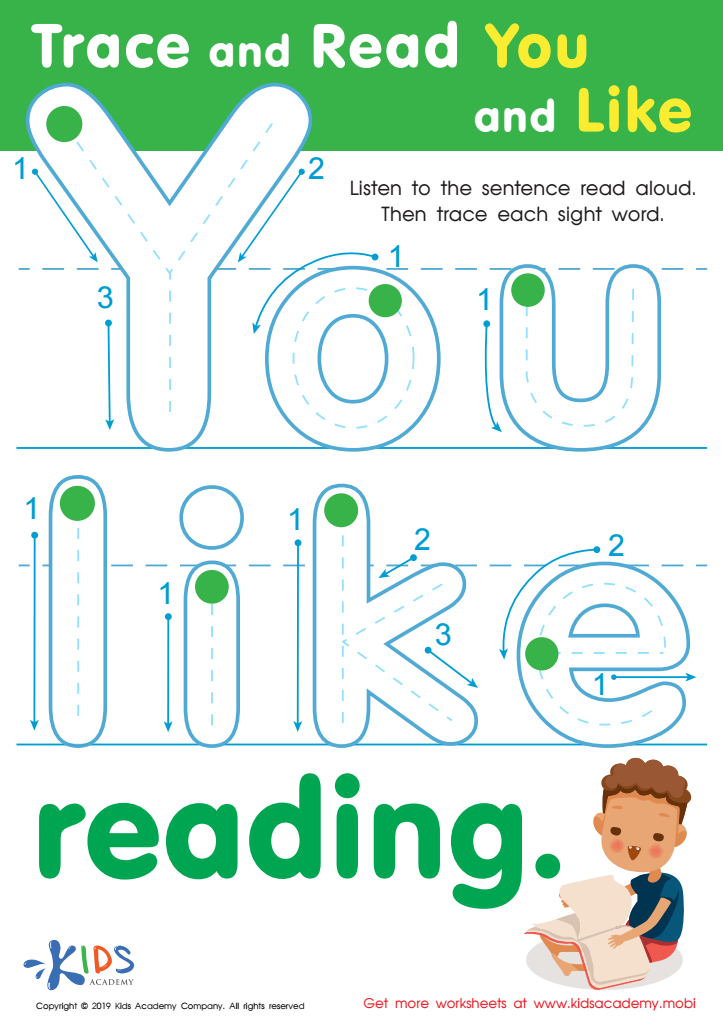
Trace Read You Like Worksheet
 Assign to My Students








Reading skills are fundamental for children aged 4-9 because these are the crucial years when foundational literacy is established, which directly influences future academic success and lifelong learning. This period, known as the "window of opportunity," is when children's brains are highly receptive to new language skills, making it easier for them to absorb vocabulary, phonics, comprehension, and fluency.
Parents and teachers play a critical role in nurturing these skills. Strong reading abilities form the cornerstone of all learning; without it, children may struggle in subjects across the board, as reading proficiency is required in science, math, and social studies. Moreover, early reading skills are correlated with better social and communication skills, enabling children to express themselves more clearly and understand others effectively.
Engaging with books increases children's curiosity, imagination, and critical thinking. It also fosters a love for learning that extends beyond the classroom. For young minds, reading cultivates focus, patience, and discipline.
Inadequate reading skills at an early age can lead to long-term academic challenges and decreased self-esteem. By prioritizing reading, parents and teachers not only help children perform better academically but also equip them with essential life skills and a passion for lifelong learning. Therefore, ensuring children achieve normal reading skills between ages 4-9 is fundamental for their overall development and future success.








