Sight words recognition Normal Worksheets for Ages 4-9
4 filtered results
-
From - To
Unlock the power of reading with our Sight Words Recognition Normal Worksheets, designed for children aged 4 to 9. These engaging, interactive worksheets help young learners recognize and master essential sight words, paving the way for successful reading skills. Each worksheet features age-appropriate activities that promote word recognition, comprehension, and vocabulary development through fun exercises. Perfect for classroom teachers or home-schooling parents, our resources create a vibrant learning experience, encouraging children to grow their confidence in reading. Explore our collection today to help your child flourish in literacy and establish a solid foundation for their educational journey!
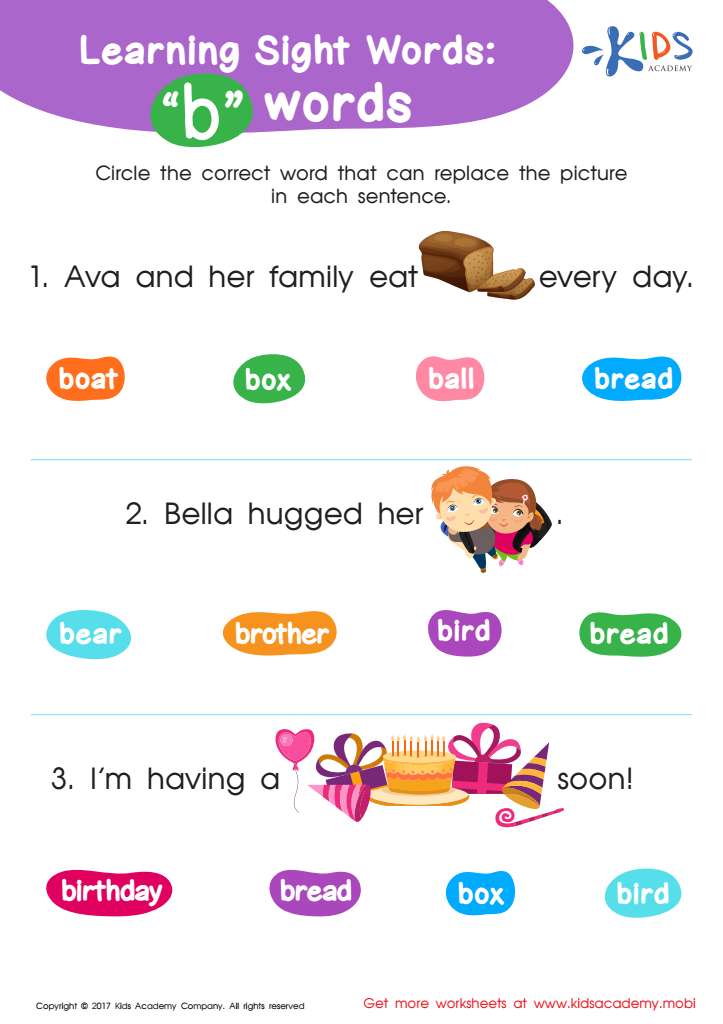
Sight Words Free Worksheet – B Words
 Assign to My Students
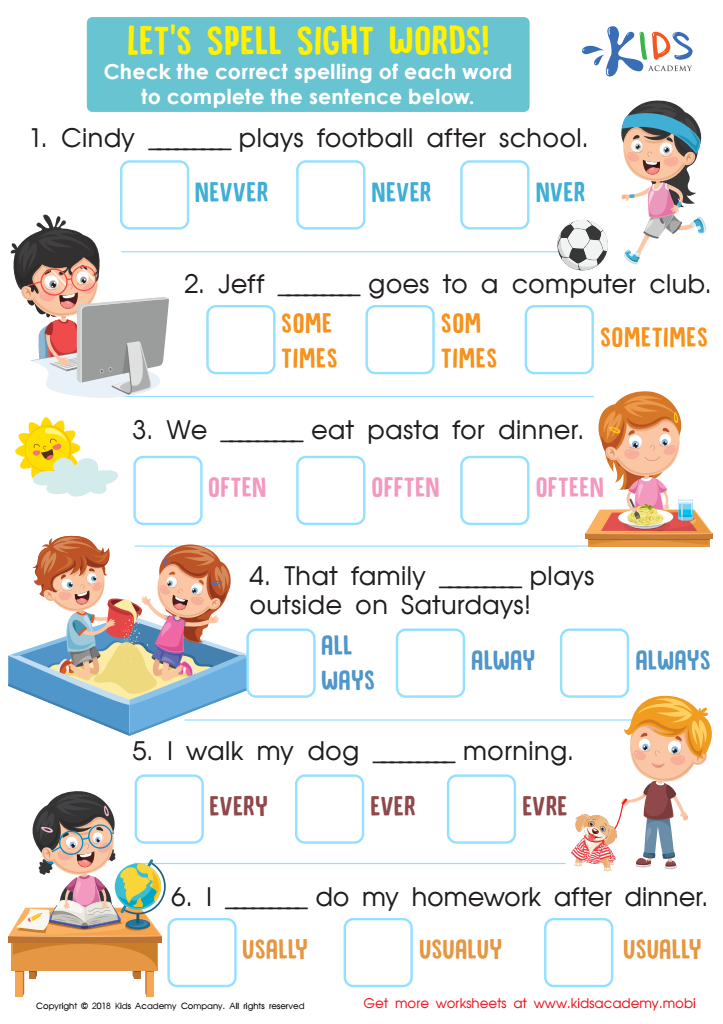
Let's Spell Sight Words Worksheet
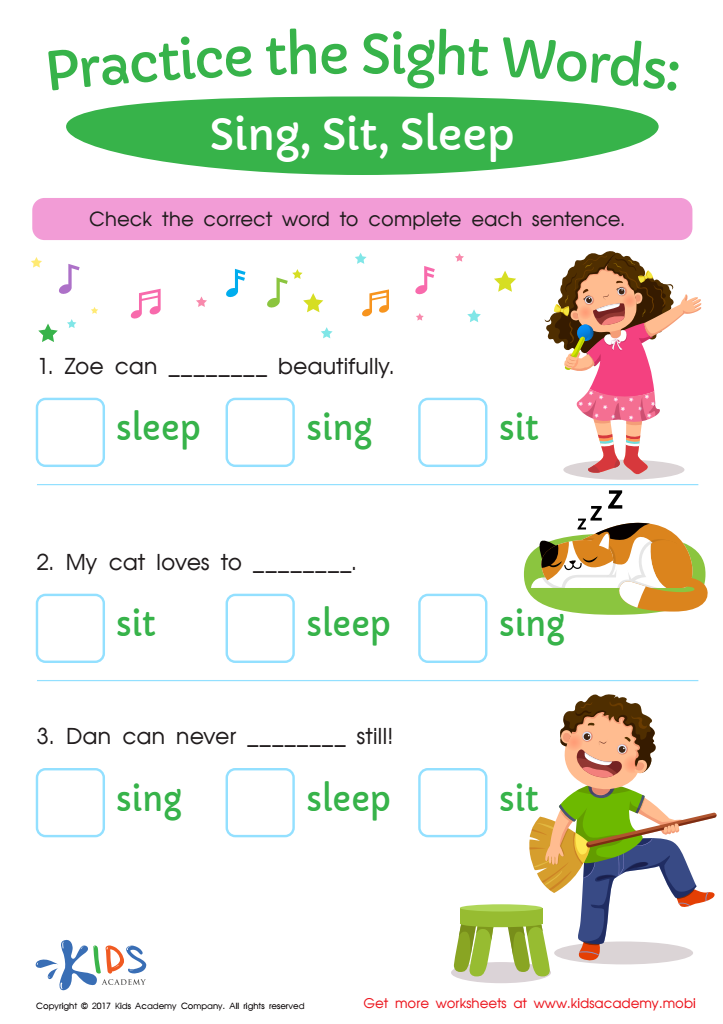
Sing, Sit, Sleep Sight Words Worksheet
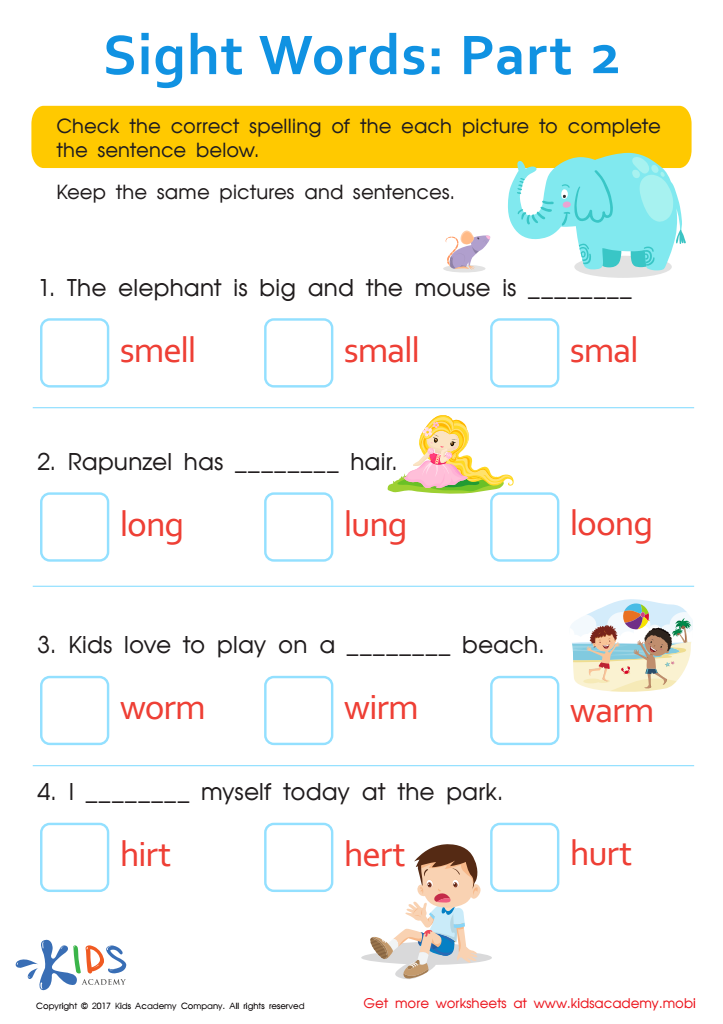
Sight Words Worksheet






Sight word recognition is crucial for children aged 4-9 as it lays the foundation for their reading skills and overall literacy development. Sight words are common words that readers are encouraged to recognize instantly, without needing to sound them out. Familiarity with these words boosts reading fluency, enabling children to transition from decoding individual letters and sounds to reading smoothly and confidently.
When parents and teachers prioritize sight word recognition, they not only enhance children's reading skills but also boost their comprehension and enjoyment of reading. Mastering sight words allows young readers to tackle age-appropriate texts independently, fostering a sense of achievement and motivation. This early success in reading can cultivate a lifelong love for literature and learning.
Additionally, sight word recognition provides essential support for language development. As children recognize and understand more words, their vocabulary expands, which enhances their ability to express ideas, engage in conversations, and succeed in school.
Involving parents in practice at home and integrating sight word activities in the classroom creates a connected learning environment, reinforcing the importance of reading. Consequently, investing effort into sight word recognition can significantly impact a child's academic journey, self-esteem, and lifelong skills.








