Understanding landforms Normal Worksheets for Ages 4-9
3 filtered results
-
From - To
Explore the fascinating world of landforms with our engaging and educational worksheets designed for children aged 4-9! These "Understanding Landforms" normal worksheets help young learners identify and differentiate various landforms like mountains, rivers, and plains. Each worksheet is interactive and visually appealing, making it perfect for home or classroom use. Ideal for developing essential geography skills, our materials encourage children to explore their surroundings and enhance their understanding of the earth's features. Start your child’s journey into earth science today and lay the foundation for a lifelong love of learning with our simple yet enriching activities!
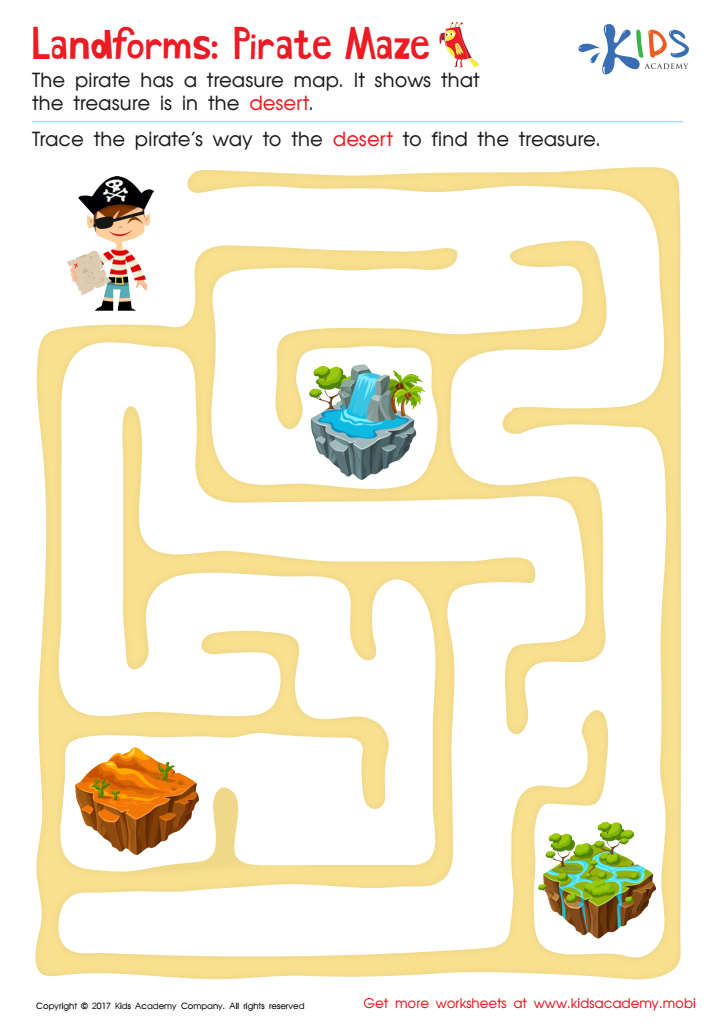
Landforms: Pirate Maze Printable
 Assign to My Students
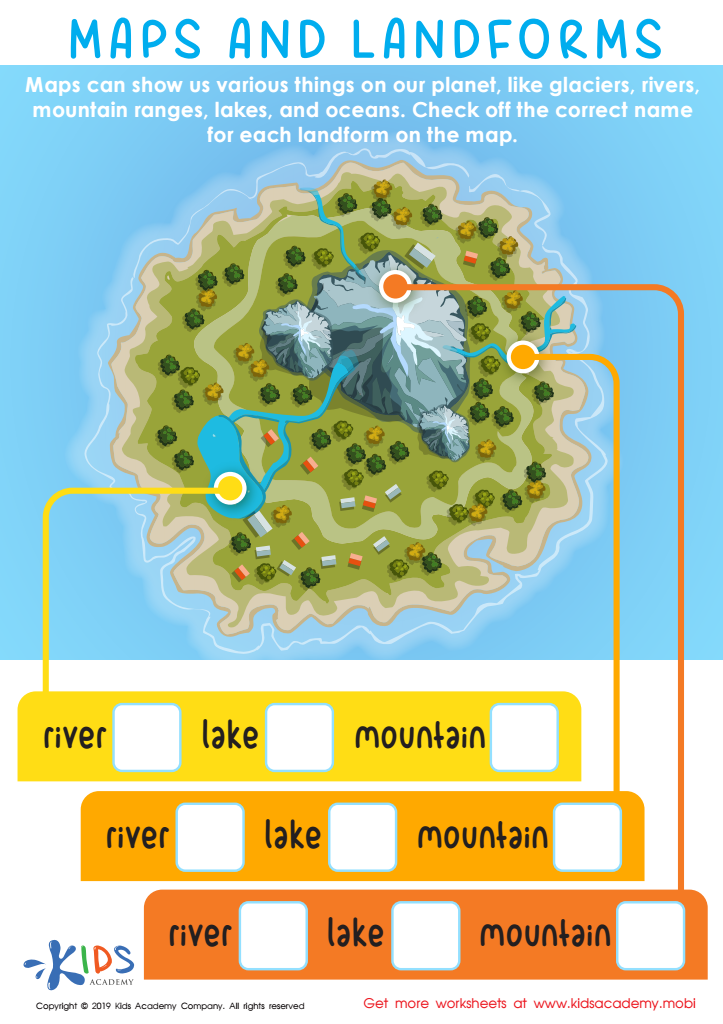
Maps and Landforms Worksheet
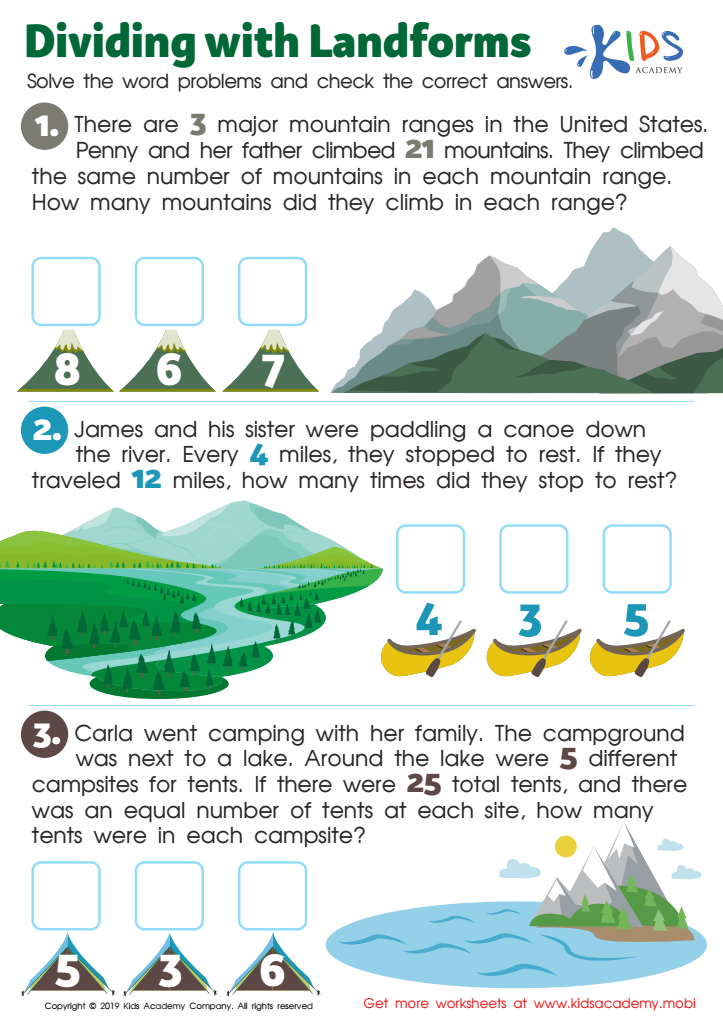
Dividing with Landforms






Understanding landforms is crucial for children aged 4 to 9 because it forms the foundation for their broader understanding of the world around them. When parents and teachers help kids learn about landforms, such as mountains, rivers, and valleys, they contribute to a child's cognitive development and curiosity. Knowledge of landforms enhances a child's ability to visualize their environment, promotes critical thinking, and encourages them to ask questions about nature and geography.
Additionally, engaging with landforms supports various skills, including observation, classification, and mapping, which are vital for science and geography education. Children often learn better through hands-on experiences; exploring local landforms or participating in nature walks can ignite an interest in the natural sciences.
Moreover, understanding landforms can foster environmental awareness and stewardship. Children learn how landforms impact habitats and ecosystems, instilling a sense of responsibility towards nature. Ultimately, by engaging with landforms, children not only enrich their knowledge but also develop a love for learning and exploration, laying the groundwork for informed global citizens in the future. Encouraging these explorations at a young age nurtures their imagination and broadens their horizons, making it essential for parents and teachers to prioritize this learning.








