Understanding perspectives Normal Worksheets for Ages 4-9
3 filtered results
-
From - To
Nurture empathy and critical thinking with our curated collection of Understanding Perspectives Worksheets for ages 4-9. At Kids Academy, we provide thoughtfully designed activities that help young learners grasp the concept of different viewpoints in everyday situations. These engaging, age-appropriate worksheets feature fun scenarios and relatable characters, fostering emotional intelligence and problem-solving skills. Perfect for the classroom or at-home learning, our tools encourage children to step into someone else’s shoes, promoting kindness, respect, and open-mindedness. Start your journey to understanding diverse perspectives with our trusted resources, ensuring your child’s social and cognitive growth. Visit Kids Academy today!
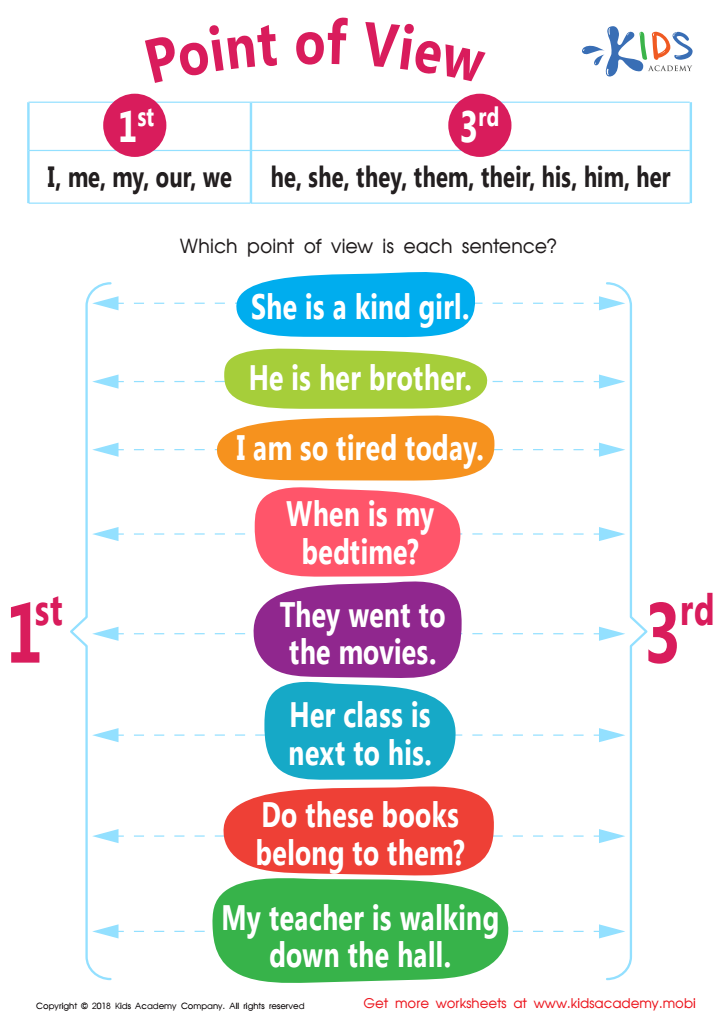
Point of View Worksheet
 Assign to My Students
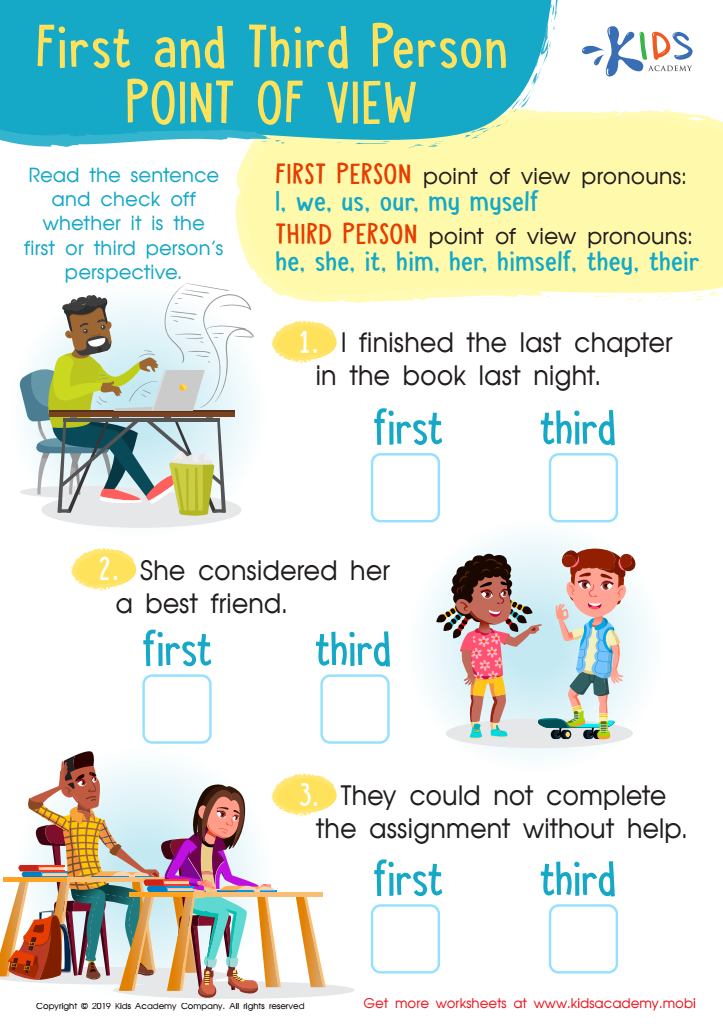
First and Third Person Point of View Worksheet
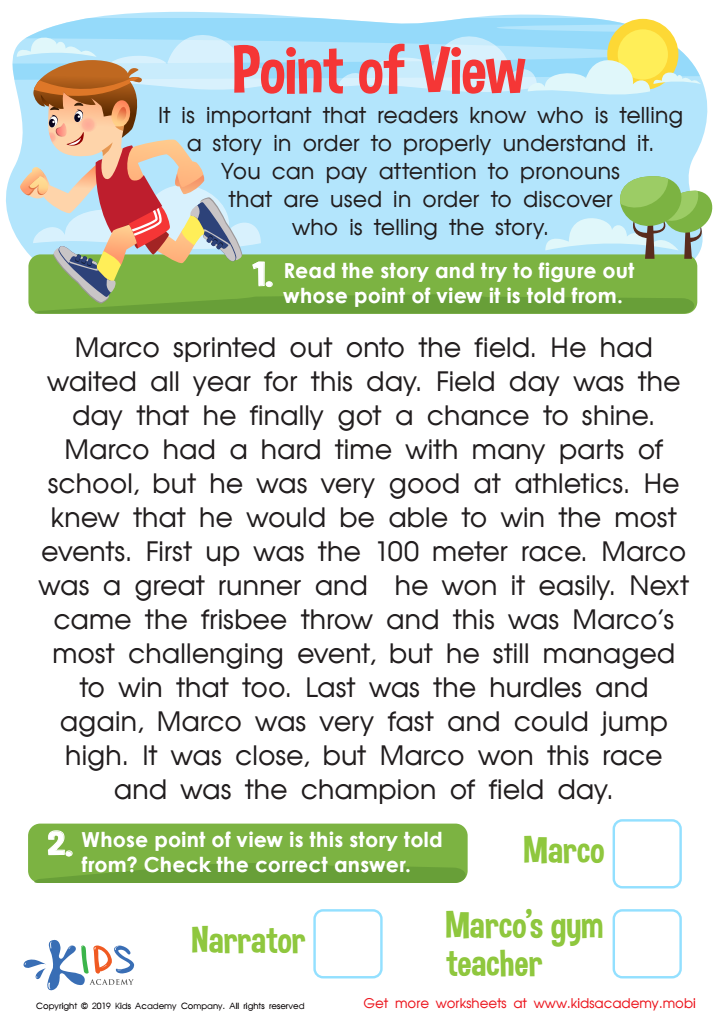
Point of View Worksheet








Understanding perspectives is crucial for children aged 4-9 as it lays the foundation for successful social and emotional development. During these formative years, kids begin to recognize that others have thoughts, feelings, and viewpoints different from their own. This recognition fosters empathy, a critical element for building healthy relationships and effective communication.
Empathy allows children to appreciate diverse experiences and resolves conflicts more harmoniously. When a child understands their friend’s perspective, for instance, they are more likely to share, cooperate, and offer comfort when needed. Consequently, this nurtures a more inclusive and supportive environment both at home and in school.
For teachers, incorporating lessons on perspective-taking can enhance classroom dynamics, promoting respect, and reducing incidences of bullying or exclusion. Equal importance lies in teaching self-awareness; when children grasp how their actions affect others, they become more mindful and considerate.
Parents who emphasize understanding perspectives help solidify these concepts outside of the classroom. Daily interactions become learning opportunities to encourage kids to express their feelings and consider those of others. This alignment between home and school settings accelerates a child’s ability to build strong, meaningful connections, crucial for their lifelong personal and academic success. Thus, fostering perspective-taking is indispensable.








