Understanding syllables Normal Worksheets for Ages 4-9
5 filtered results
-
From - To
Discover our “Understanding Syllables” worksheets, perfect for children aged 4-9. These engaging activities are designed to introduce young learners to the world of syllables, helping them break down words into small, manageable parts. Through vibrant visuals and interactive exercises, kids will learn to count, segment, and recognize syllables, enhancing their reading and spelling skills. Ideal for both classroom and home use, these worksheets make learning fun and effective. Boost your child's phonemic awareness and set a strong foundation for future literacy success with our expertly crafted “Understanding Syllables” normal worksheets.
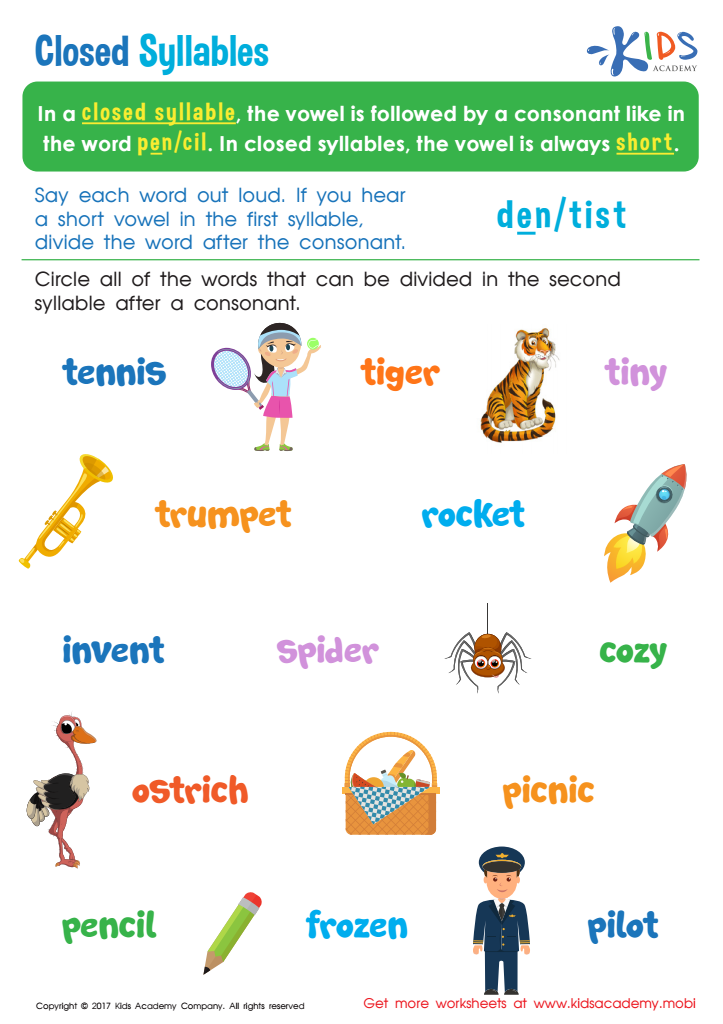
Closed Syllable Spelling Worksheet
 Assign to My Students
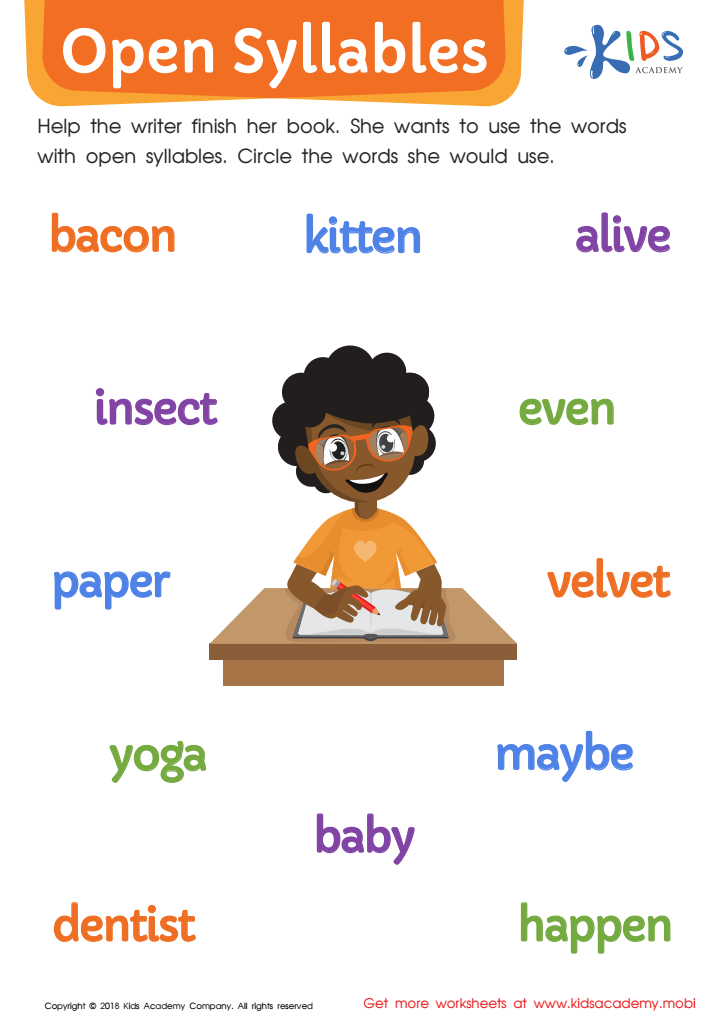
Open Syllables Worksheet
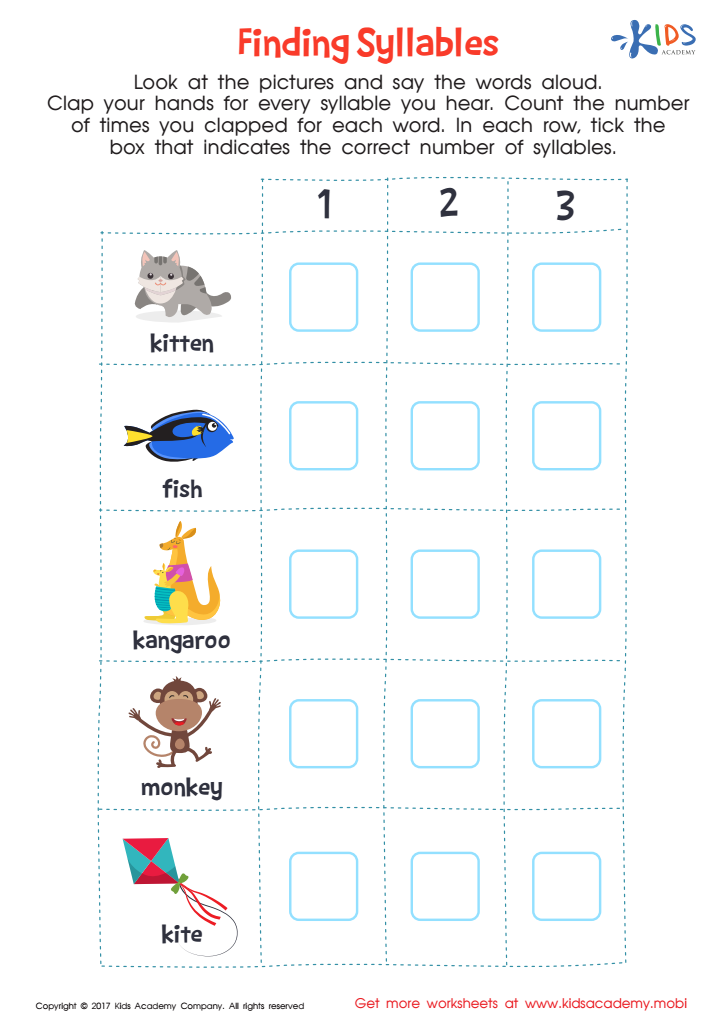
Finding Syllables Word Structure Worksheet
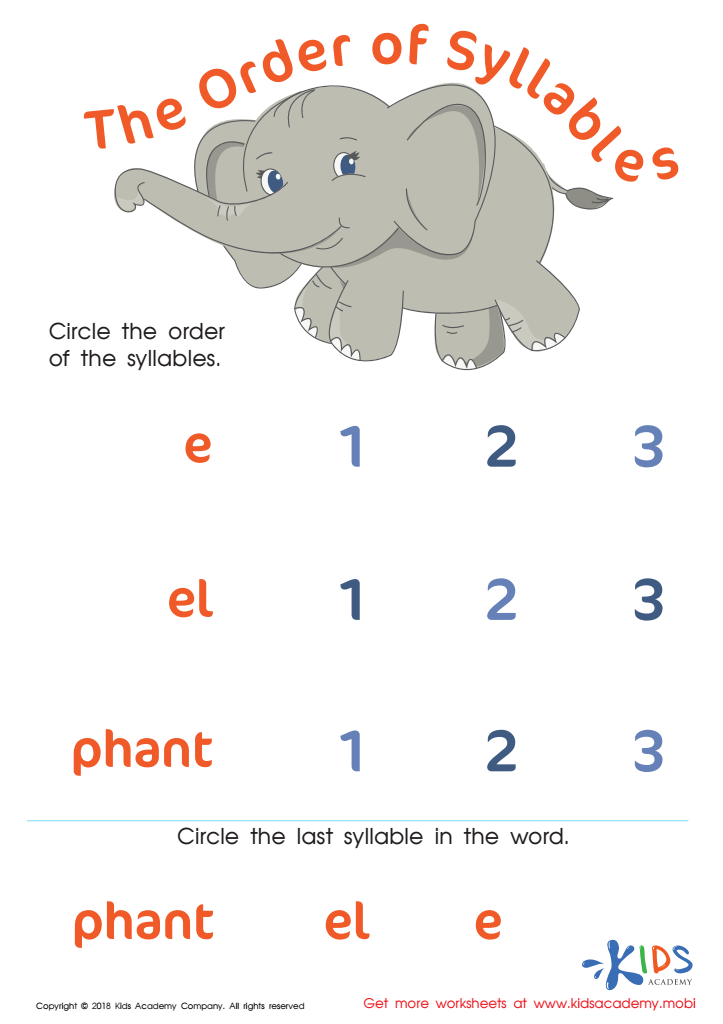
The Order of Syllables Worksheet
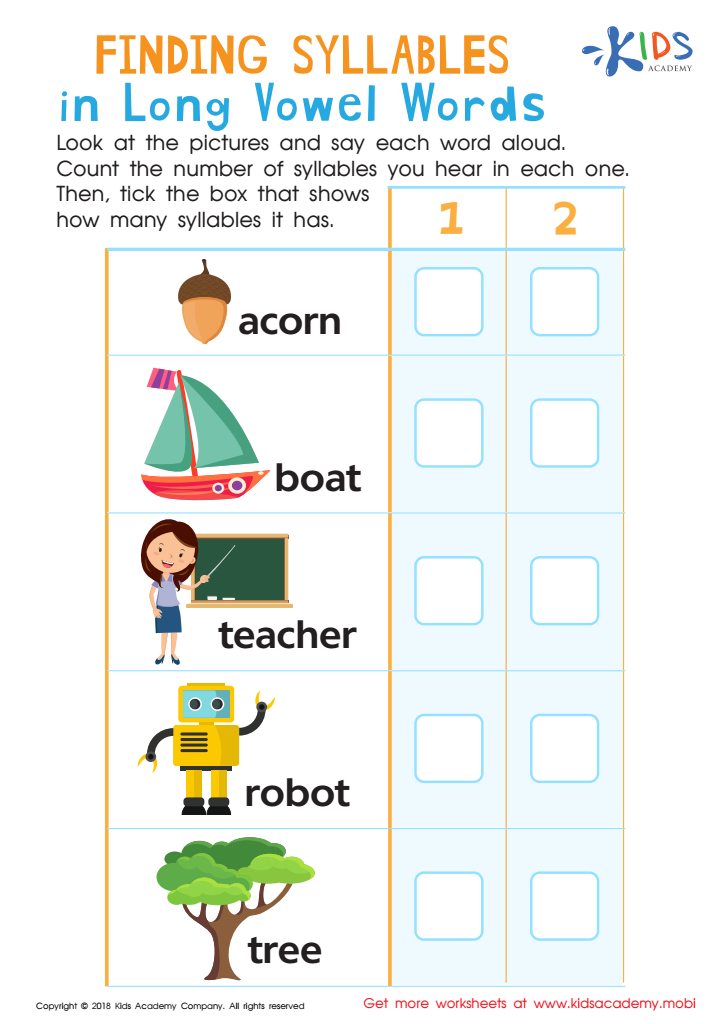
Finding Syllables in Long Vowel Words Worksheet








Understanding syllables is a fundamental skill in early literacy development for children aged 4-9. Syllables, or units of sound that form words, help children break down complex words into manageable parts, making reading and spelling easier. Awareness of syllables improves phonemic awareness, which is crucial for learning to read—a key predictor of future academic success.
For parents and teachers, focusing on syllables can aid in early detection of reading difficulties. When children recognize syllable patterns, they can decode unfamiliar words more efficiently, fostering greater reading fluency and confidence. This, in turn, enhances their comprehension as they focus less on decoding each word and more on understanding the text.
Moreover, syllable learning supports vocabulary acquisition. Children understand word structures better and can internalize new vocabulary, improving communication skills. Fun, engaging activities like clapping out syllables, playing rhyming games, or using visual aids can make learning syllables enjoyable.
Ultimately, understanding syllables offers foundational support for spelling and writing skills. As children become adept at breaking words into syllables, they can spell more accurately, write more effectively, and approach learning enthusiastically. Teachers and parents who emphasize this aspect of literacy set the stage for a lifetime of strong reading and writing capabilities.








