
Verb identification Normal Worksheets for Ages 4-9
7 filtered results
Difficulty Level
Grade
Age
-
From - To
Subject
Activity
Standards
Explore our engaging Verb Identification Normal Worksheets designed specifically for children aged 4-9! These interactive materials help young learners recognize and understand verbs in a fun and age-appropriate way. Each worksheet features colorful illustrations and practical exercises that promote active participation while reinforcing essential language skills. Perfect for classroom activities or at-home practice, our worksheets encourage creativity and critical thinking as children identify action words in various contexts. Designed by education experts, these resources also support development in reading comprehension and vocabulary growth. Download our Verb Identification worksheets today and watch your child enjoy the process of learning language fundamentals!
Favorites
With answer key
Interactive
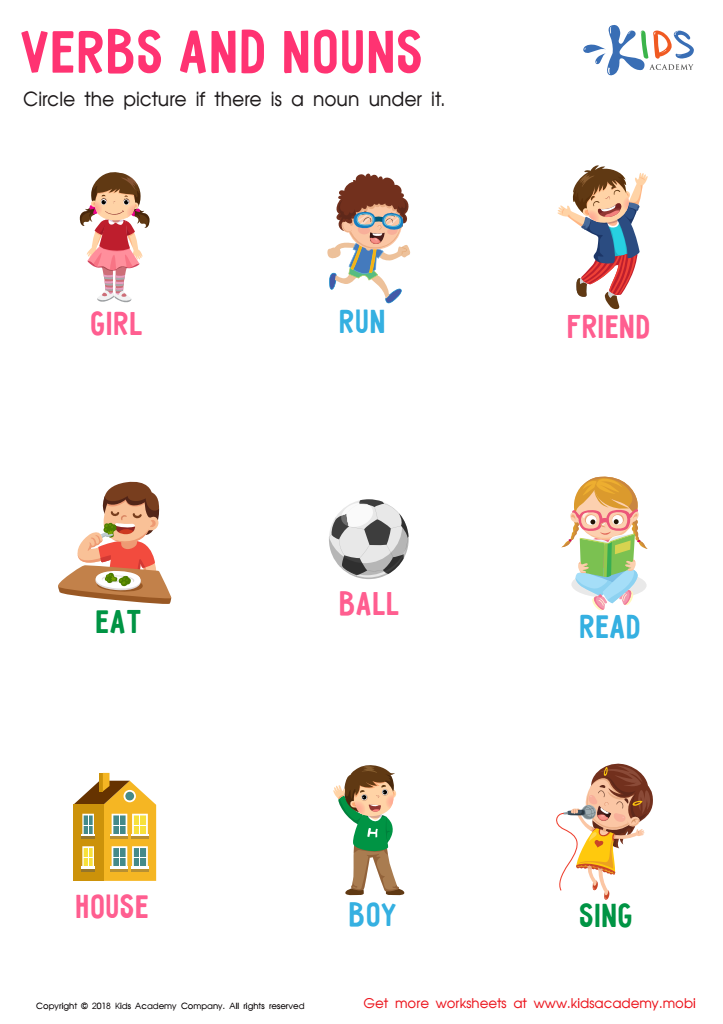
Verbs and Nouns Worksheet
Your child should have basic knowledge of verbs and nouns before starting this worksheet. Go through it with them and ask them to circle the pictures with nouns under them. This way, they'll become more familiar with parts of speech.
 Assign to My Students
Verbs and Nouns Worksheet
Worksheet
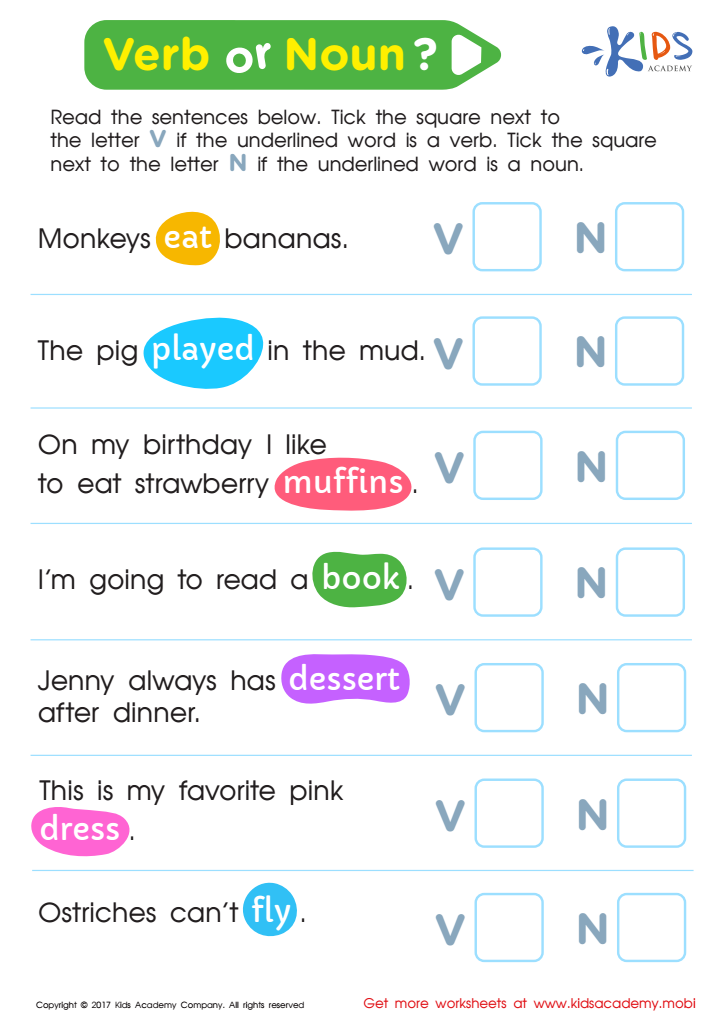
Verb or Noun Worksheet
This worksheet will help your child identify verbs and nouns quickly. With colorful highlights and simple sentences, they'll master parts of speech in no time! Get ahead of the game with this incredible worksheet.
Verb or Noun Worksheet
Worksheet
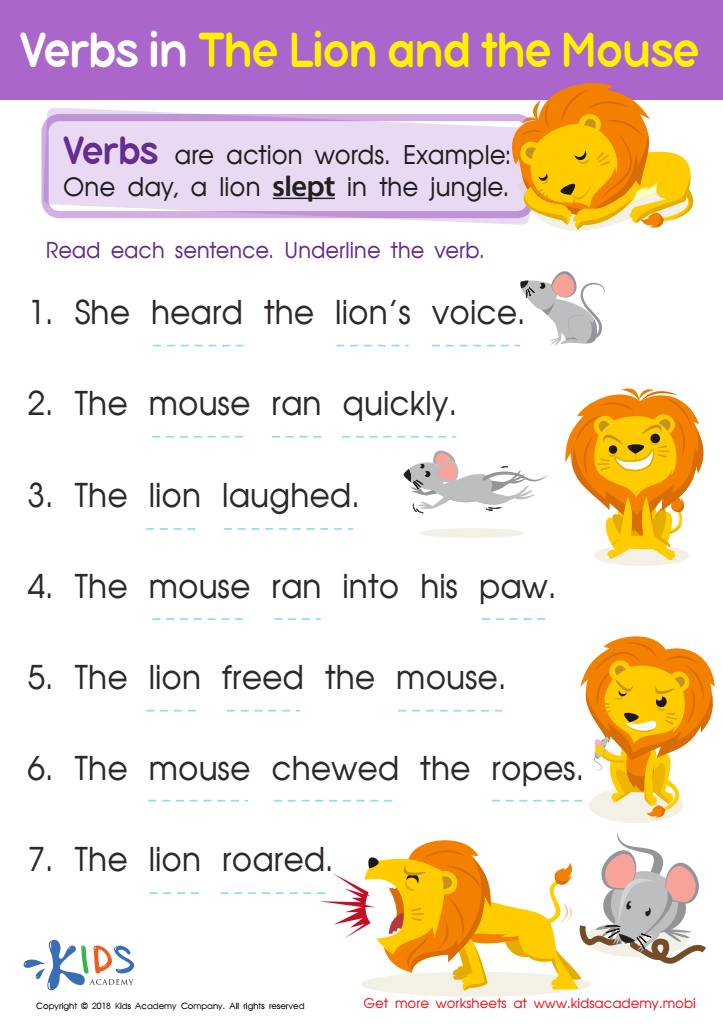
Verbs in The Lion and the Mouse Worksheet
This grammar worksheet is perfect for young learners starting to learn parts of speech. It includes action verbs, which can be used in conjunction with the story The Lion and the Mouse. Students can read the sentences and choose the verb. Understanding and using verbs helps children read and write with expression.
Verbs in The Lion and the Mouse Worksheet
Worksheet
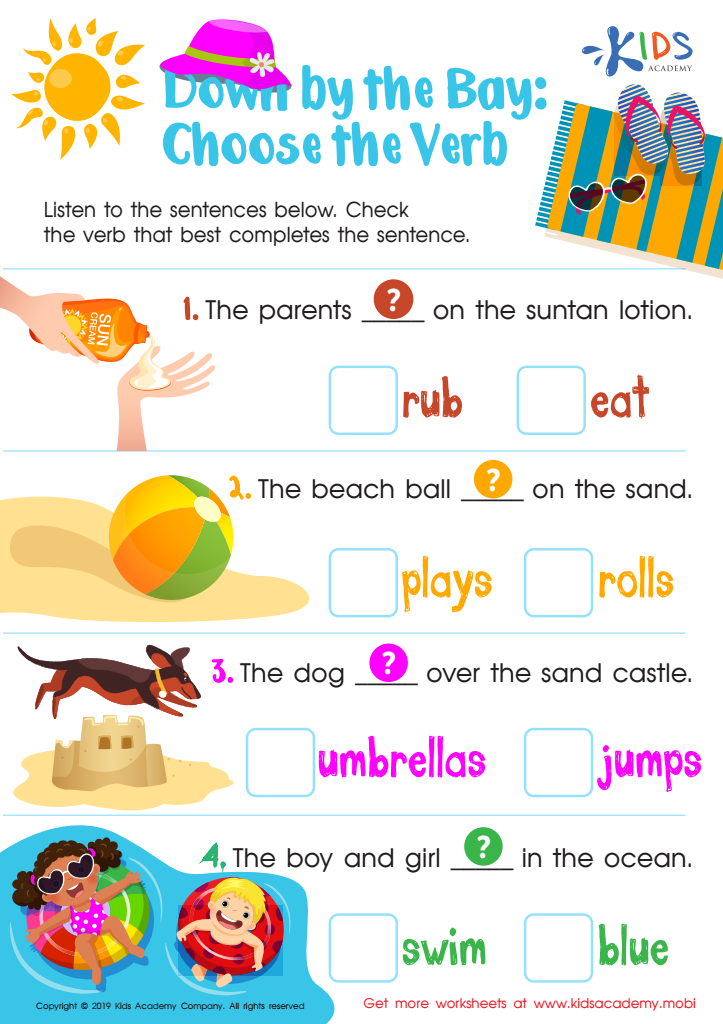
Down by the Bay: Choose the Verb Worksheet
Teach your kids about verbs: words that describe actions, like 'playing', 'eating', 'talking'. Ask your child to give their own verbs, then read the sentences in a worksheet and help them pick the best one for each question.
Down by the Bay: Choose the Verb Worksheet
Worksheet
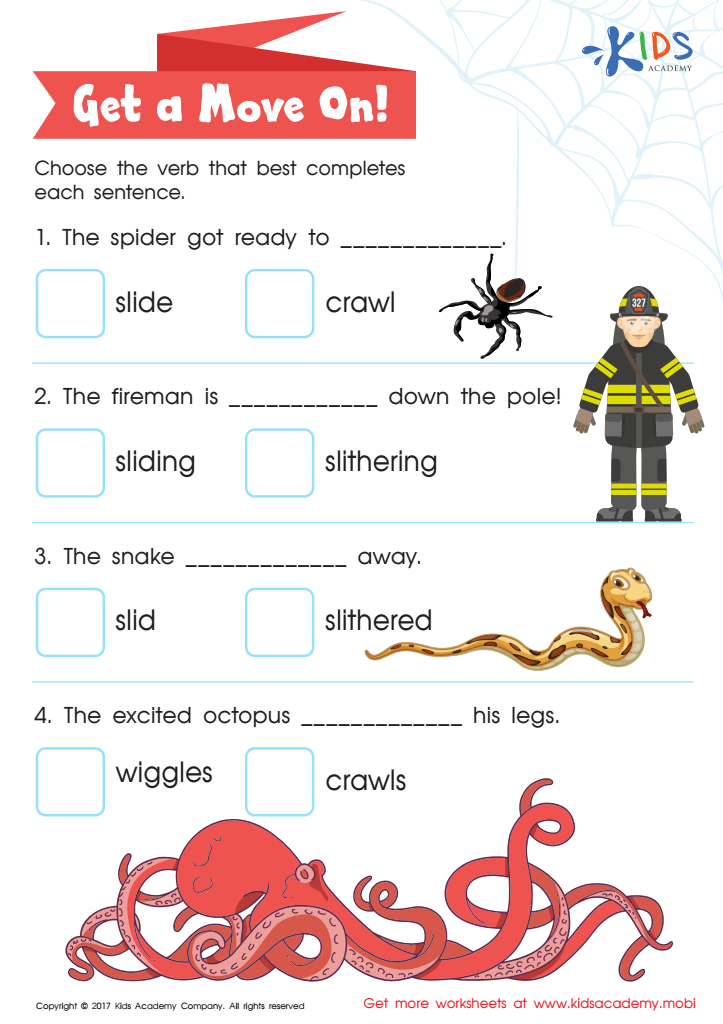
Verb Worksheet
Help your child learn verbs with this fun verb worksheet for grade 2! Firemen slide down poles, spiders crawl - they'll learn while they select the right verb in each sentence.
Verb Worksheet
Worksheet
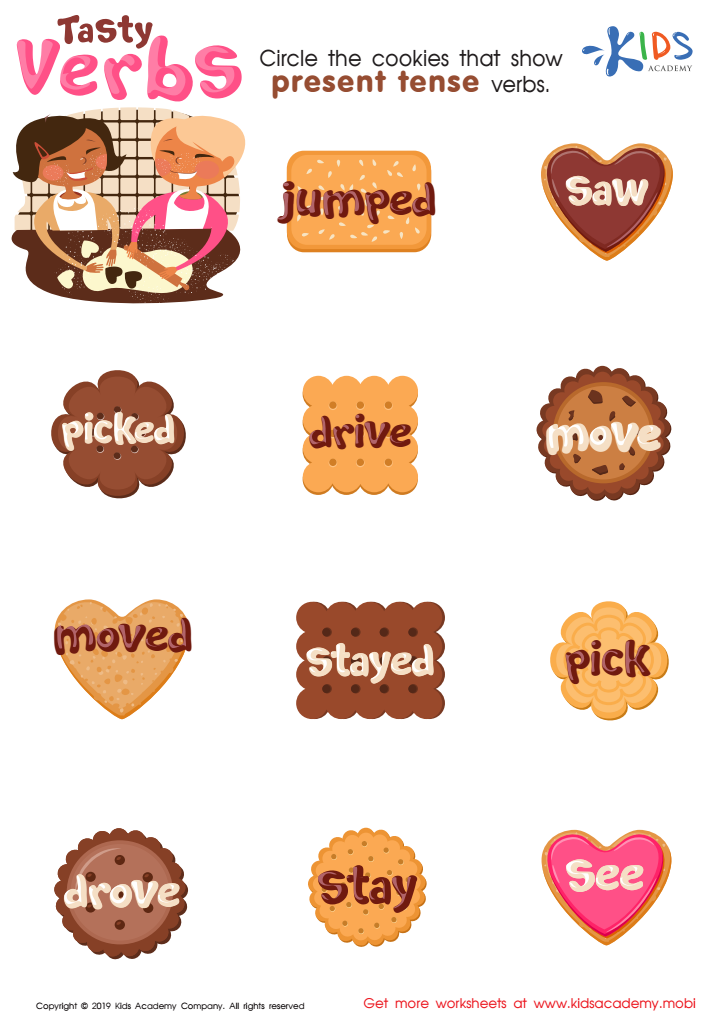
Tasty Verbs Worksheet
Verbs can show actions, past events, and future happenings. Master present tense verbs with this cookie-themed worksheet! Read the verbs on each cookie and help kids form sentences using the word in present tense. Circle the correct answers for each cookie. Give them a tasty treat while learning something new!
Tasty Verbs Worksheet
Worksheet
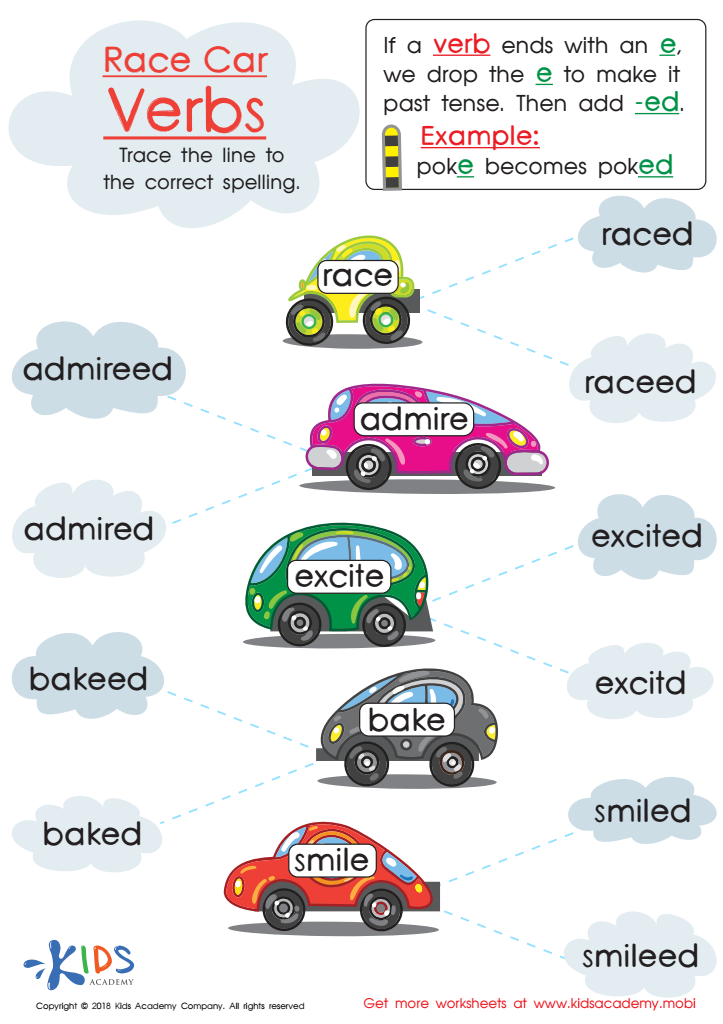
Race Car Verbs Worksheet
Help your child learn to spell and write with this fun car-themed worksheet! Read the words in the center of each car and review their past tense versions in the smoke. Have your learner trace the line from each car to the correctly spelled word – and don't forget to drop the 'e' before adding an -ed ending!
Race Car Verbs Worksheet
Worksheet
Join Kids Academy for Free
Who is primarily going to use this learning content?








Verb identification is a crucial skill for children aged 4-9 as it forms the foundation for their language development, literacy, and communication skills. Understanding verbs enhances children's ability to construct sentences, comprehend stories, and express their thoughts clearly. At this early age, children are naturally curious and eager to learn about the world around them. Identifying verbs helps them connect actions to language, fostering vocabulary growth and improving their reading and writing abilities.
For parents and teachers, promoting verb identification means aiding cognitive development and critical thinking skills. When children recognize verbs, they begin to understand grammar and sentence structure, which is vital for effective writing. Additionally, recognizing action words enables children to engage more deeply with texts, leading to improved comprehension and motivation to read.
Moreover, targeting verb identification caters to various learning styles—visual learners might benefit from action images, while kinesthetic learners can be encouraged to act out verbs. Ultimately, focusing on verb identification equips children with essential tools for academic success, empowering them to present their ideas confidently and creatively. Thus, parents and teachers play a key role in guiding children through this fundamental aspect of language learning, establishing a strong basis for their educational journey.








