Enhancing math skills Normal Addition & Subtraction Worksheets for Ages 4-9
4 filtered results
-
From - To
Boost young learners' confidence and proficiency in math with our expertly designed Normal Addition & Subtraction Worksheets, perfect for children aged 4-9. These engaging worksheets are tailored to build foundational math skills, offering a variety of exercises that make learning addition and subtraction both fun and effective. Each worksheet focuses on enhancing problem-solving abilities and reinforcing key concepts through practice and repetition. Ideal for both classroom and home use, our resources support teachers and parents in providing essential practice to help children succeed. Start building a strong math foundation today with our comprehensive and easy-to-use worksheets.
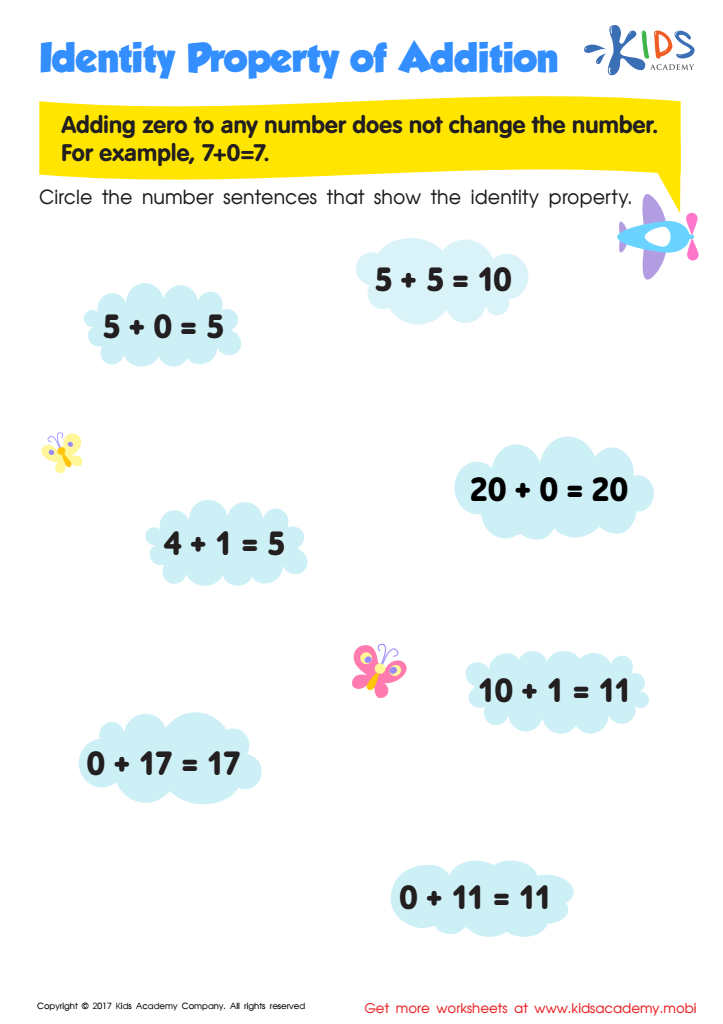
Identity Property of Addition Worksheet
 Assign to My Students
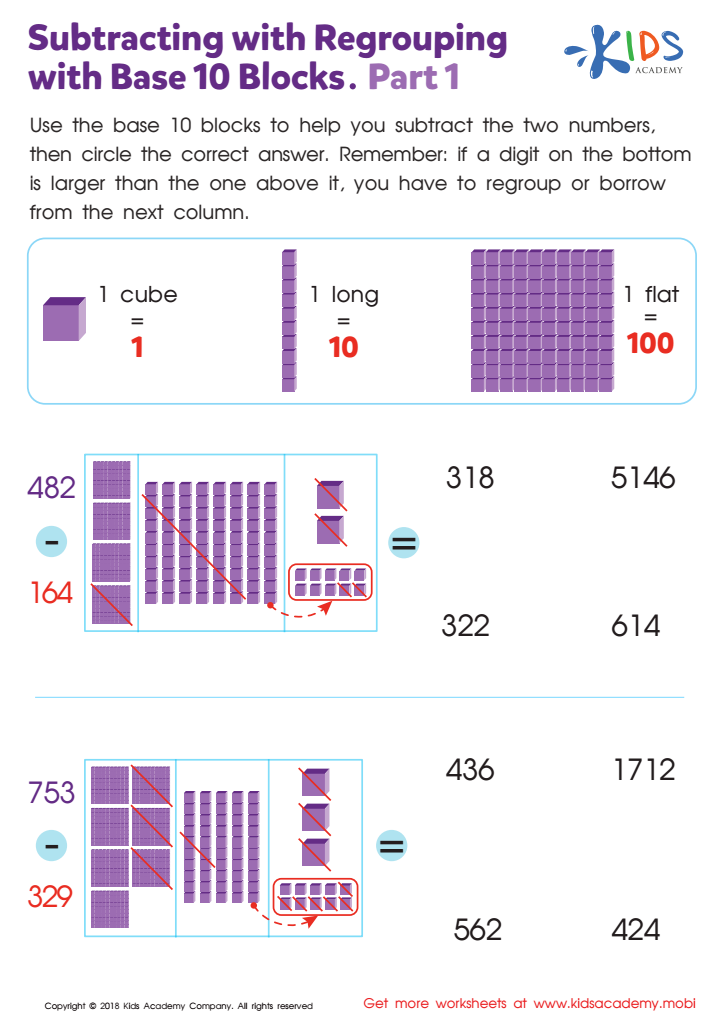
Subtracting with Regrouping with Base 10 Blocks. Part1 Worksheet
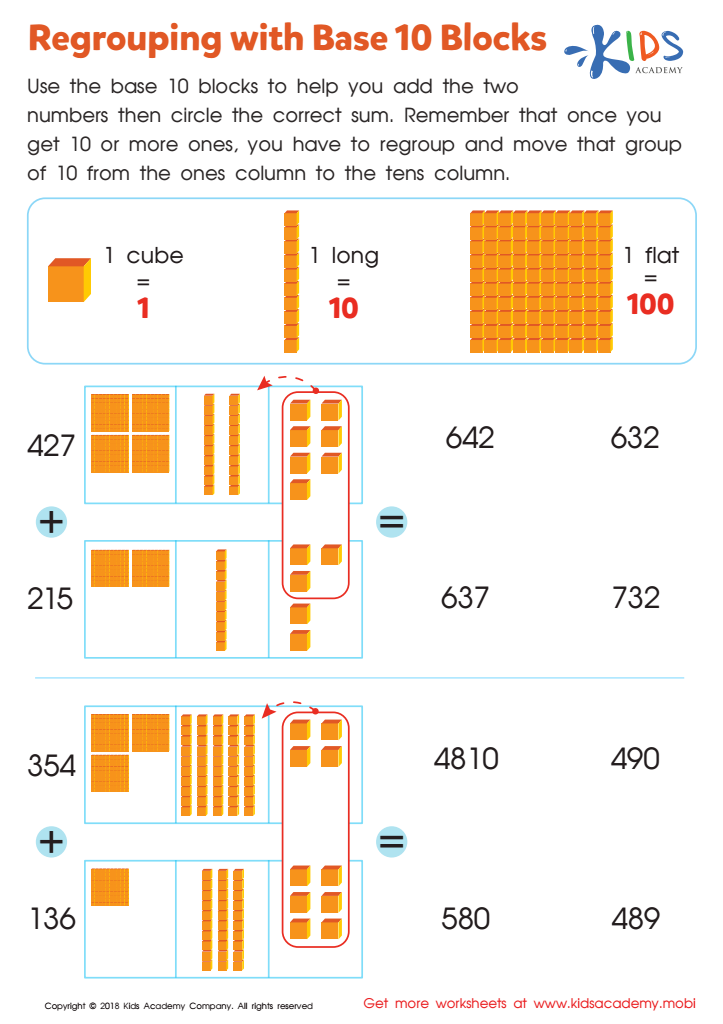
Regrouping with Base 10 Blocks Worksheet
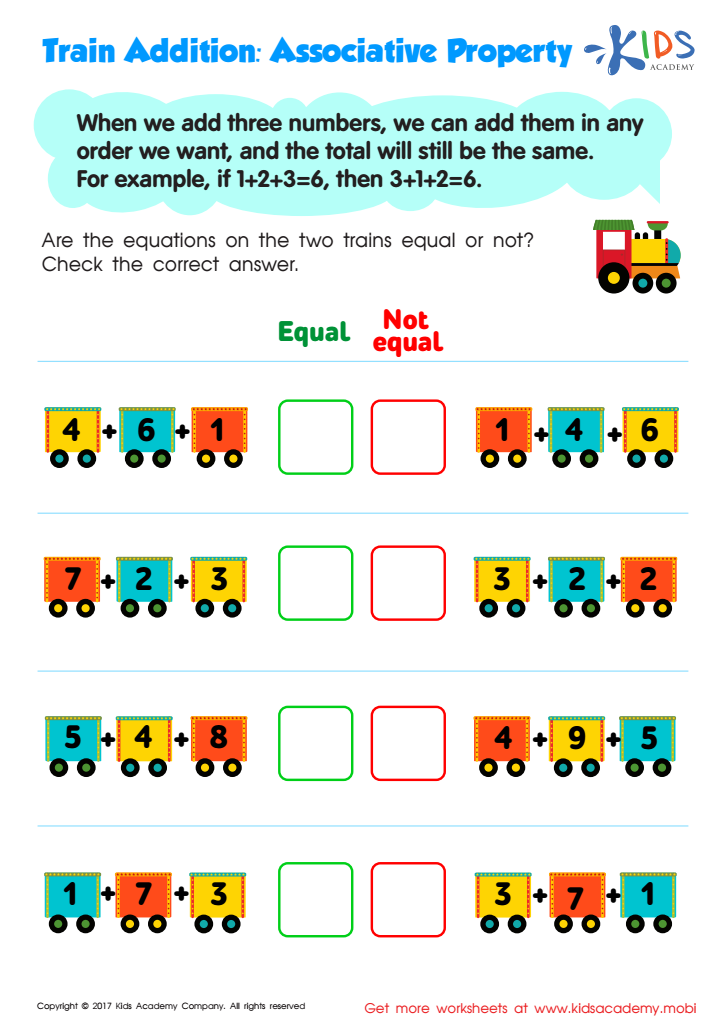
Train Addition: Associative Property Worksheet








Enhancing math skills through basic addition and subtraction for ages 4-9 is crucial because it builds the foundation for all future mathematical learning. During these early years, children's brains are highly flexible and capable of absorbing new information quickly. Introducing basic arithmetic at this stage capitalizes on their natural learning abilities and curiosity.
First, mastering addition and subtraction enhances problem-solving skills, essential not just in academics but in daily life. These operations simplify tasks such as handling money, telling time, and understanding quantities, thereby making children more independent and confident.
Second, early math skills contribute to cognitive development. Studies consistently show that children proficient in basic arithmetic tend to perform better in later school years, and they often excel across other subjects. Quality math instruction develops logical thinking, a discipline useful in nearly every field of study.
Additionally, nurturing these skills at a young age combats math anxiety, a common issue that hinders academic performance as children grow older. When parents and teachers actively encourage and support early math learning, children are more likely to develop a positive attitude toward the subject.
In summary, focusing on basic addition and subtraction during early childhood prepares children not just for academic success, but also for functional, everyday activities, fostering both confidence and competence.








