Fine Motor Skills Normal Addition Worksheets for Ages 4-9
3 filtered results
-
From - To
Explore our Fine Motor Skills Normal Addition Worksheets designed specifically for children ages 4-9. These worksheets combine fun and engaging math exercises with activities that enhance fine motor skills, helping young learners develop essential coordination and dexterity. Each worksheet features colorful illustrations and age-appropriate addition problems, making learning enjoyable and effective. Perfect for early childhood classrooms or home practice, these resources encourage children not only to master math concepts but also to strengthen their hand skills through activities like tracing, coloring, and writing numbers. Download our worksheets today and support your child's growth in math and fine motor proficiency!

18 Candles Worksheet
 Assign to My Students
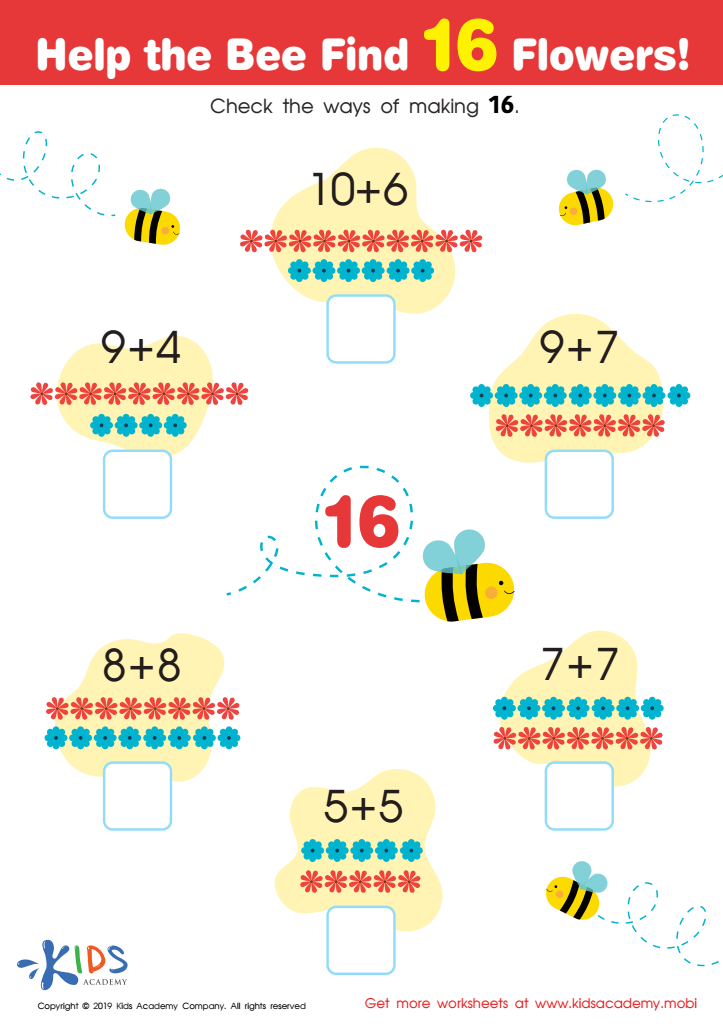
Help the Bee Find 16 Flowers Worksheet
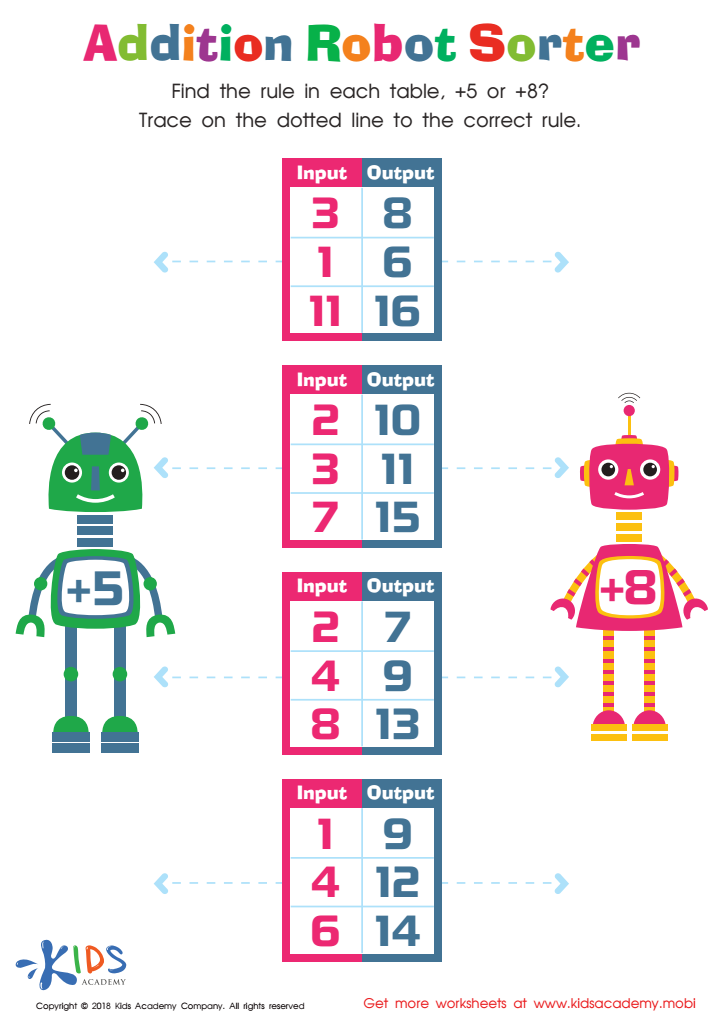
Addition Robot Sorter Worksheet








Fine motor skills are crucial for children aged 4-9 as they form the foundation for everyday tasks and learning. These skills involve the coordination of small muscles in the hands and fingers, essential for activities like writing, buttoning clothes, and using scissors. For parents and teachers, fostering fine motor development not only improves a child's ability to perform daily functions but also enhances their cognitive and academic abilities.
Normal addition, or counting and basic arithmetic, is an area where fine motor skills play a significant role. Children often need to manipulate objects, like counting blocks or drawing numbers, to grasp mathematical concepts. This tactile engagement promotes active learning and aids memory retention. Furthermore, when children gain proficient fine motor skills, they experience increased confidence, which translates to greater participation in school activities.
Parents and teachers should prioritize fine motor skill development through fun exercises like crafts, games, and structured play. Engaging children in these activities not only enhances their learning experience but also strengthens the parent-child or teacher-student bond, making the process enjoyable. Ultimately, nurturing fine motor skills is key to fostering a well-rounded development in children, encouraging their personal and academic growth.