Enhancing Counting Skills Normal Numbers Worksheets for Ages 4-9
5 filtered results
-
From - To
Welcome to our "Enhancing Counting Skills with Normal Numbers Worksheets" tailored for kids aged 4-9! Our engaging worksheets are designed to support young learners in mastering the art of counting through exciting activities. Using colorful illustrations and interactive exercises, children will reinforce their counting abilities while developing essential mathematical skills. These worksheets align with key developmental milestones, providing step-by-step guidance to make learning enjoyable. Perfect for classroom use or home practice, they help boost confidence and make counting a fun experience. Start your child’s mathematical journey today and watch their confidence soar as they count from 1 to 100 and beyond!
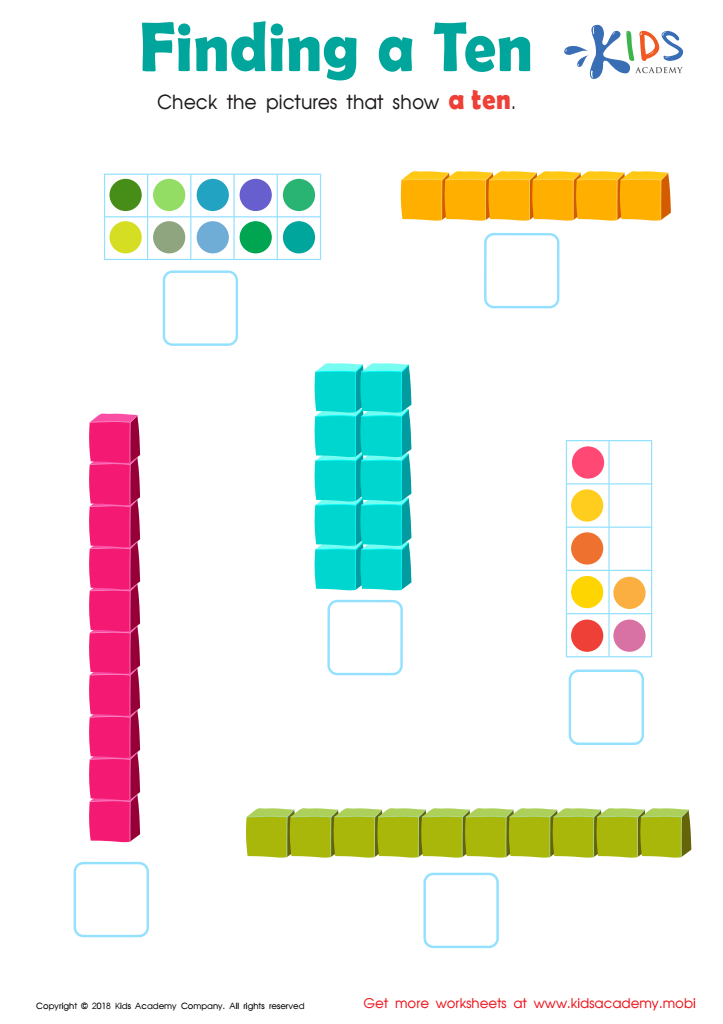
Finding a Ten Worksheet
 Assign to My Students
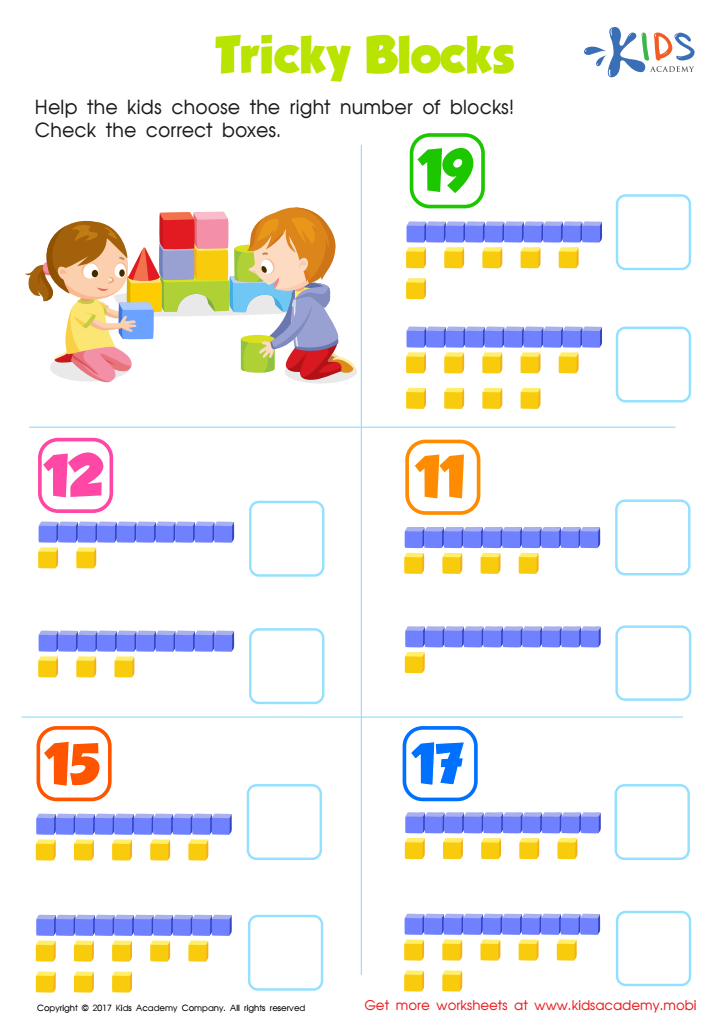
Tricky Blocks Worksheet
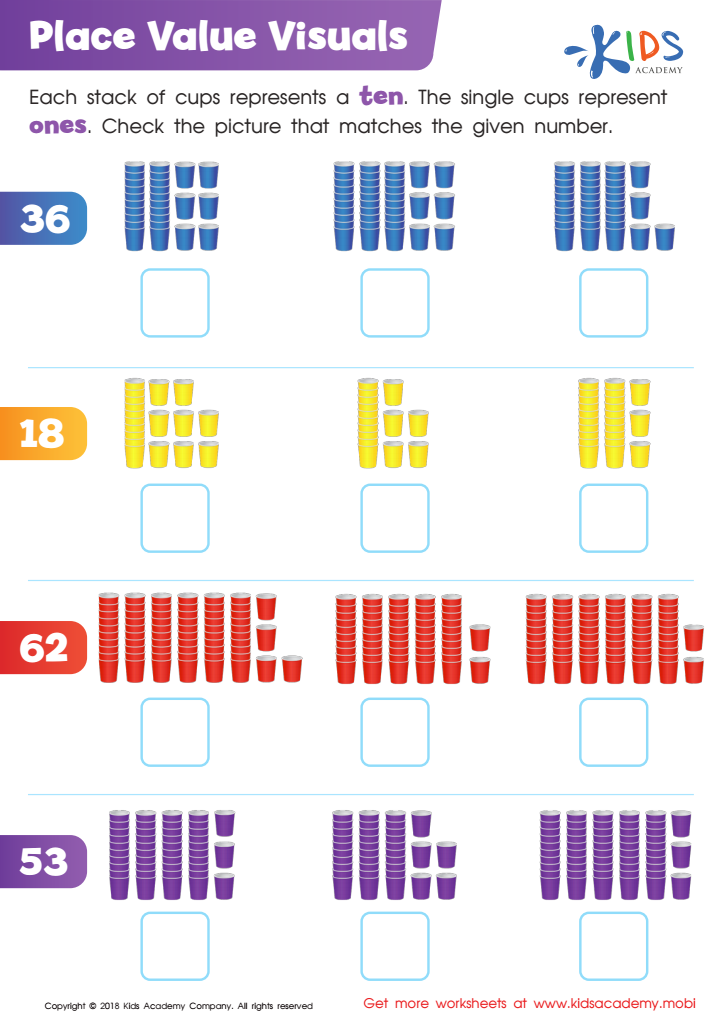
Place Value Visuals Worksheet
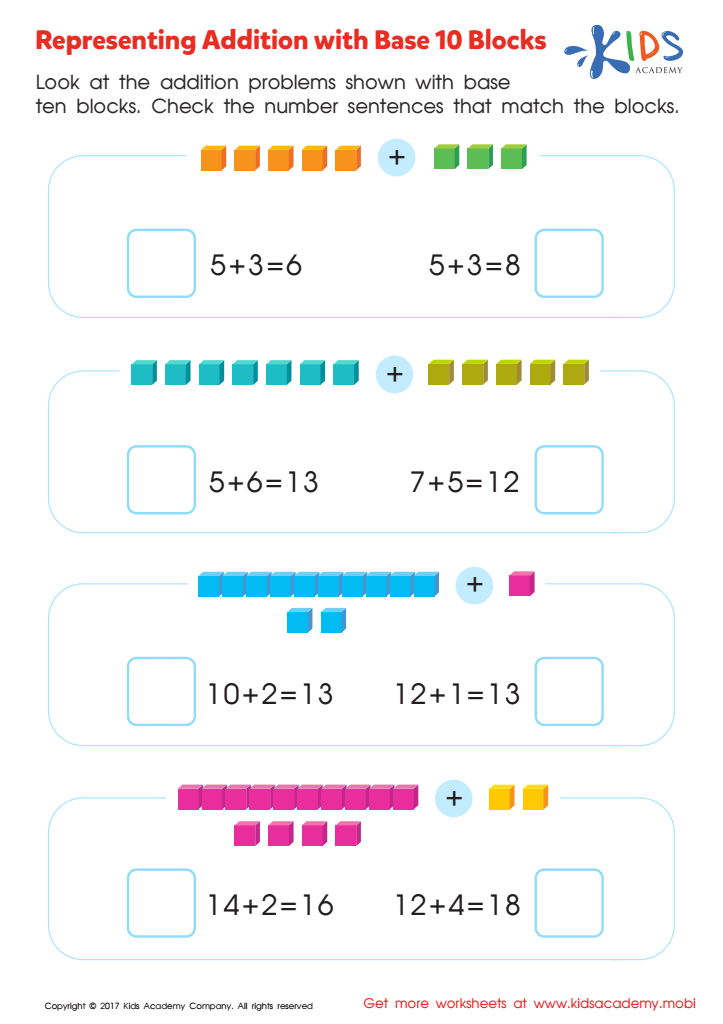
Representing Addition with Base 10 Blocks Worksheet
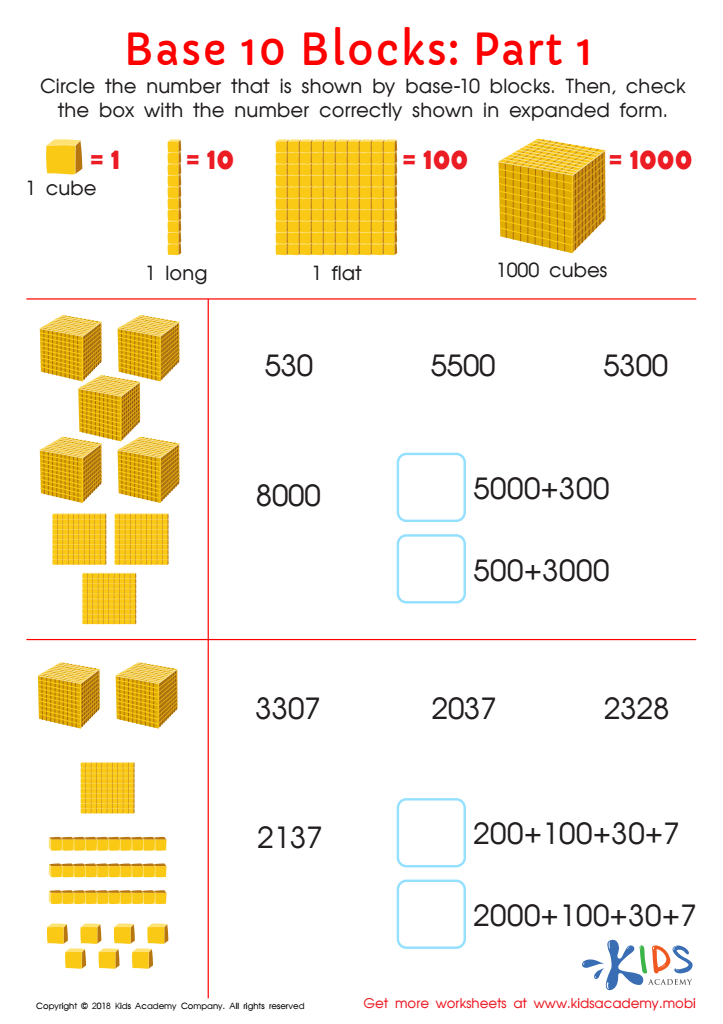
Base 10 Blocks Worksheet: Part 1







Enhancing counting skills in children ages 4-9 is crucial for their foundational mathematical understanding and everyday life. During these formative years, children develop cognitive abilities that influence their future learning. Counting is one of the first mathematical concepts they encounter, shaping their ability to recognize quantities, understand number sequences, and engage with basic arithmetic. These skills nurture logical thinking and problem-solving abilities.
Moreover, strong counting skills facilitate children’s comprehension of more complex mathematical operations as they progress in their education. Children who grasp counting early tend to have more confidence in their abilities, fostering a positive attitude toward math—a subject many struggle with in later years. Furthermore, these skills contribute to a child's overall cognitive development, enhancing skills like memorization and pattern recognition that are applicable across a range of learning experiences.
Parents and teachers play a critical role in this process, as they can create engaging counting activities, integrate counting in daily routines, and provide reinforcement. By actively promoting counting skills, they not only lay the groundwork for mathematical success but also empower children with essential life skills that include organization, measurement, and critical thinking. In short, enhancing counting skills in early learners is an investment in their academic and personal growth.








