Associative learning Normal Math Worksheets for Ages 4-9
3 filtered results
-
From - To
Discover our "Associative Learning Normal Math Worksheets" designed for children aged 4-9, where fun meets education! These engaging worksheets are tailored to enhance children's mathematical skills through the concept of associative learning, helping them make connections between numbers and operations. Featuring various activities like puzzles, games, and problem-solving exercises, these resources promote critical thinking while encouraging kids to enjoy math. Perfect for both classroom and home use, our printable worksheets cater to diverse learning styles and abilities, ensuring every child can thrive. Equip young learners with essential math foundations while they play and explore the exciting world of numbers!
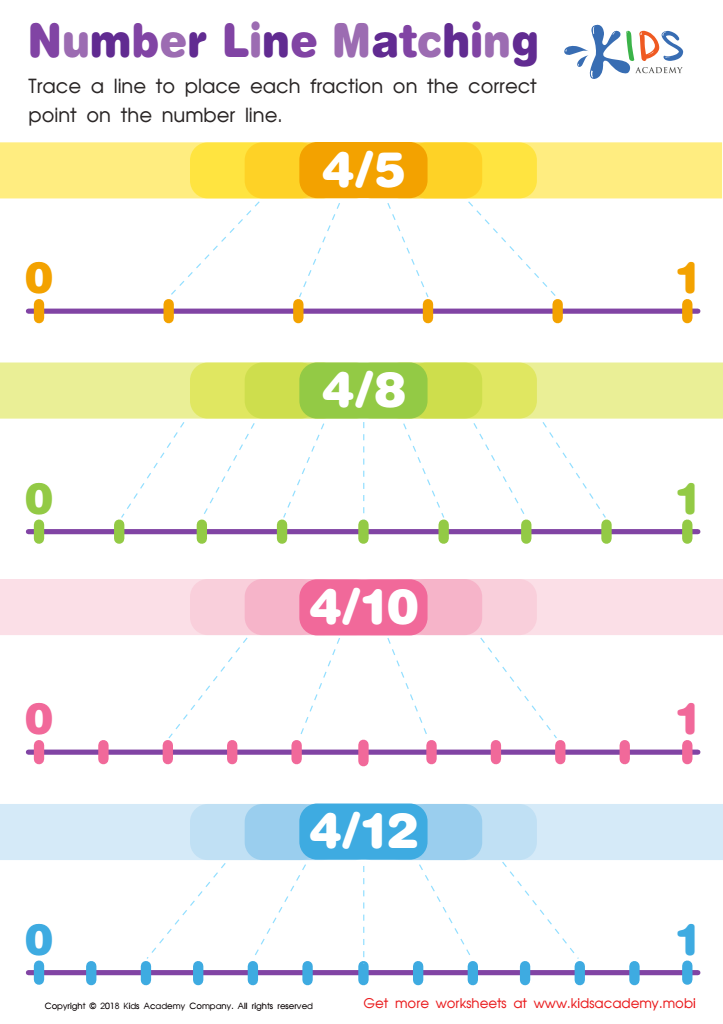
Number Line Matching Worksheet
 Assign to My Students
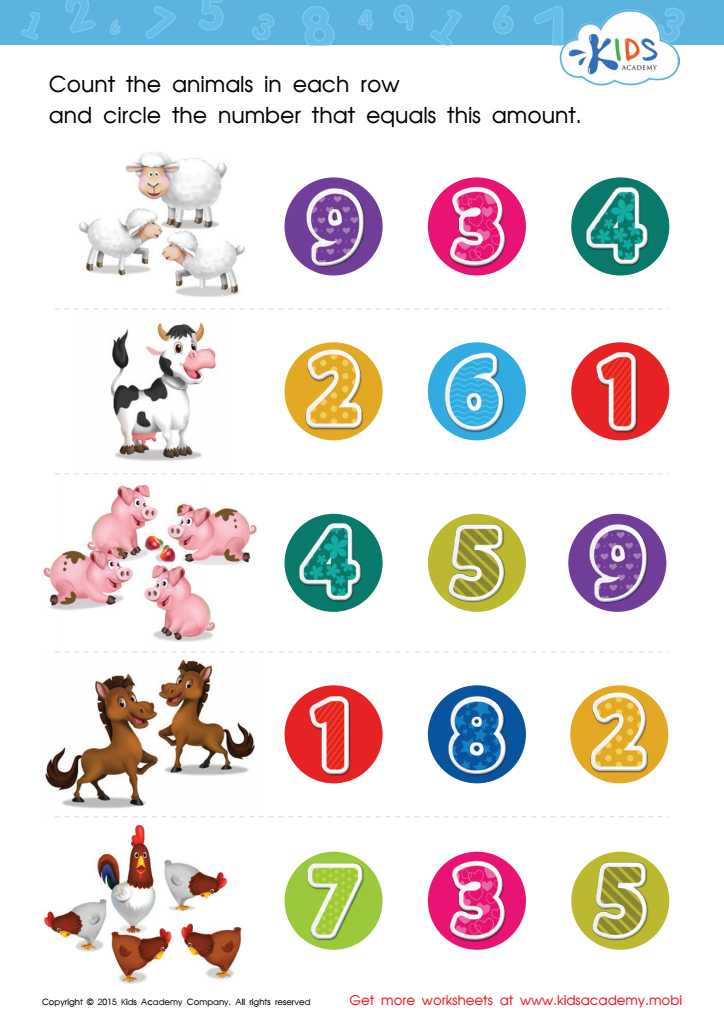
Count and Match 1 – 5 Math Worksheet
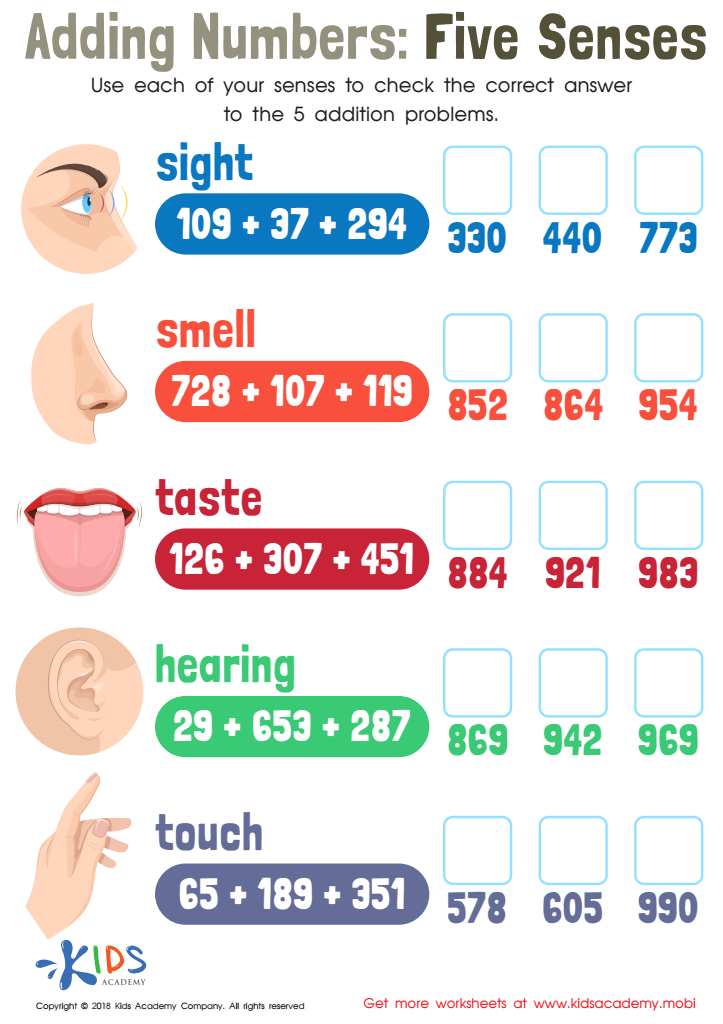
Adding Numbers: Five Senses Worksheet





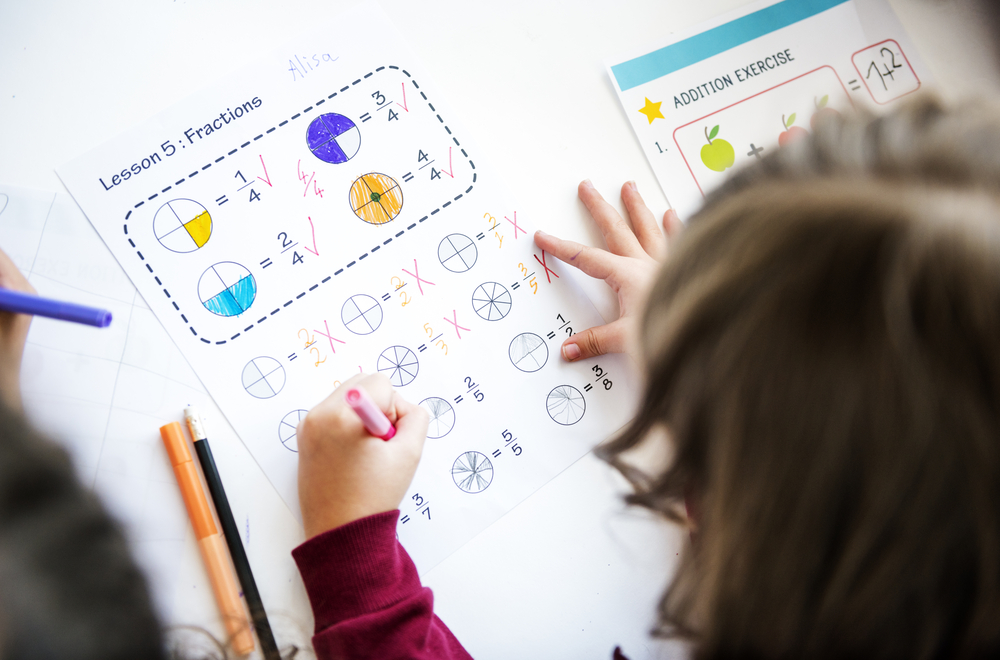


Associative learning Normal Math for ages 4-9 is crucial for several reasons. First, these formative years lay the groundwork for a child's mathematical understanding. Associative learning enables students to make connections between concepts, enhancing their ability to grasp abstract ideas and problem-solving skills. By engaging in age-appropriate math activities, children can relate numbers to real-world contexts, fostering their interest and motivation.
Moreover, this approach promotes critical thinking. When children understand relationships between numbers, such as addition and subtraction, they develop the ability to reason mathematically. This not only aids in basic computations but also prepares them for more complex math topics in the future.
Additionally, teachers and parents play a vital role in creating a supportive learning environment. By encouraging play-based activities and discussions around numbers, they can reinforce associative learning naturally. This nurtures a positive attitude towards math, which is essential for lifelong learning.
In essence, understanding and promoting Associative learning Normal Math is not just about teaching math concepts; it's about building a strong educational foundation that supports cognitive growth, fosters critical thinking, and prepares children for future academic success. Engaged parents and teachers can significantly influence this journey, making math an enjoyable and meaningful part of a child's life.








