
Basic measurement concepts Normal Math Worksheets for Ages 4-9
3 filtered results
Difficulty Level
Grade
Age
-
From - To
Subject
Activity
Standards
Explore our engaging Basic Measurement Concepts Worksheets designed for children aged 4-9! These math worksheets introduce young learners to essential measurement skills through fun activities and colorful illustrations. Children will master concepts like length, height, weight, and volume while fostering their math problem-solving abilities. Our printable worksheets cater to different learning styles, ensuring every child can grasp measurement in an interactive way. Perfect for classroom use or home learning, these resources will help build a strong mathematical foundation. Encourage your child's love for math and measurements today with our thoughtfully crafted normal math worksheets!
Favorites
With answer key
Interactive
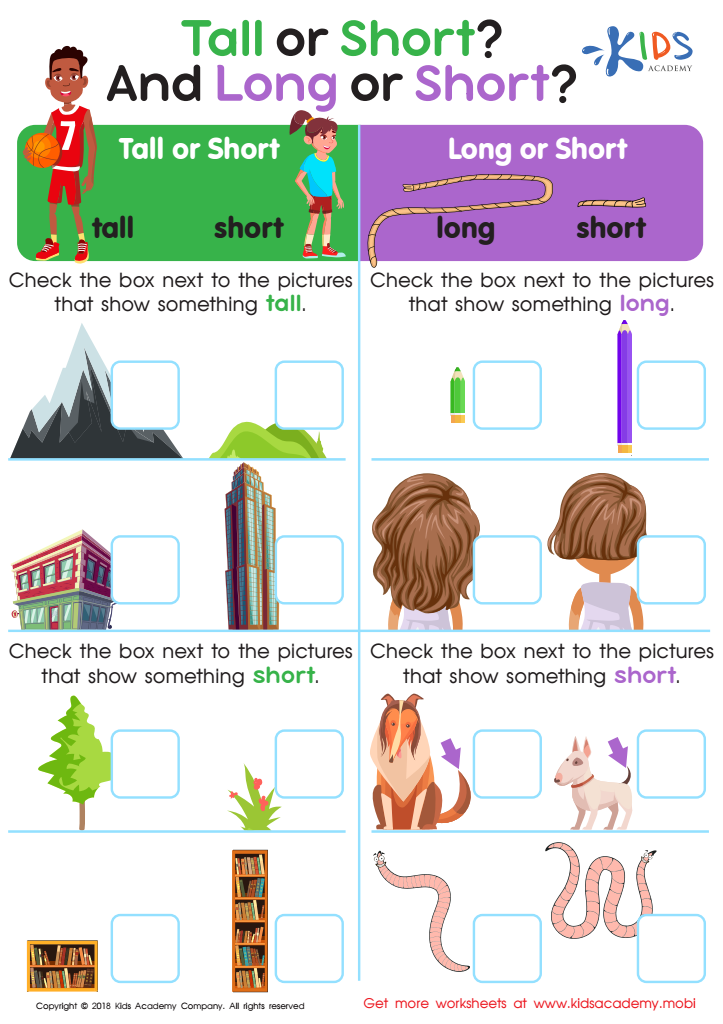
Tall or Short and Long or Short? Worksheet
This worksheet is fun and helpful for kids to understand the difference between height and length. With pictures of familiar objects, they can compare and choose the box with the right answer. This helps them gain skills and a better foundation for future measuring.
 Assign to My Students
Tall or Short and Long or Short? Worksheet
Worksheet
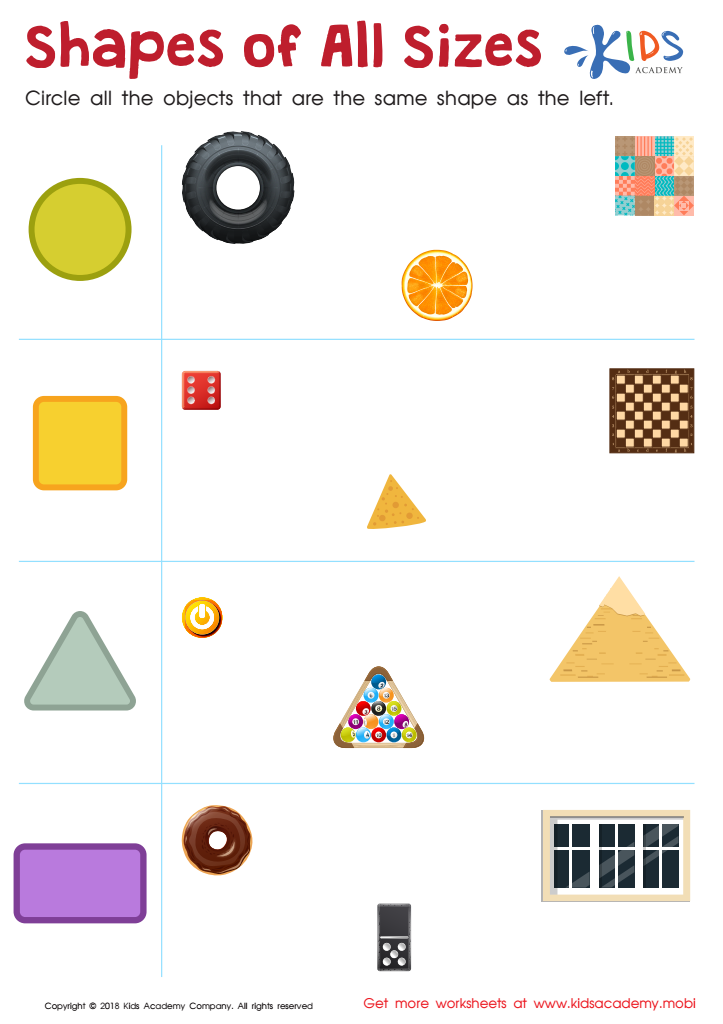
Shapes of All Sizes Worksheet
Students will have fun comparing basic shapes to familiar objects with this worksheet. It's an excellent way to help them recognize similarities in geometric shapes, building strong foundations for understanding congruence and similarity.
Shapes of All Sizes Worksheet
Worksheet
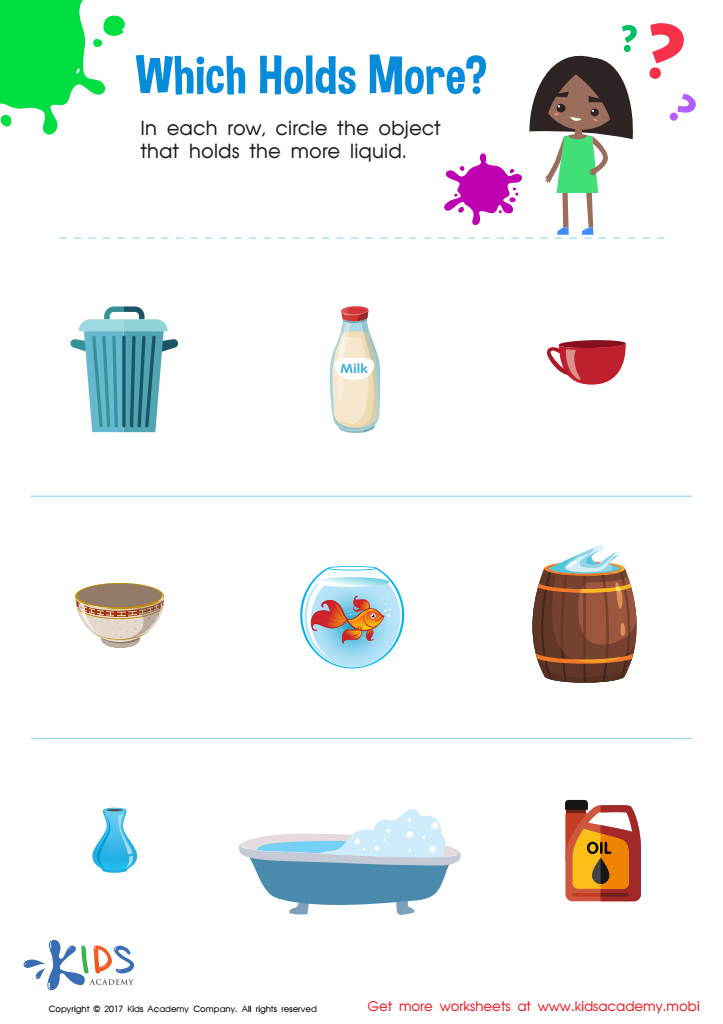
Which Holds More: Capacity Worksheet
Kids learn volume with containers of different capacities, such as mugs and barrels, and understand which can hold more liquid. A fun and interactive way to teach essential math concepts.
Which Holds More: Capacity Worksheet
Worksheet
Join Kids Academy for Free
Who is primarily going to use this learning content?








Understanding basic measurement concepts is essential for children ages 4-9 as it lays the groundwork for their mathematical journey and everyday problem-solving skills. When parents and teachers prioritize these concepts, they help students develop a foundation in comparing lengths, weights, volumes, and time—all of which are vital in daily life.
Measurement fosters critical thinking and logical reasoning. As children measure objects, they learn to estimate, compare, and quantify, fostering a sense of confidence in their mathematical abilities. This engagement with measurement helps children grasp the concept of numbers in a tangible way, linking math to real-world situations.
Moreover, early exposure to measurement concepts can enhance a child’s spatial awareness and improve their observational skills. Activities like baking, crafting, or building with blocks provide practical experiences that make learning dynamic and enjoyable. Engaging in these activities together reinforces not only academic concepts but also family and teacher relationships.
When parents and teachers actively promote measurement learning, they prepare children for future math concepts and standardized assessments. Plus, when children appreciate and understand measurement, they are more likely to develop a positive attitude toward math—setting the stage for a lifelong love of learning.








