Shape identification Normal Math Worksheets for Ages 4-9
6 filtered results
-
From - To
Discover our engaging Shape Identification Normal Math Worksheets designed for children aged 4-9. These worksheets offer a fun and interactive way for young learners to recognize and understand different shapes. Tailored to enhance critical thinking and visual recognition skills, our activities include vibrant images and hands-on exercises that captivate children's attention. From circles and squares to triangles and rectangles, your child will develop a solid foundation in geometry while enjoying the learning process. Perfect for use at home or in the classroom, these worksheets are a fantastic resource to foster early math skills and encourage a love for learning. Start exploring today!
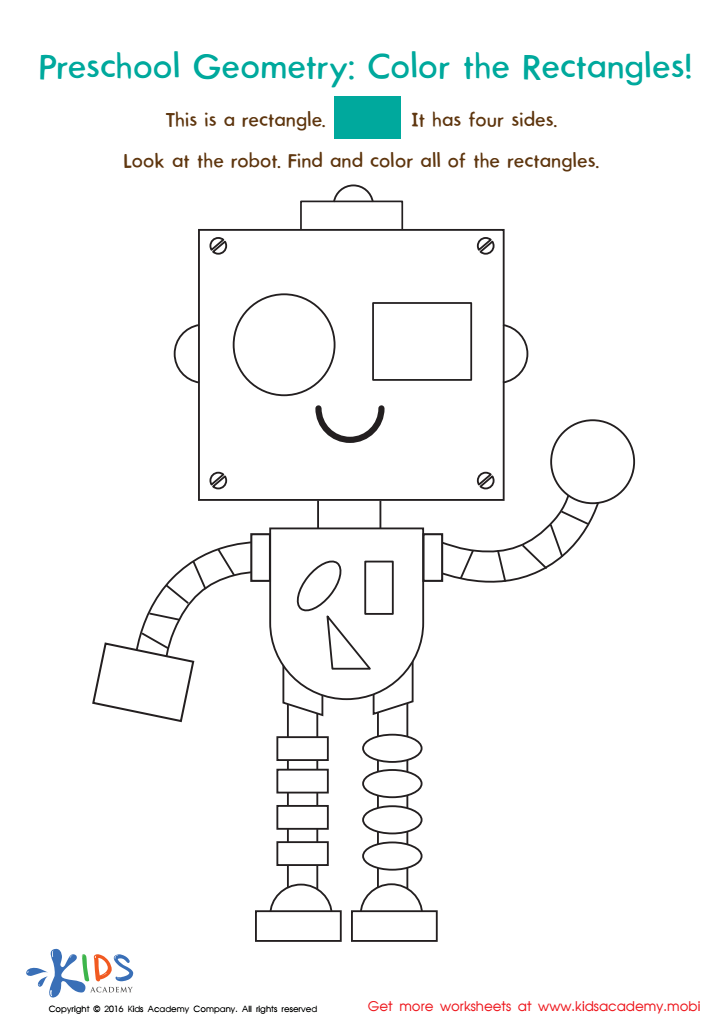
Geometry Worksheet
 Assign to My Students
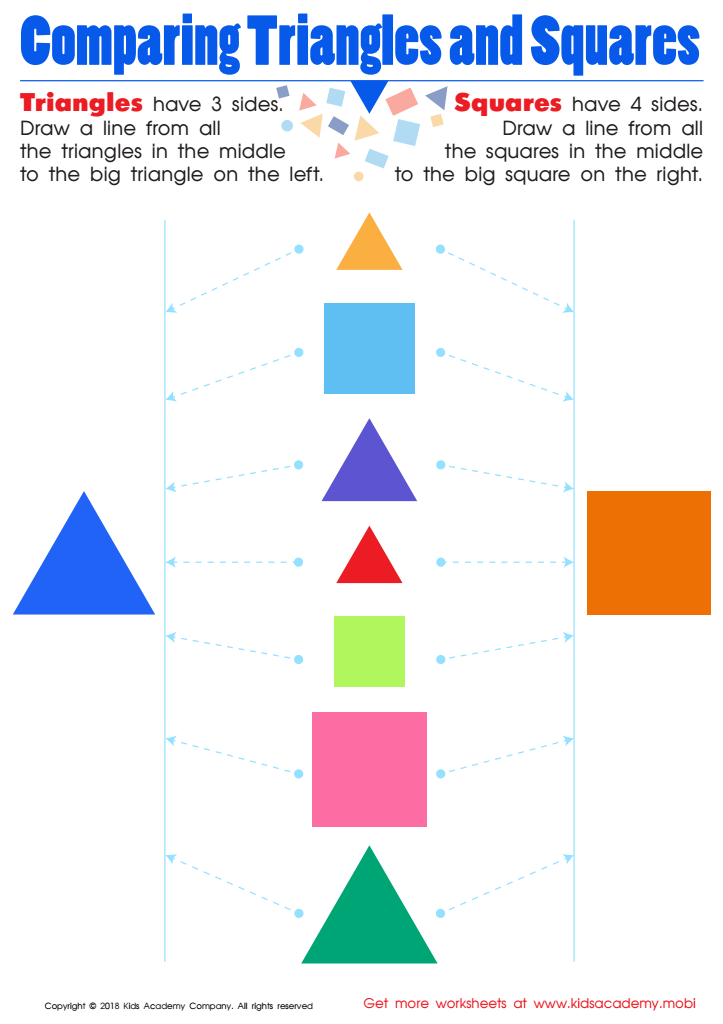
Comparing Triangles Squares Worksheet
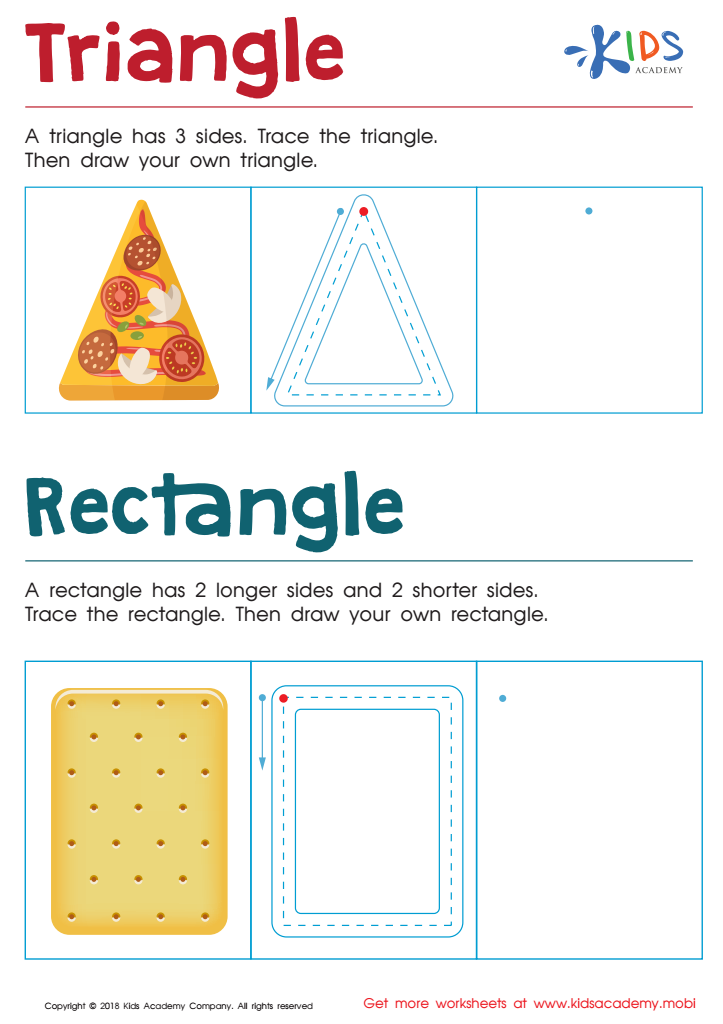
Triangle Rectangle Worksheet
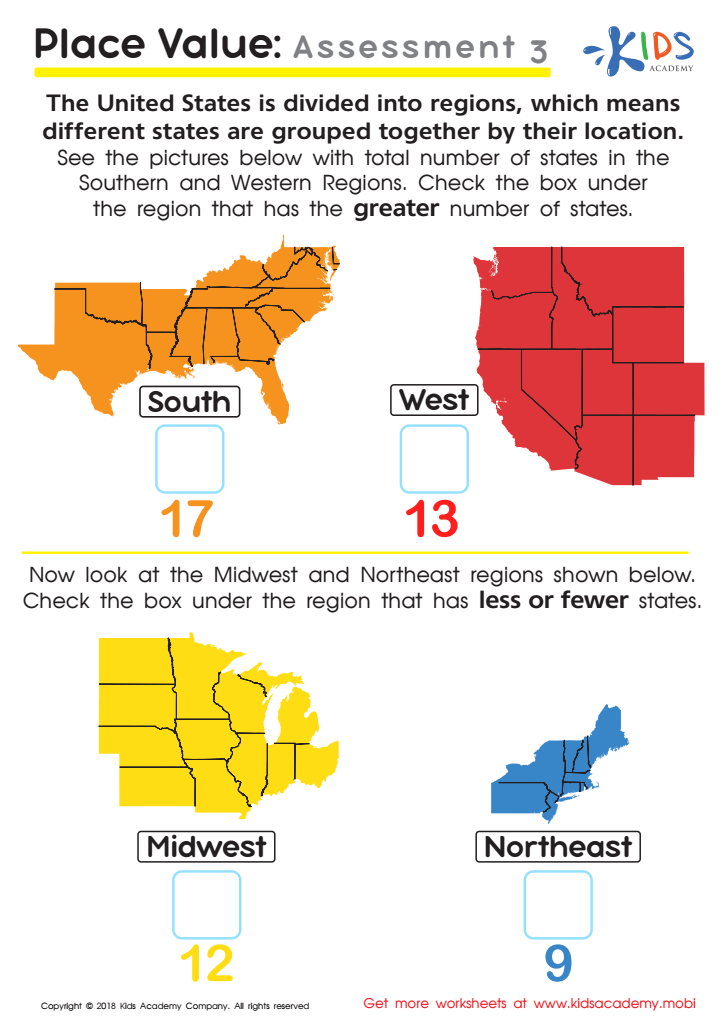
Place Value: Assessment 3 Worksheet
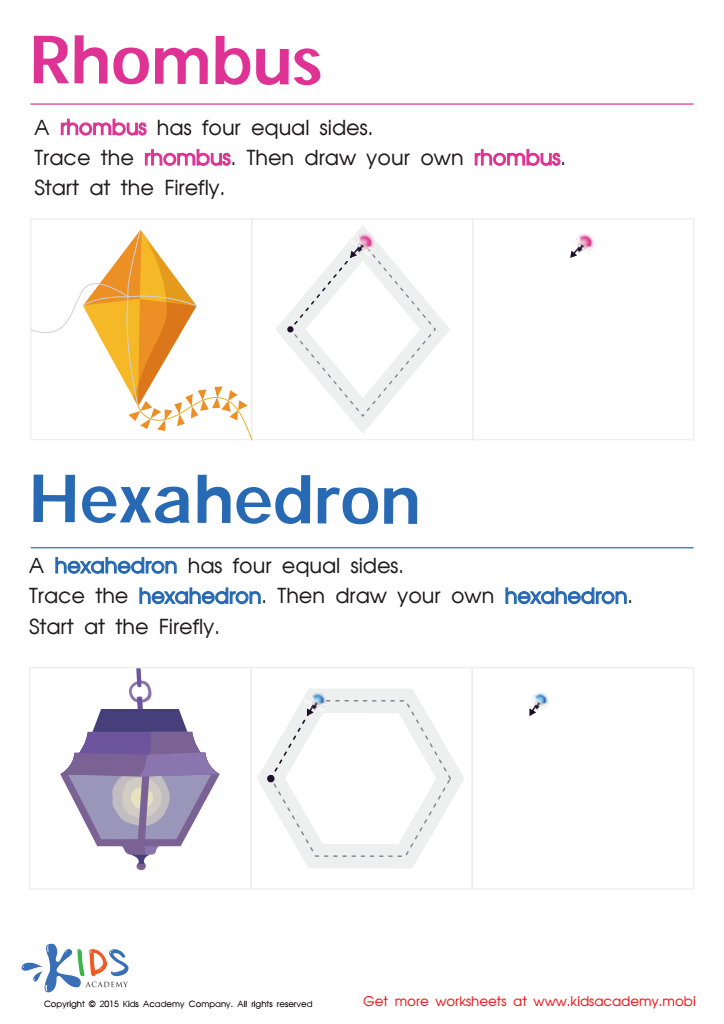
Draw a Rhombus And a Hexahedron Printable
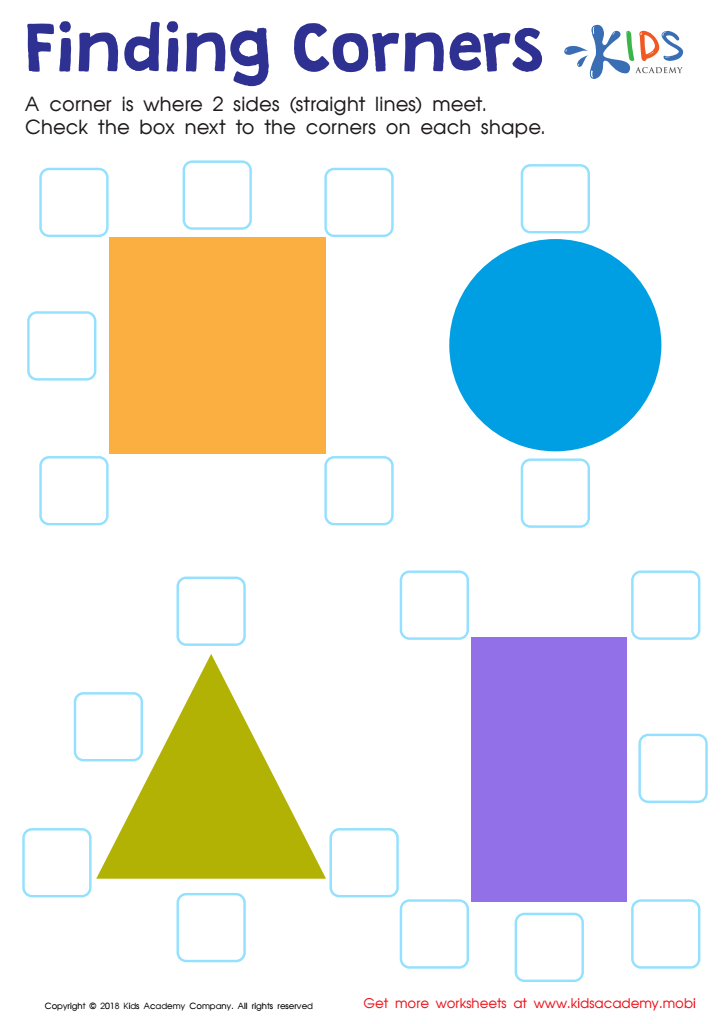
Finding Corners Worksheet








Shape identification is fundamental for children ages 4 to 9 as it establishes a critical foundation for various mathematical concepts and cognitive skills. At this stage, children are not only learning to recognize different shapes, such as circles, squares, and triangles, but they are also beginning to understand characteristics like size, symmetry, and spatial relationships.
Parents and teachers should care about this foundational skill because it significantly impacts problem-solving abilities and logical thinking. Recognizing and naming shapes helps children develop visualization skills essential for advanced math topics like geometry and measurement that they will encounter later in their education. Furthermore, identifying shapes reinforces vocabulary development and encourages observational skills as children learn to describe their surroundings.
Incorporating shape identification into play and daily activities also promotes engagement and enhances learning experiences. It allows for hands-on exploration and fun learning opportunities, which can foster a positive attitude toward math in young learners. Above all, a strong grasp of shape identification paves the way for future academic success, making it a crucial focus for parents and teachers alike. By nurturing these skills, we help children build self-confidence and the ability to tackle more complex mathematical challenges as they progress.








