
Understanding directions Normal Math Worksheets for Ages 4-9
3 filtered results
Difficulty Level
Grade
Age
-
From - To
Subject
Activity
Standards
Welcome to our "Understanding Directions" Normal Math Worksheets for Ages 4-9! Designed to enhance foundational math skills, these engaging worksheets help young learners grasp essential directional concepts. With a variety of fun and interactive activities, children will explore themes like left and right, before and after, and up and down, fostering critical thinking and comprehension. Our resources are tailored to accommodate different learning styles, ensuring each child can thrive at their own pace. Perfect for at-home practice or classroom use, these worksheets aim to make learning directional terms enjoyable while building confidence in early math proficiency. Let's embark on this exciting educational journey together!
Favorites
With answer key
Interactive
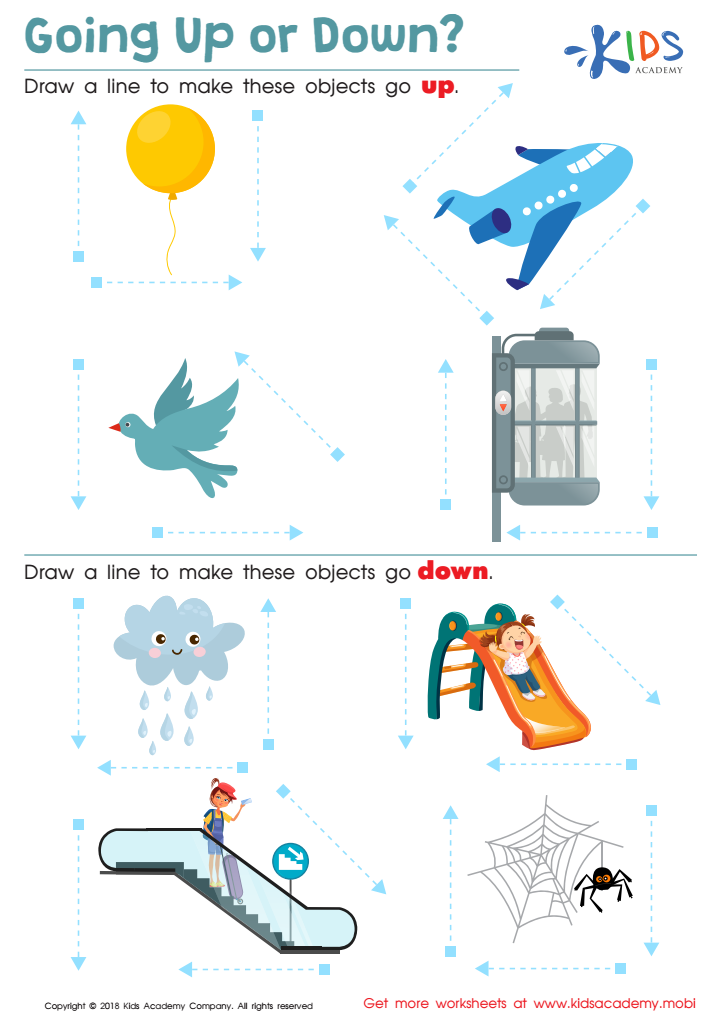
Going up or Down? Worksheet
Young students learn the concept of up and down with this geometry worksheet. They trace lines to identify relative positioning as an object travels. Kids can use position words to describe an object's movement, enhancing their spatial relationship skills - an important geometry foundation.
 Assign to My Students
Going up or Down? Worksheet
Worksheet
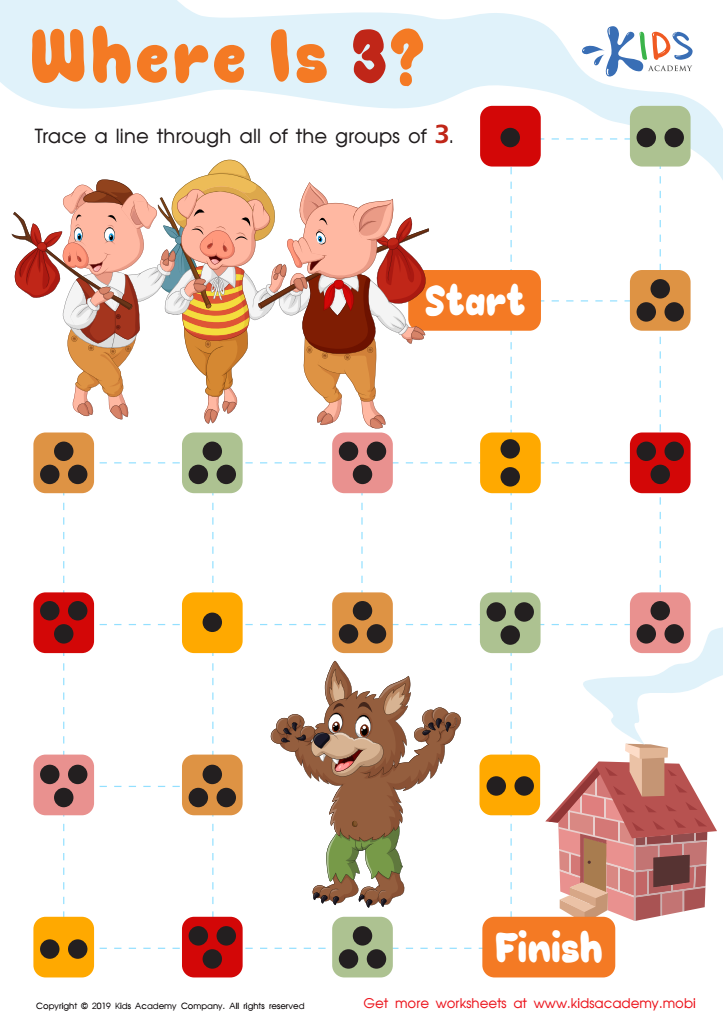
Where Is 3? Worksheet
Let your little mathematician join the Three Little Pigs on an adventure! With this free worksheet, they'll guide the pigs through a maze of numbered bricks, using one-to-one representation to get to the sturdy house. Have fun helping the piggy friends past the wolf!
Where Is 3? Worksheet
Worksheet
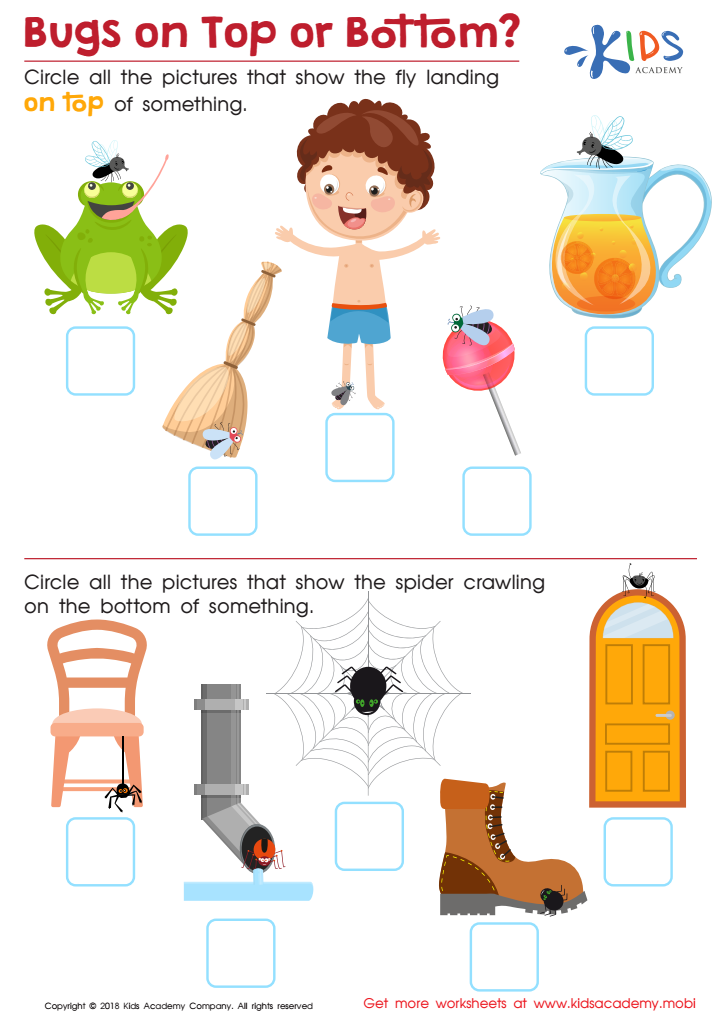
Bugs on Top or Bottom? Worksheet
Preschoolers need to learn directional skills such as top and bottom. This PDF worksheet helps them recognize bugs on the top or bottom using fun visuals. It builds their spatial reasoning while teaching prepositional words in an engaging way.
Bugs on Top or Bottom? Worksheet
Worksheet
Join Kids Academy for Free
Who is primarily going to use this learning content?



.jpg)




Understanding directions in math is crucial for children aged 4-9 as it establishes foundational skills that will benefit them throughout their education. At this age, children are developing cognitive abilities and problem-solving skills, and mastering directional words enhances their comprehension and application of mathematical concepts. When children learn how to follow directions, they become more adept at completing tasks, resulting in increased confidence and a positive attitude towards math.
Moreover, understanding directions fosters critical thinking and encourages children to engage with their environment. It helps them relate math to real-life situations, such as measuring ingredients for a recipe or counting items in a store. By learning to decipher instructions in math, children also improve their listening skills, promoting better communication and collaboration in group settings.
Parents and teachers play a vital role in reinforcing these skills by providing appropriate guidance and activities that encourage direction-following. When children see that parents and teachers value directional understanding, it also teaches them the importance of following guidelines and enhances their overall academic performance. Ultimately, fostering an understanding of directions in math lays the groundwork for lifelong learning, helping children feel prepared to tackle increasingly complex concepts as they grow.








