
Understanding regrouping Normal Math Worksheets for Ages 4-9
4 filtered results
Difficulty Level
Grade
Age
-
From - To
Subject
Activity
Standards
Discover the essential concept of regrouping with our "Understanding Regrouping Normal Math Worksheets" designed for children ages 4 to 9. These engaging worksheets provide a fun and interactive way for young learners to master addition and subtraction through regrouping techniques. With a variety of colorful illustrations and intuitive exercises, children will gain confidence as they practice key math skills. Our worksheets cater to different learning styles, ensuring that each child can grasp concepts at their own pace. Help your child build a strong foundation in mathematics while making learning enjoyable! Explore our resources today to enhance your child’s math journey.
Favorites
With answer key
Interactive
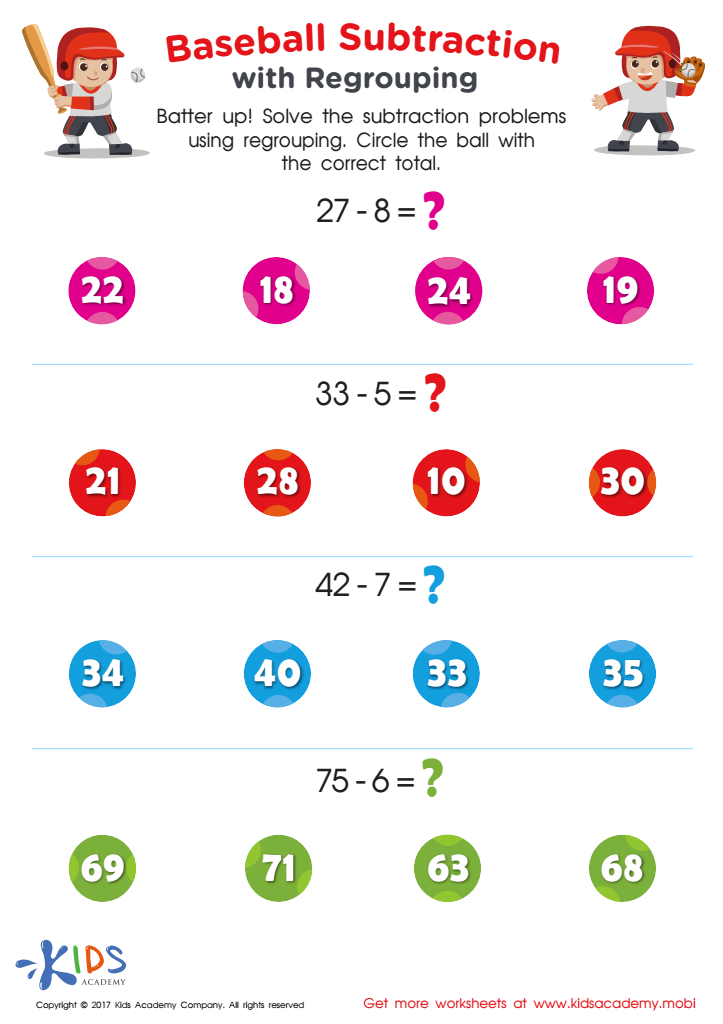
Subtraction With Regrouping for 2nd Grade Worksheet
Kids solve two-digit subtraction problems using regrouping and color in the baseballs.
2nd graders may find regrouping for subtraction tricky, so give them a helping hand with this fun worksheet! They practice two-digit subtraction and regrouping by coloring in baseballs as they solve the problems. Let them practice the skill and enjoy the game at the same time.
 Assign to My Students
Subtraction With Regrouping for 2nd Grade Worksheet
Worksheet
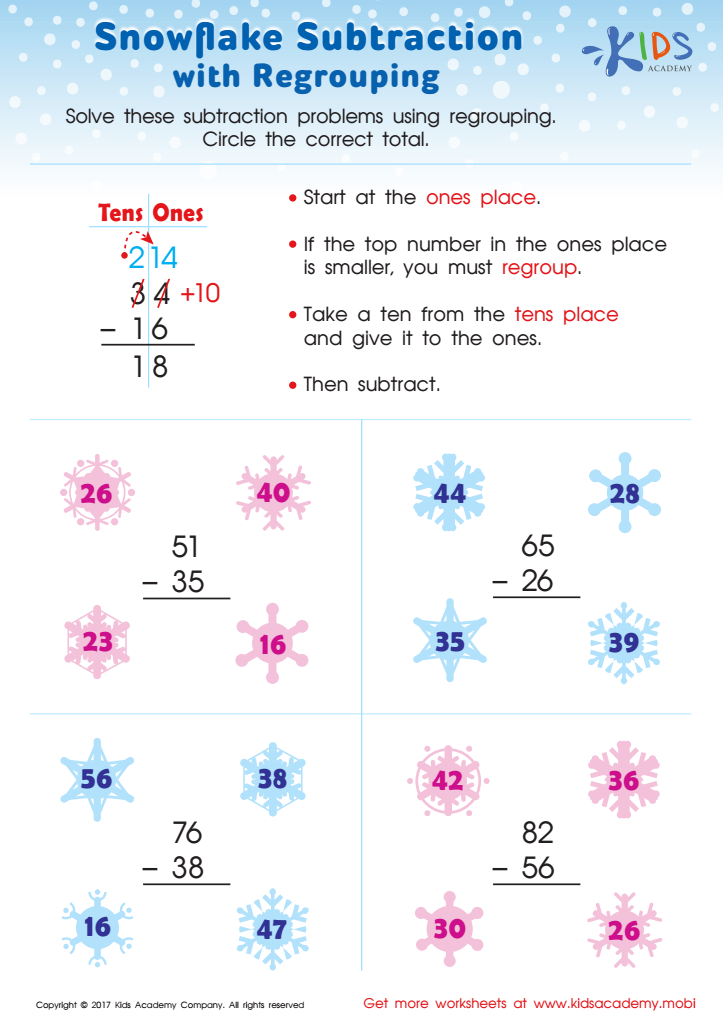
Subtraction With Regrouping Worksheet: Snowflake
It's a great way to learn on a cold winter day.
Teach your child regrouping while subtracting with this winter-themed activity! Have them refer to the instructions at the top and solve each problem using the strategy. Snowflake Subtraction is a great way to learn on a cold winter day - choose the correct answer and have fun!
Subtraction With Regrouping Worksheet: Snowflake
Worksheet
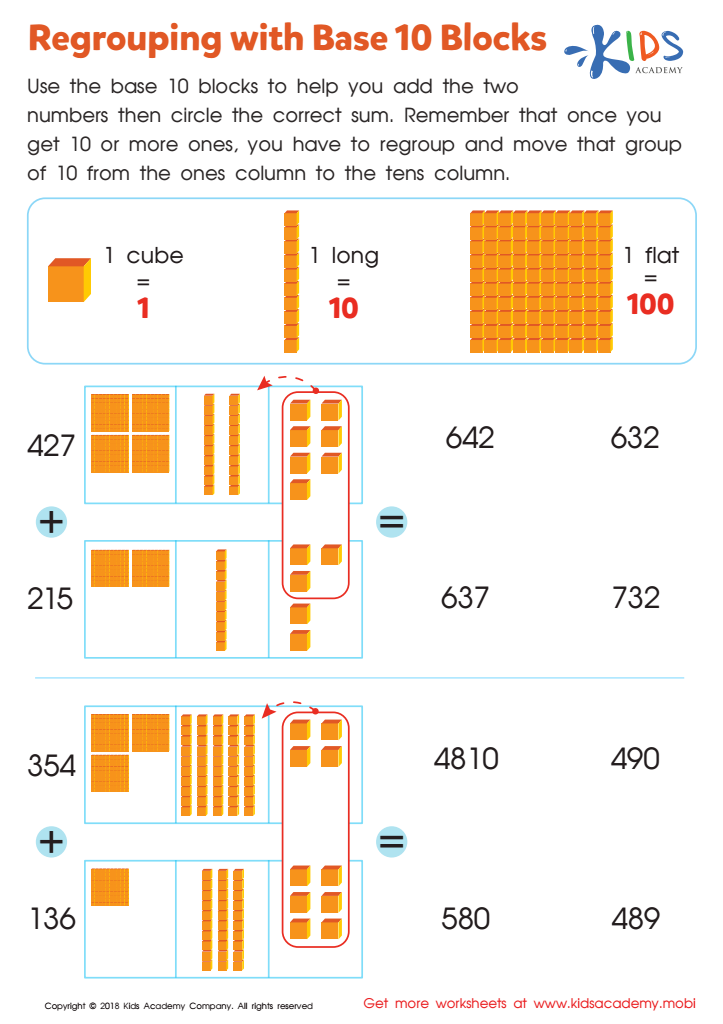
Regrouping with Base 10 Blocks Worksheet
Practice and master 3-digit subtraction with this handy worksheet! It uses base ten blocks to illustrate what's being taken away, helping children understand this tricky skill. Viewing the visual aid will help them get the hang of larger numbers quickly.
Regrouping with Base 10 Blocks Worksheet
Worksheet
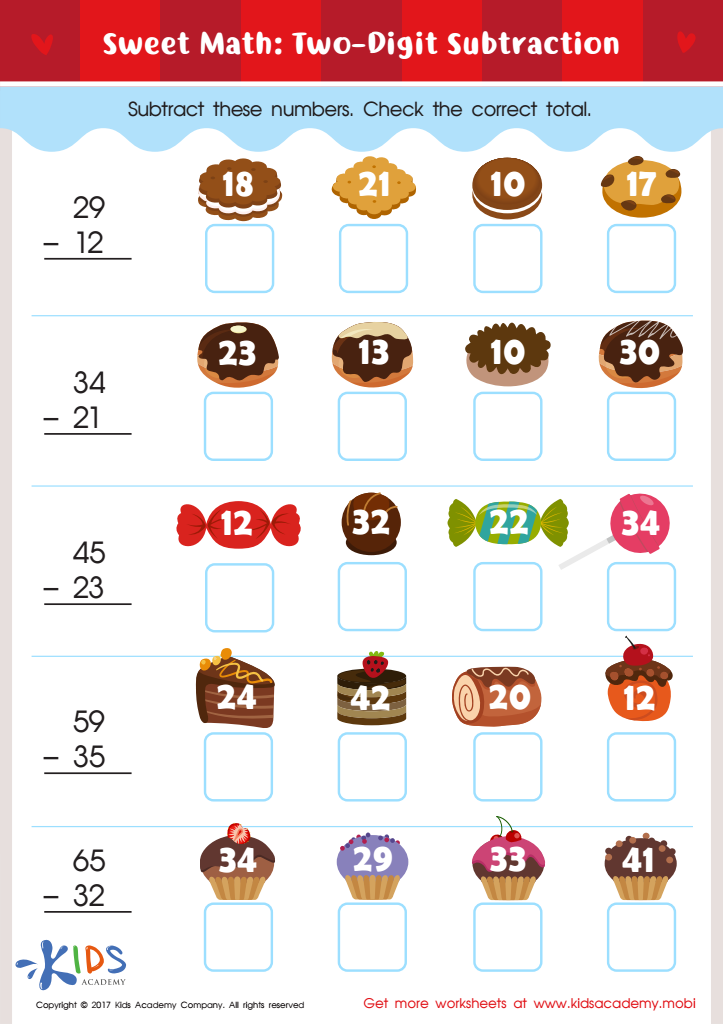
Two Digit Subtraction Worksheet
Make subtraction practice fun and easy with Kids Academy's delightful two digit subtraction worksheet PDF! Your child will love finding the sweet treat containing the correct answer to each 2-digit problem. Offer this quick practice and watch them learn!
Two Digit Subtraction Worksheet
Worksheet
Join Kids Academy for Free
Who is primarily going to use this learning content?




.jpg)


.jpg)
Understanding regrouping in mathematics is essential for children aged 4-9 as it lays the foundational skills necessary for more complex arithmetic—particularly addition and subtraction. Regrouping, often referred to as "carrying" in addition and "borrowing" in subtraction, allows children to master multi-digit calculations, thoroughly preparing them for future math challenges.
For parents and teachers, investing time in helping children understand grouping concepts enhances their math confidence and reduces anxiety surrounding numbers. When children grasp regrouping, they develop critical thinking skills and learn how numbers relate to each other, building a solid number sense that applies to real-life scenarios. Furthermore, early mastery of these concepts fosters a positive attitude towards learning mathematics, promoting lifelong skills associated with problem-solving and logical reasoning.
Moreover, understanding regrouping encourages collaborative learning among peers, facilitating group activities that promote discussion and cooperative problem-solving. Supporting children in this area enables them to overcome potential math-related hurdles, ensuring they do not fall behind. Ultimately, everyone's involvement in nurturing this understanding can significantly impact a child’s academic journey, fostering both competence and enthusiasm for math.








