Counting skills Normal Matching Worksheets for Ages 4-9
6 filtered results
-
From - To
Explore our engaging Counting Skills Normal Matching Worksheets designed for children ages 4-9! These worksheets help young learners develop essential counting skills through fun matching activities. By pairing numbers with corresponding quantities and visuals, children boost their understanding of basic math concepts while enhancing their cognitive abilities. Ideal for home or classroom use, our worksheets promote independent learning and make math both enjoyable and accessible. With themes tailored to captivate young minds, your child will build confidence in their counting skills. Discover the joy of counting and watch as they learn to love math through interactive matching games!
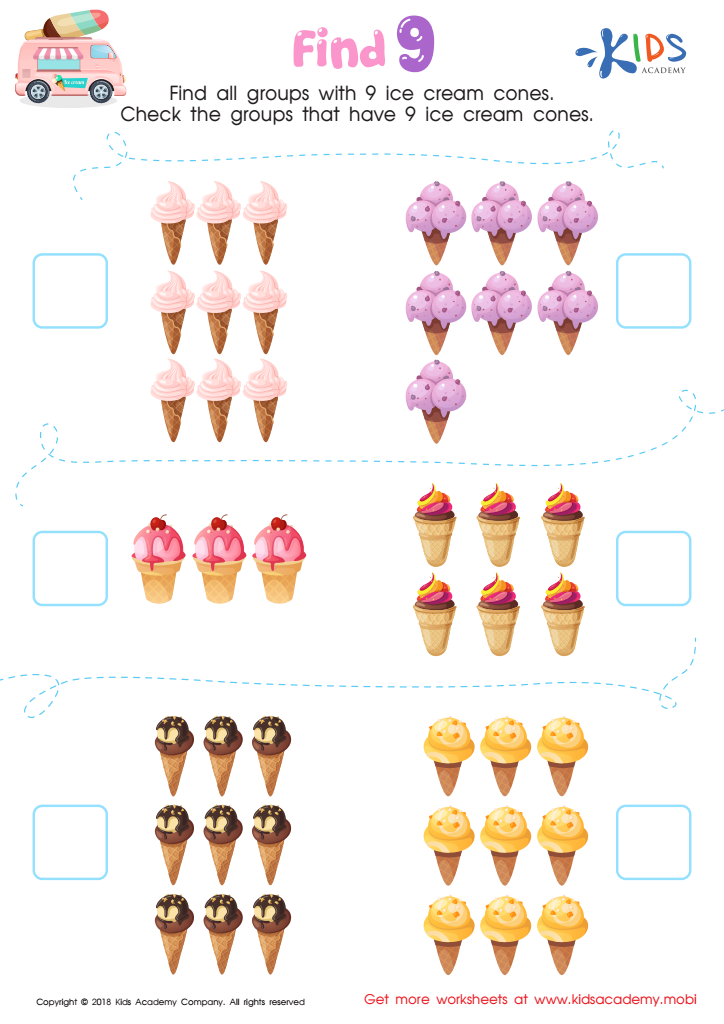
Find 9 Worksheet
 Assign to My Students
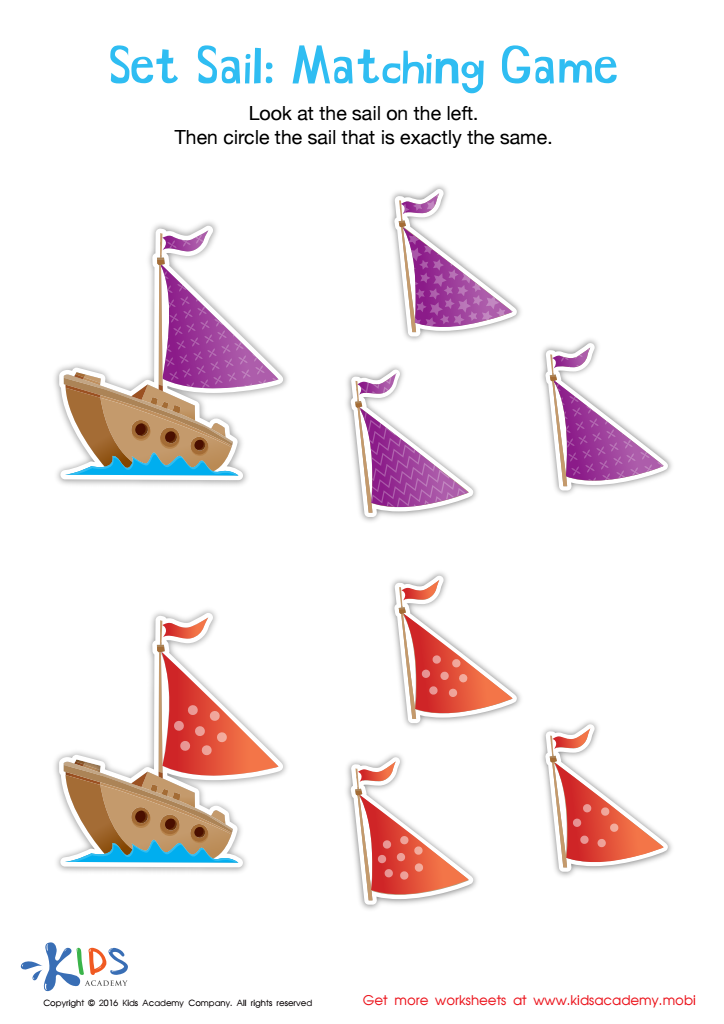
Set Sail Worksheet
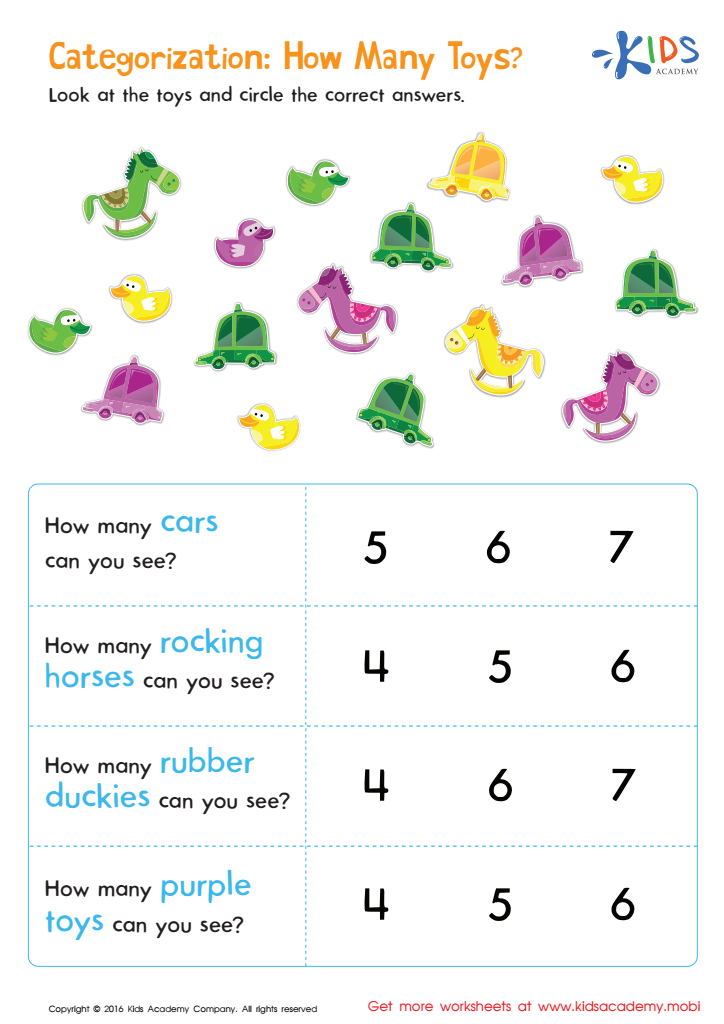
Classifying Toys by Type and Color Sorting Worksheet
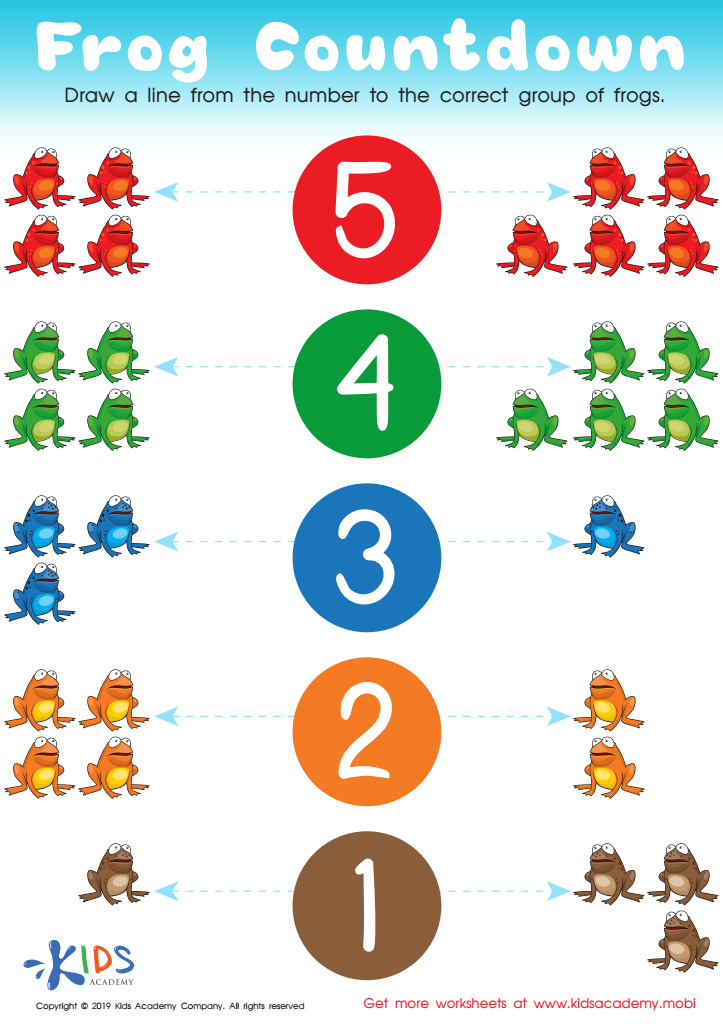
Frog Countdown Worksheet

Ten in the Bed Worksheet
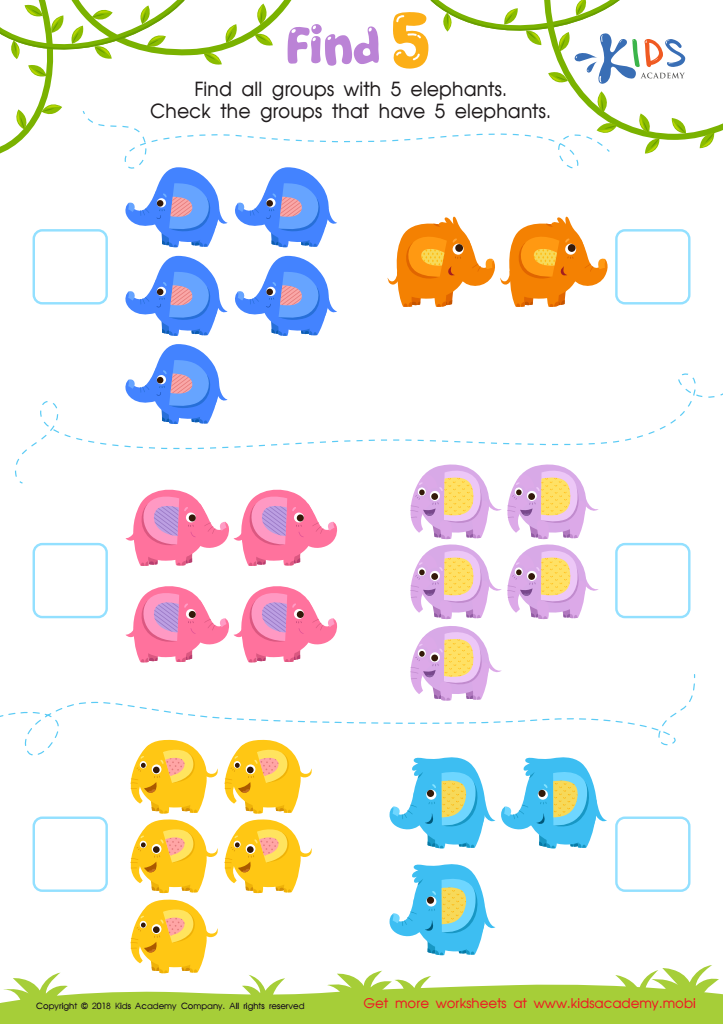
Find 5 Worksheet








Parents and teachers should pay close attention to counting skills and normal matching for children aged 4-9, as these foundational skills are crucial for cognitive development and future academic success. Counting helps children understand numbers and their relationships, which is essential for developing mathematical reasoning. At this age, children begin to grasp concrete concepts of quantity, order, and comparison, which are foundational for more complex math concepts they will encounter later.
Normal matching activities enable children to identify similarities and differences, a skill that fosters critical thinking and problem-solving abilities. Through matching, children enhance their visual perception and categorization skills, which are relevant not just in mathematics but also in language development and scientific reasoning.
Engagement in counting and matching exercises also cultivates a child’s attention span and focus, important traits for learning across all subjects. Furthermore, these skills promote social interactions when children participate in group activities, helping develop communication and collaboration abilities. By nurturing these skills early on, parents and teachers set the stage for confidence and competence in numeracy, significantly contributing to the child's overall academic journey and personal growth.








