
Fine Motor Skills Normal Matching Worksheets for Ages 4-9
4 filtered results
Difficulty Level
Grade
Age
-
From - To
Subject
Activity
Standards
Our "Fine Motor Skills Normal Matching Worksheets for Ages 4-9" are carefully designed to develop children's hand-eye coordination and precision. Engaging activities and matching exercises enhance dexterity, encouraging proper pencil grip and control. Perfect for both home and classroom settings, these worksheets offer a blend of fun and education, supporting foundational motor skills that are crucial for daily tasks and advanced learning. Suitable for ages 4 to 9, each worksheet targets age-specific milestones, ensuring your child excels. Let us help your young learners flourish with enjoyable, practical, and effective fine motor skill-building worksheets.
Favorites
With answer key
Interactive
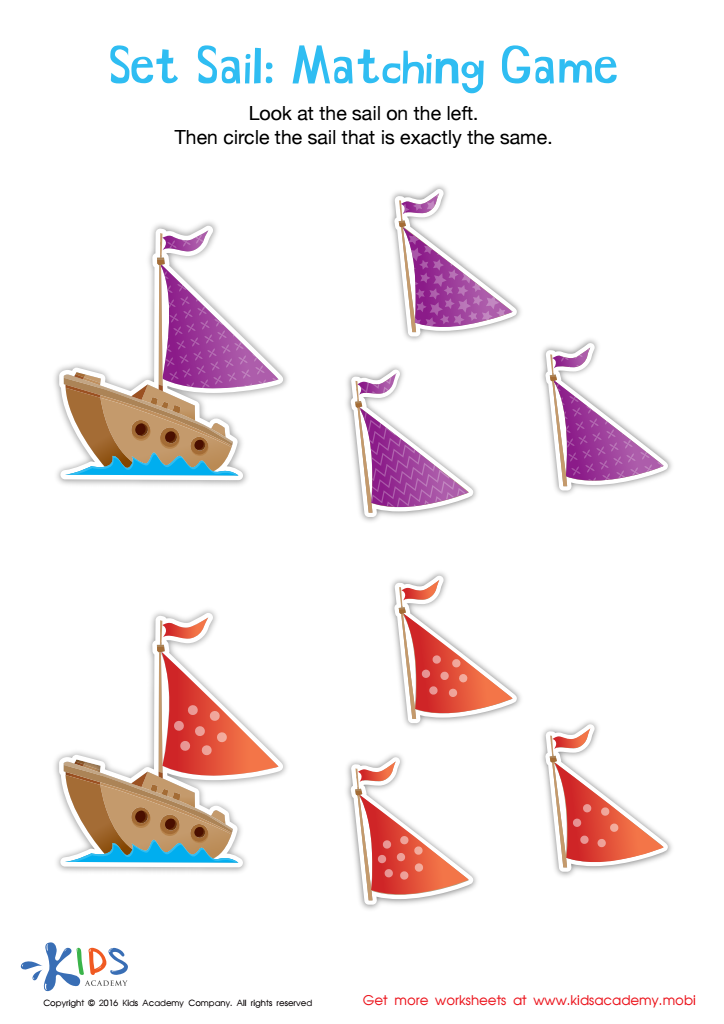
Set Sail Worksheet
Set sail with this fun matching game for toddlers! Kids will love finding the same pattern on the sails, improving their problem-solving and counting skills. Enjoy this bright and engaging worksheet!
 Assign to My Students
Set Sail Worksheet
Worksheet

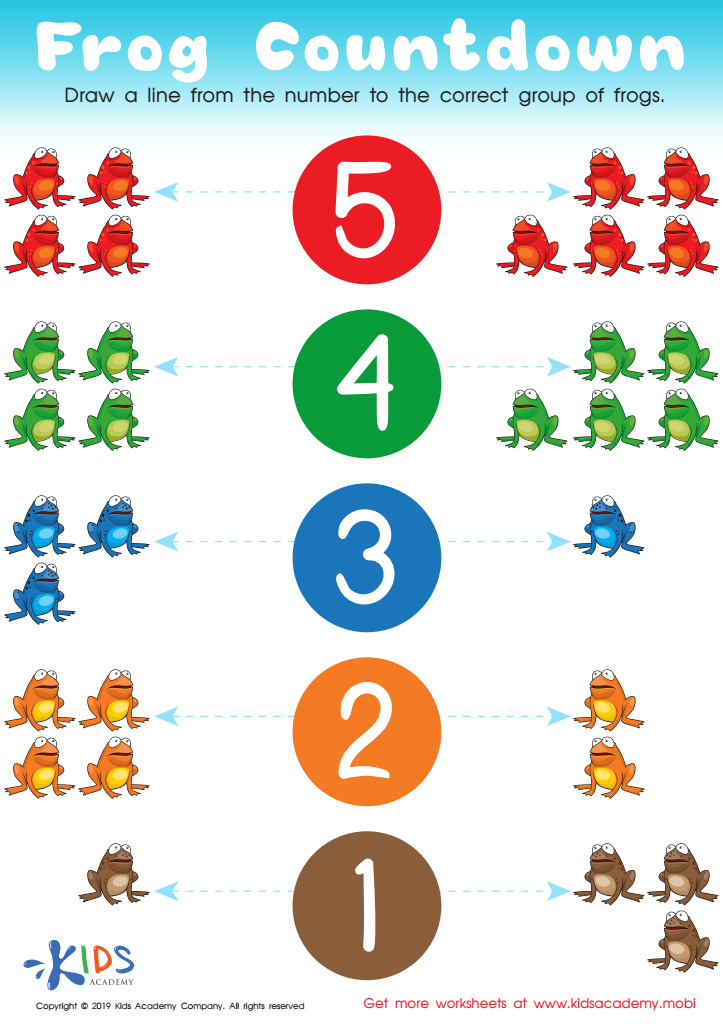
Frog Countdown Worksheet
Make learning fun for kids with traceable printouts! This exercise has kids counting frogs and drawing a line to match the number. Expand their knowledge with activities like this, beyond the basics they learn in school. Help them explore new ways of learning and make it enjoyable.
Frog Countdown Worksheet
Worksheet
Join Kids Academy for Free
Who is primarily going to use this learning content?








Fine motor skills encompass the small muscle movements in the hands and fingers that enable precise tasks such as writing, buttoning a shirt, and using utensils. For children aged 4-9, development in these skills is crucial for both academic success and daily living.
Teachers and parents should prioritize fine motor skills development because it directly impacts a child’s ability to perform classroom tasks effectively. For example, writing legibly, cutting with scissors, and manipulating small objects are integral activities within this age range. A deficit in fine motor skills might result in slower progression in literacy and numeracy due to difficulties in completing assignments, which could affect overall academic confidence and performance.
Moreover, fine motor skills are foundational for growing independence in personal care. Zipping jackets, tying shoelaces, and even basic hygiene tasks all depend upon the dexterity children develop during these formative years. Ensuring children have robust fine motor skills promotes their autonomy, fostering a sense of achievement and boosting self-esteem.
Given their critical role, it is essential for parents and teachers to offer activities that strengthen these skills, such as playing with building blocks, engaging in crafts, and practicing handwriting. Early focus in this developmental domain lays a solid groundwork for future educational and personal competence.








