Multiplication practice Normal Multiplication Worksheets for Ages 4-9 - Page 2
26 filtered results
-
From - To
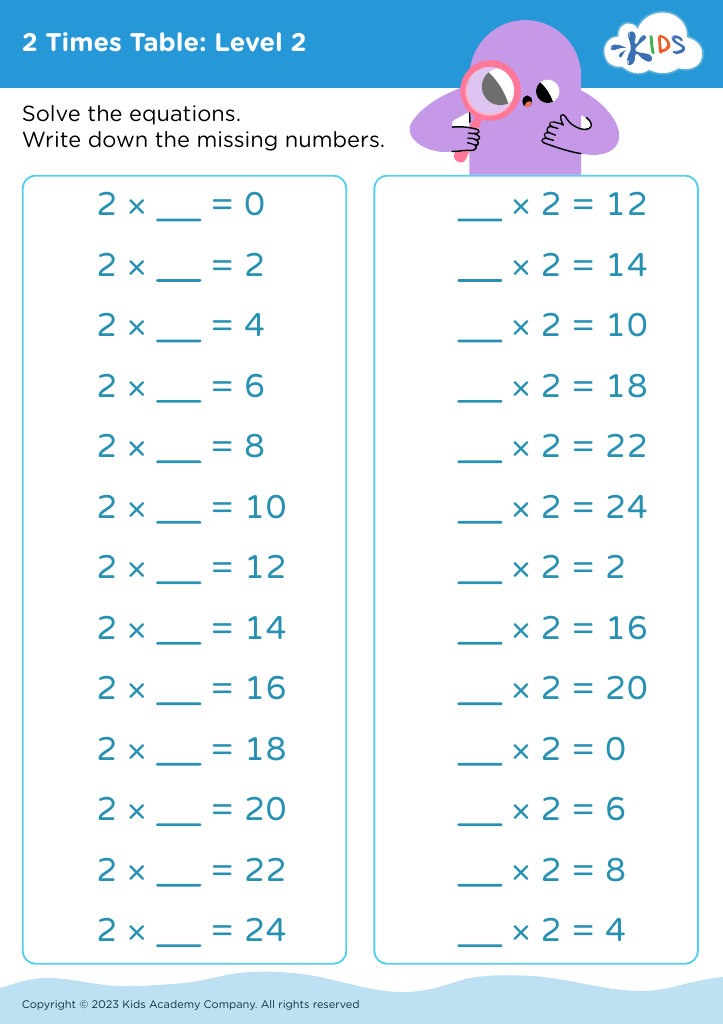
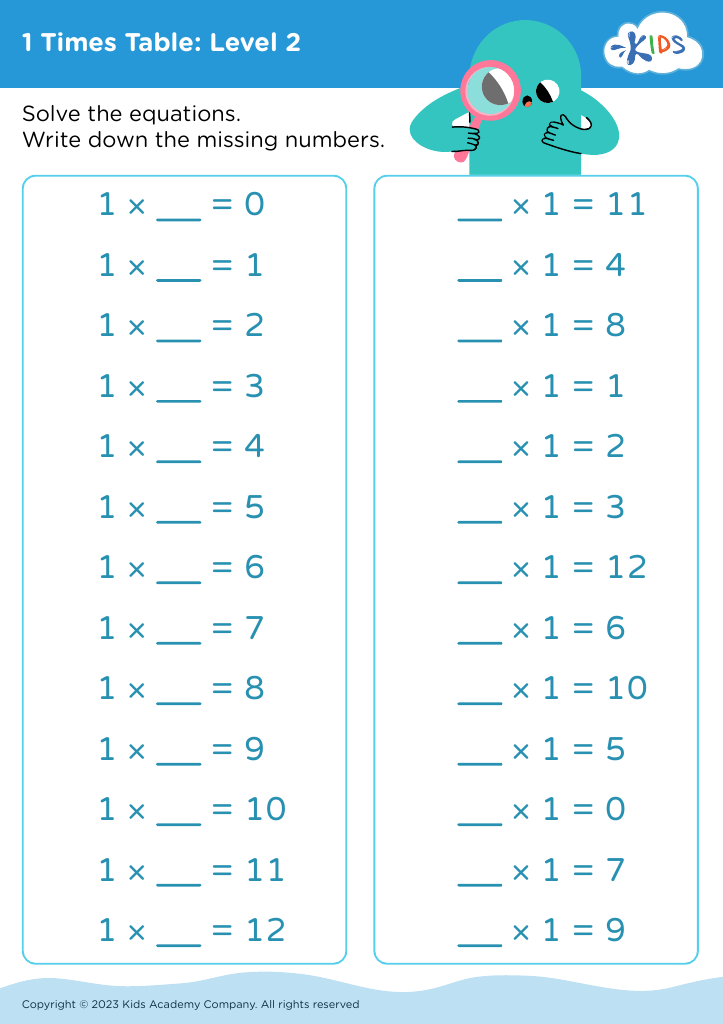








Multiplication practice is crucial for children ages 4-9 as it lays the foundation for future mathematical understanding and problem-solving skills. At an early age, children are in their prime cognitive development stage, where they are most receptive to learning and retaining new information. Introducing multiplication during this period helps solidify basic arithmetic skills that are vital for more advanced math concepts in later grades, such as division, fractions, and algebra.
Beyond academic skills, mastering multiplication fosters critical thinking and analytical abilities. It enhances a child’s ability to recognize patterns, understand relationships between numbers, and solve problems efficiently. By practicing multiplication, children also improve their memorization and recall capabilities, which are beneficial in many aspects of learning both within and outside math.
Moreover, early proficiency in multiplication boosts a child’s confidence in their mathematical abilities, encouraging a positive attitude towards math as they progress through school. This confidence can reduce math anxiety and make children more willing to tackle challenging problems.
Parents and teachers play a key role in nurturing these skills through consistent practice and positive reinforcement. Engaging, fun activities like games, songs, and interactive tools can make learning multiplication enjoyable and effective, setting the stage for a lifelong appreciation and aptitude for math.








