
Understanding times tables Normal Multiplication Worksheets for Ages 4-9
3 filtered results
Difficulty Level
Grade
Age
-
From - To
Subject
Activity
Standards
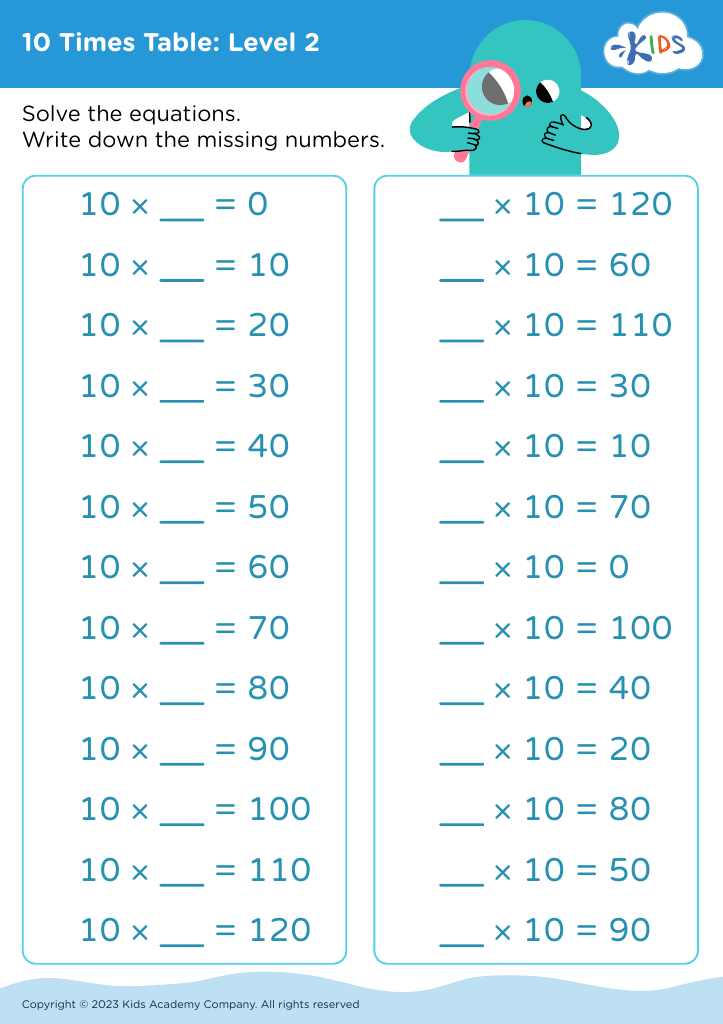
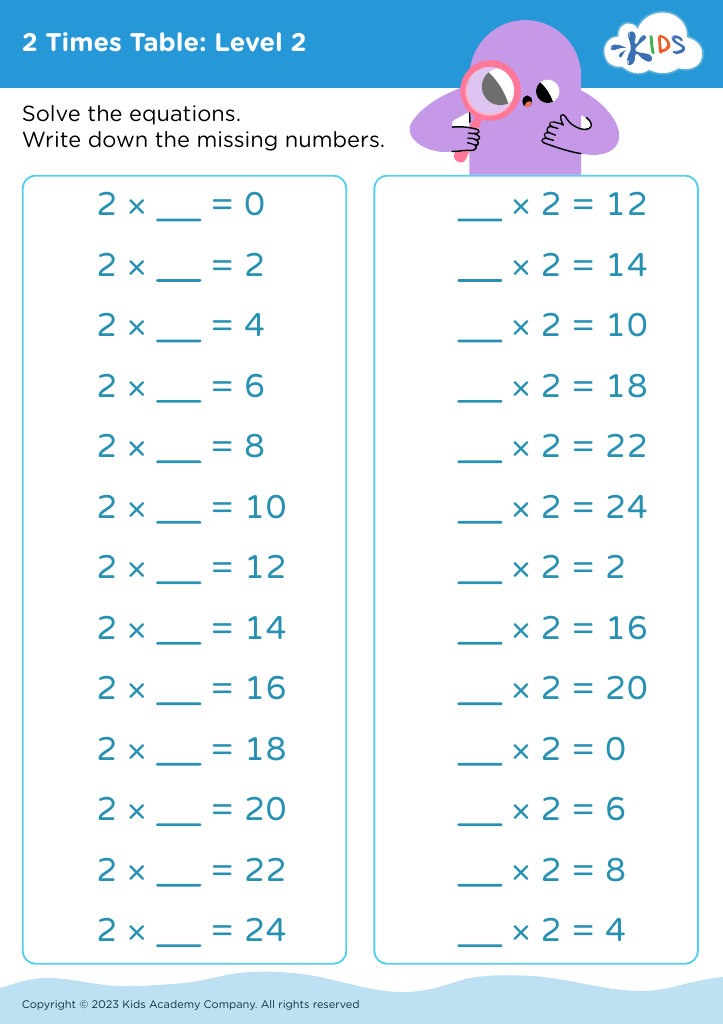
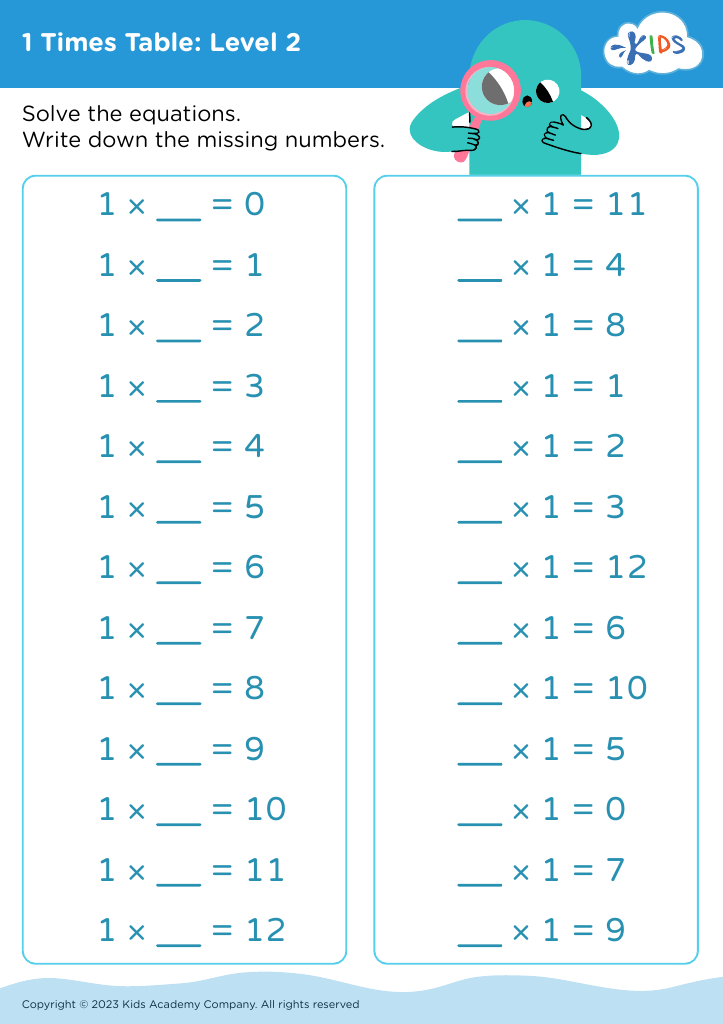
Explore our engaging "Understanding Times Tables Normal Multiplication Worksheets" designed for children aged 4-9. These interactive worksheets are perfect for cultivating a strong foundation in multiplication skills, helping young learners grasp the concept of times tables with ease. Featuring vibrant visuals and age-appropriate exercises, these resources make learning fun and effective. Children will develop critical thinking skills and enhance their math abilities while building confidence in their multiplication knowledge. Ideal for classroom activities or home practice, our worksheets cater to various learning styles, ensuring every child can thrive in their math journey. Start your multiplication adventure today!
Favorites
With answer key
Interactive
Join Kids Academy for Free
Who is primarily going to use this learning content?








Understanding times tables and normal multiplication is crucial for children aged 4-9 as it lays the foundation for their mathematical journey. At this formative age, children develop cognitive skills that enable them to think logically and solve problems, and multiplication is a key component of this development.
Grasping multiplication through times tables helps children to recognize patterns, strengthen number sense, and enhance their arithmetic fluency. This skill not only boosts their confidence but also encourages a positive attitude toward mathematics. Mastering these concepts early on cultivates a solid groundwork for more complex operations such as long division, fractions, and later algebra, reducing anxiety in future math learning.
Teachers and parents play a vital role in this process by incorporating engaging, interactive strategies to practice multiplication, turning it into a fun rather than intimidating experience. By fostering a supportive learning environment, they can encourage a love for math that persists beyond the classroom.
Investing efforts in helping children understand multiplication can thereby promote overall academic success, set the stage for lifelong learning, and empower them to tackle everyday challenges involving numbers, paving the way for their future success in mathematics and beyond.








