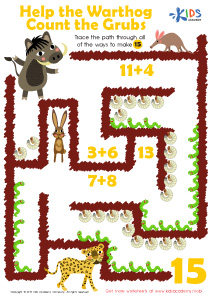
Mathematical reasoning Normal Subtraction Worksheets for Ages 4-9
4 filtered results
-
From - To
Unlock the potential of young minds with our Mathematical Reasoning Normal Subtraction Worksheets, designed for ages 4-9. These engaging worksheets focus on enhancing fundamental subtraction skills through interactive activities that stimulate logical thinking and problem-solving abilities. With colorful illustrations and progressive challenges, children grasp core concepts and build a solid foundation for future math success. Ideal for classrooms or at-home practice, these worksheets make learning subtraction enjoyable and effective. Empower your child with the confidence to tackle math problems head-on by incorporating our expertly crafted resources for comprehensive mathematical growth. Explore our selection and watch your child excel in math!
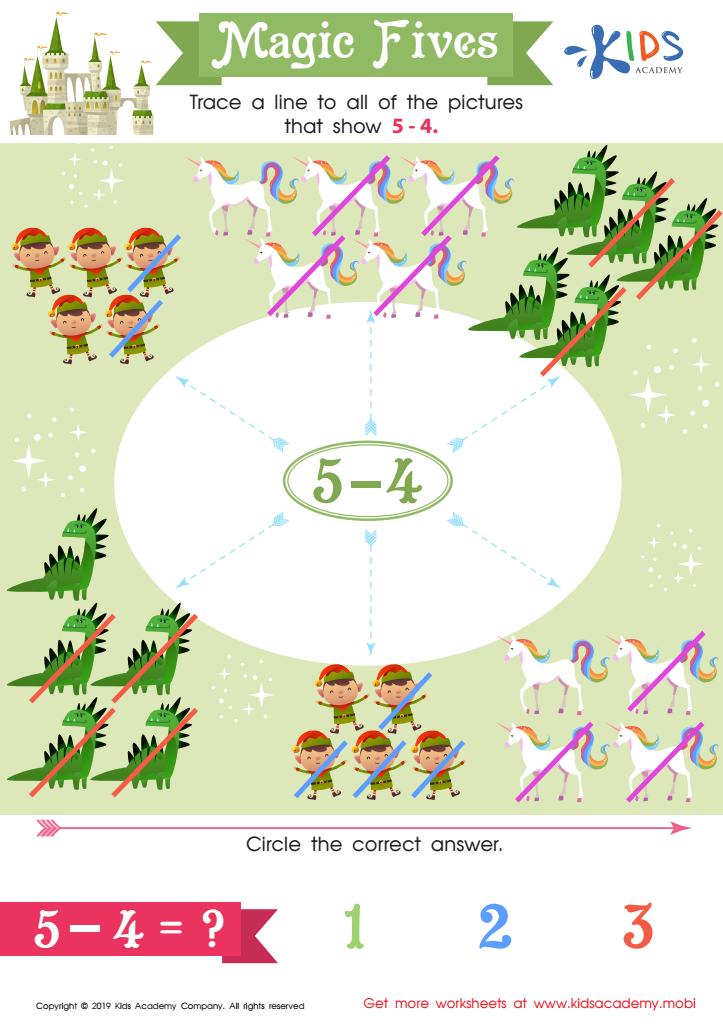
Magic Fives Worksheet
 Assign to My Students
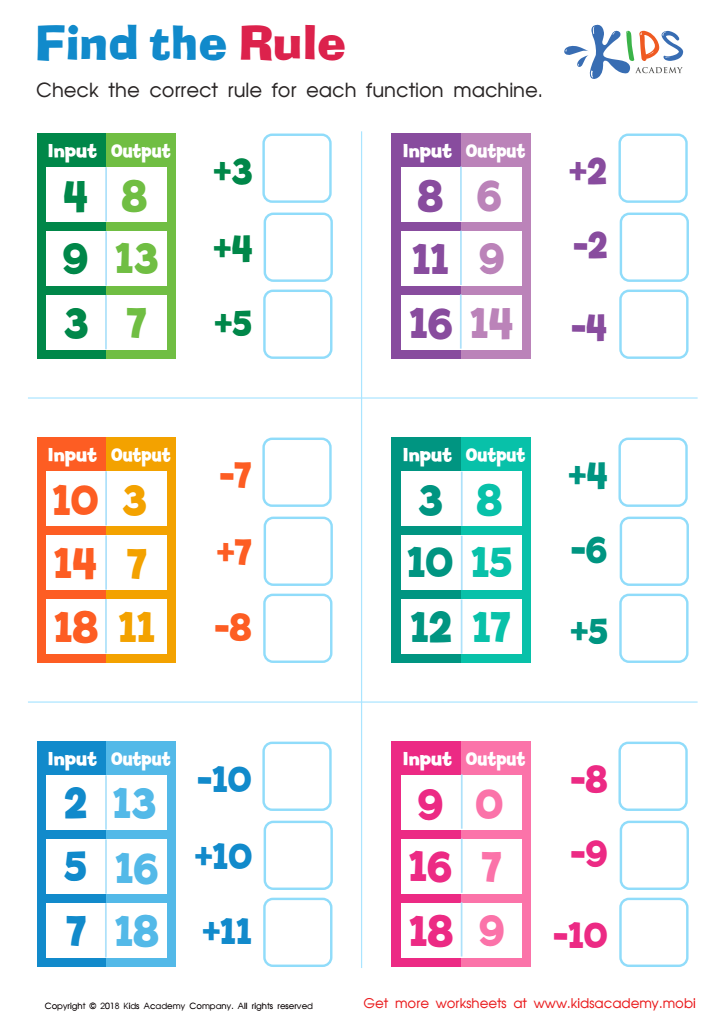
Find the Rule Worksheet
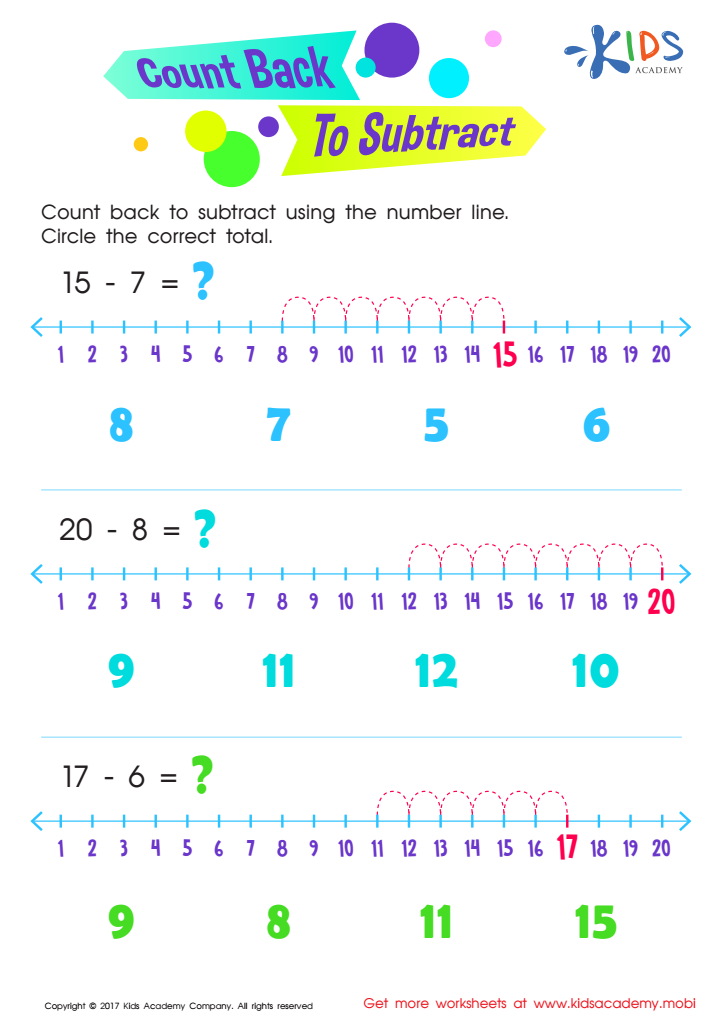
Count Back to Subtract Substraction Worksheet
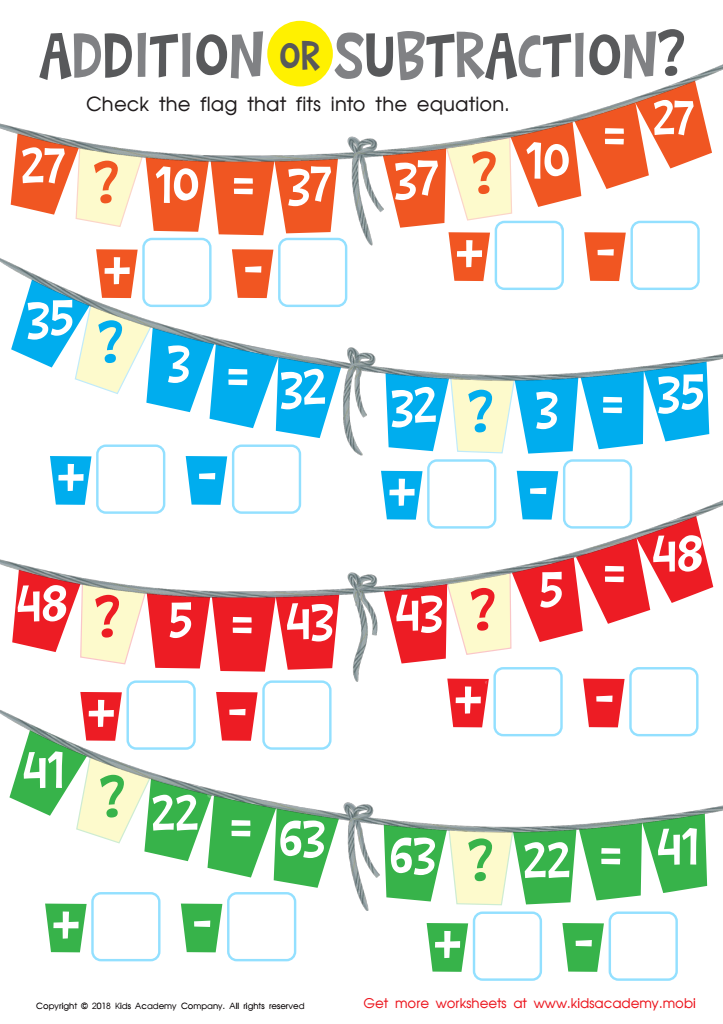
Addition or Subtraction? Worksheet








Parents and teachers should care about mathematical reasoning, especially normal subtraction, for children ages 4-9 because it plays a critical role in their cognitive development and future academic success. During these formative years, children’s brains are highly adaptable and capable of learning and retaining fundamental mathematical concepts. Subtraction is not just about performing basic mathematical operations; it nurtures problem-solving skills, logical thinking, and the ability to understand and manipulate numbers, which are foundational for advanced mathematical studies.
Enhancing mathematical reasoning through subtraction helps children see patterns, understand relationships between numbers, and develop mental arithmetic skills that are essential in everyday life. Engaging young learners with subtraction activities can also boost their confidence and reduce math-related anxiety, fostering a positive attitude towards learning mathematics.
Furthermore, early proficiency in these skills sets a solid groundwork for more complex mathematical concepts such as multiplication, division, fractions, and algebra in later grades. A strong foundation in mathematic reasoning, validated through operations like subtraction, prepares children not just for academic success but also for practical, everyday problem-solving and critical thinking skills required throughout their lives.
Parents and teachers play essentials roles in making learning enjoyable and meaningful, thus, creating a supportive and stimulating environment is key to nurturing a lifelong appreciation and excellence in mathematics.