Subtraction practice Normal Subtraction Worksheets for Ages 4-9
6 filtered results
-
From - To
Welcome to our Subtraction Practice Normal Worksheets designed specifically for children ages 4-9! These engaging worksheets provide an excellent opportunity for young learners to develop their subtraction skills through fun and interactive exercises. Each worksheet is tailored to match various skill levels, ensuring every child can progress at their own pace. From basic single-digit problems to more challenging equations, our resources encourage practice and enhance math fluency. Perfect for classroom use or at-home learning, these subtraction worksheets aim to make math enjoyable while building a solid foundation in arithmetic. Start your child's math journey today with our printable subtraction worksheets!
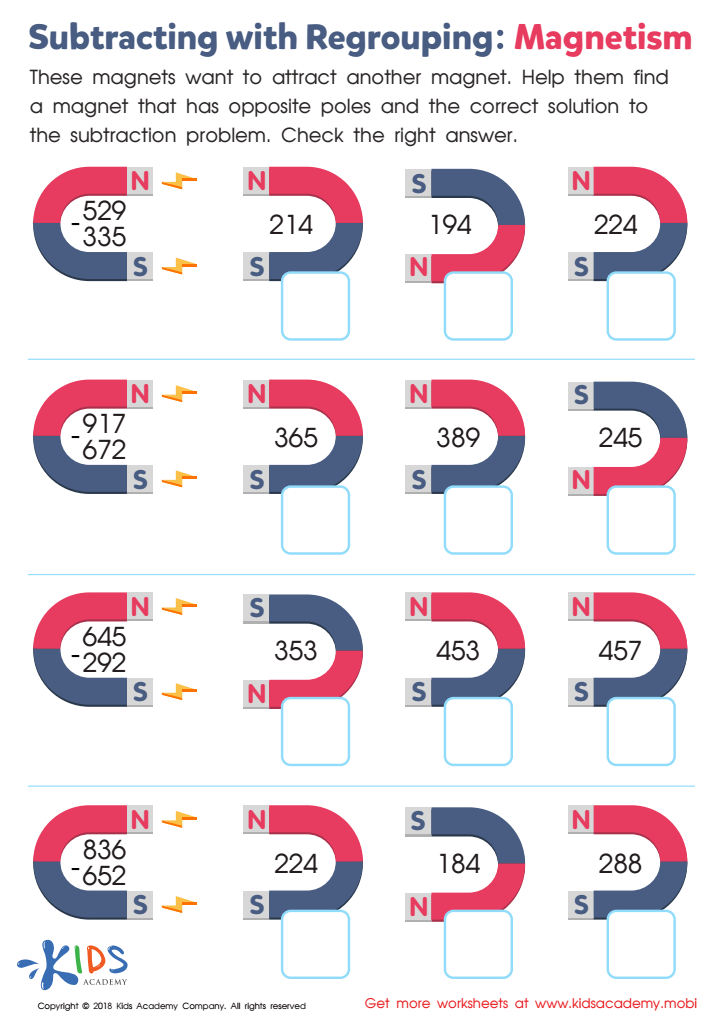
Subtracting with Regrouping: Magnetism Worksheet
 Assign to My Students
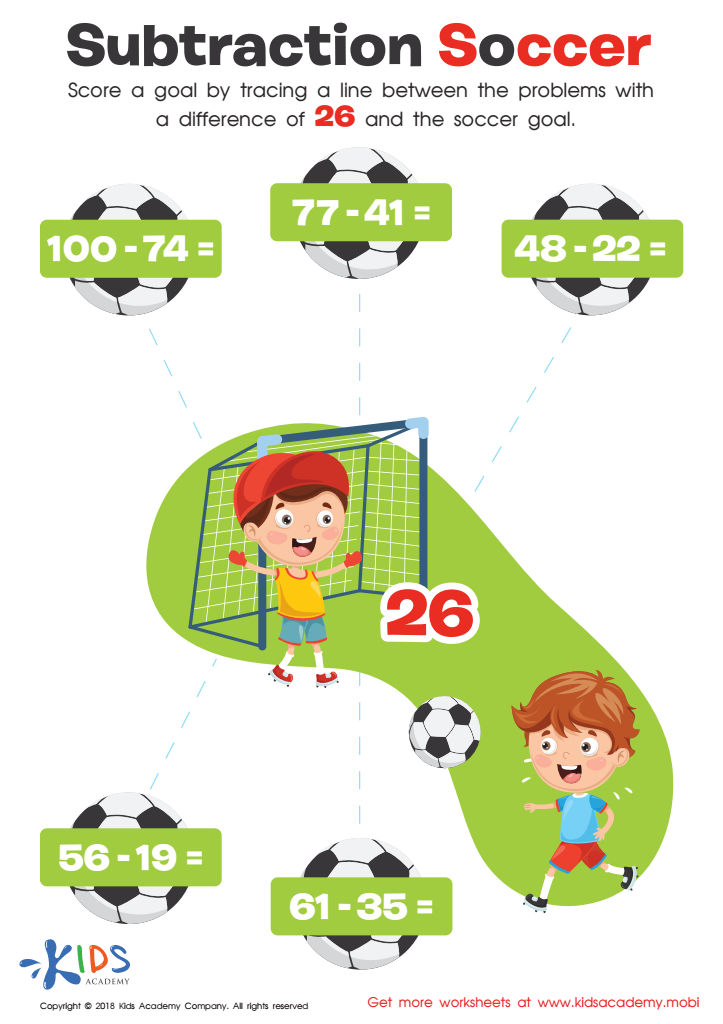
Subtraction Soccer Worksheet
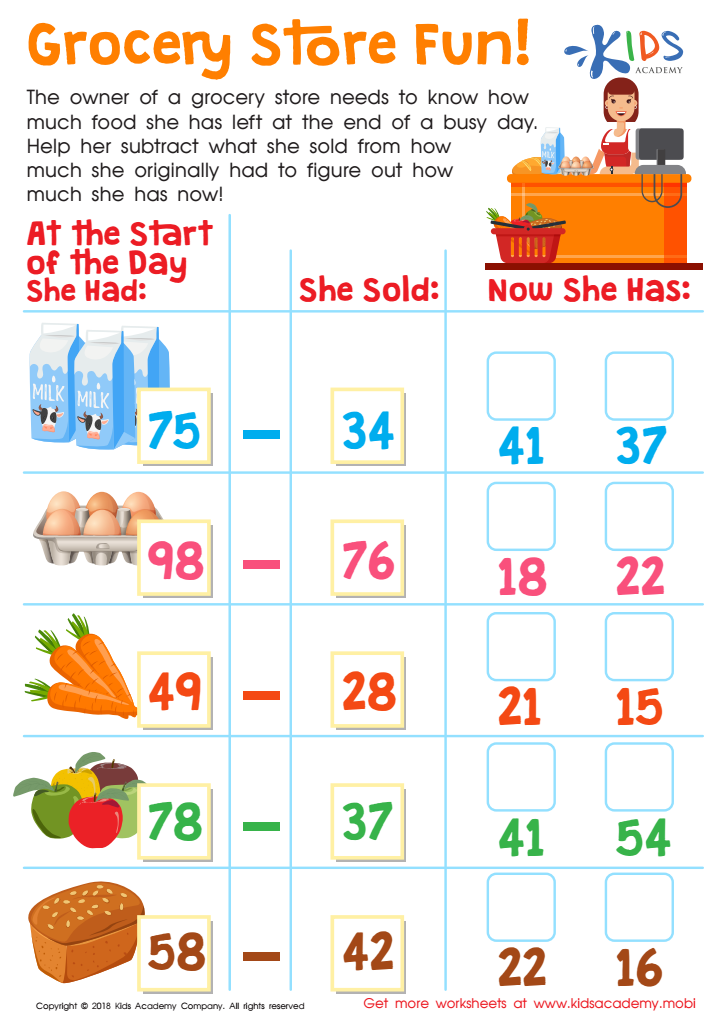
Grocery Store Fun! Worksheet
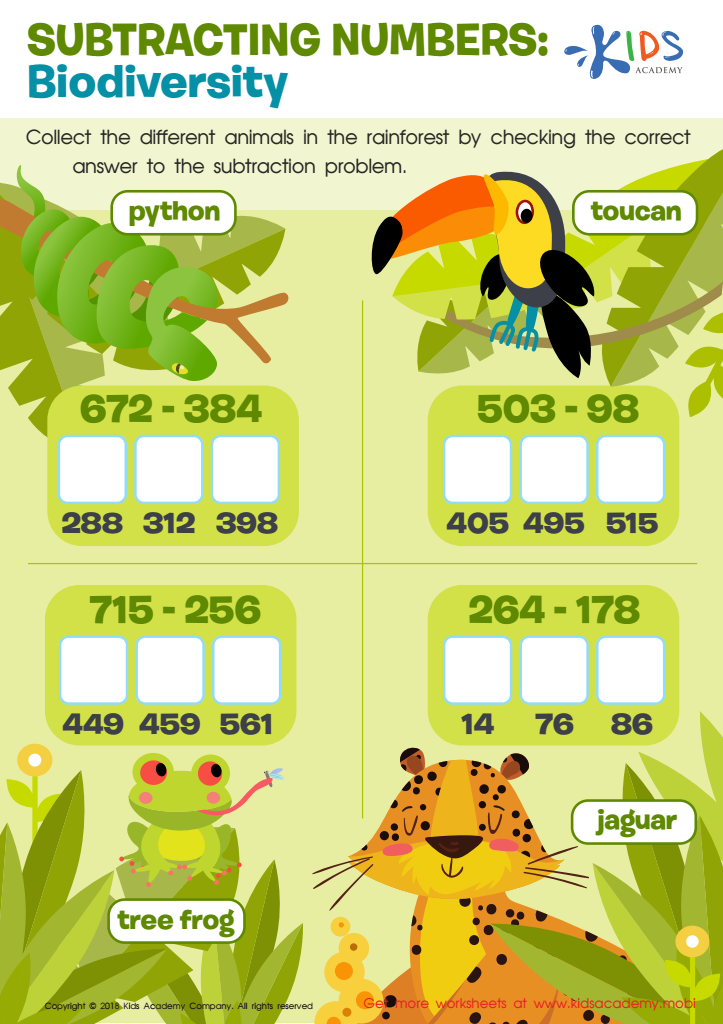
Subtracting Numbers: Biodiversity Worksheet
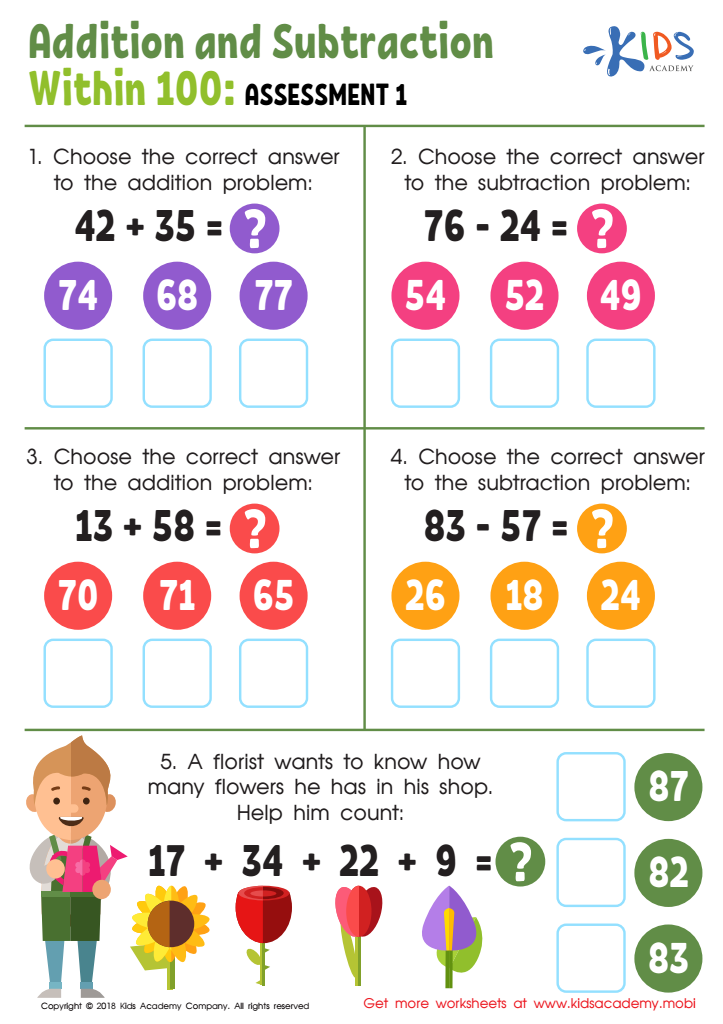
Addition and Subtraction Within 100 Worksheet
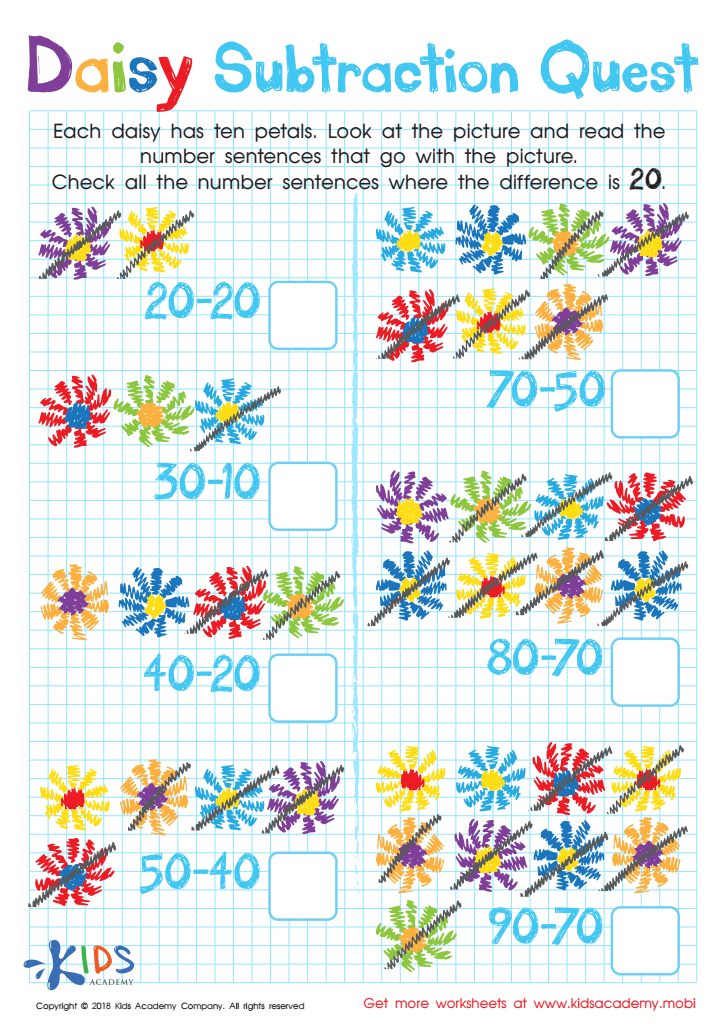
Daisy Subtraction Quest Worksheet








Parents and teachers should prioritize subtraction practice for children aged 4-9 as it forms the foundational pillar of their mathematical education. Mastering subtraction not only enhances numerical fluency but also fosters critical thinking and problem-solving skills. During these formative years, children are like sponges, absorbing essential concepts that will benefit their overall cognitive development.
Subtraction practice enables children to develop number sense, allowing them to understand the relationships between numbers and grasp more complex mathematical concepts later on. It reinforces their ability to manipulate numbers, which is vital in everyday scenarios like sharing items, managing allowances, or understanding scores in games.
Moreover, consistent subtraction practice builds confidence and reduces math anxiety. Children who find joy in successfully solving subtraction problems are more likely to engage positively with mathematics in the long run. Additionally, it encourages perseverance and resilience as they learn that mistakes are part of the learning process.
Ultimately, fostering a strong understanding of subtraction lays the groundwork for more advanced math skills, such as addition, multiplication, and division. Investing time in subtraction practice is an investment in a child’s academic future and emotional well-being, empowering them to tackle complex challenges with confidence.