Phonics recognition Normal Building Vocabulary Worksheets for Ages 4-9
3 filtered results
-
From - To
Discover our Phonics Recognition Normal Building Vocabulary Worksheets designed for children aged 4-9. These engaging worksheets help young learners develop crucial reading skills by enhancing their vocabulary through fun and interactive phonics activities. With a focus on letter sounds, word formation, and pronunciation, our resources provide the foundation for successful literacy. Perfect for teachers and parents seeking to support early education, these worksheets make learning enjoyable and effective. Foster your child's phonics recognition and vocabulary-building journey today with our expertly crafted printable activities from Kids Academy!
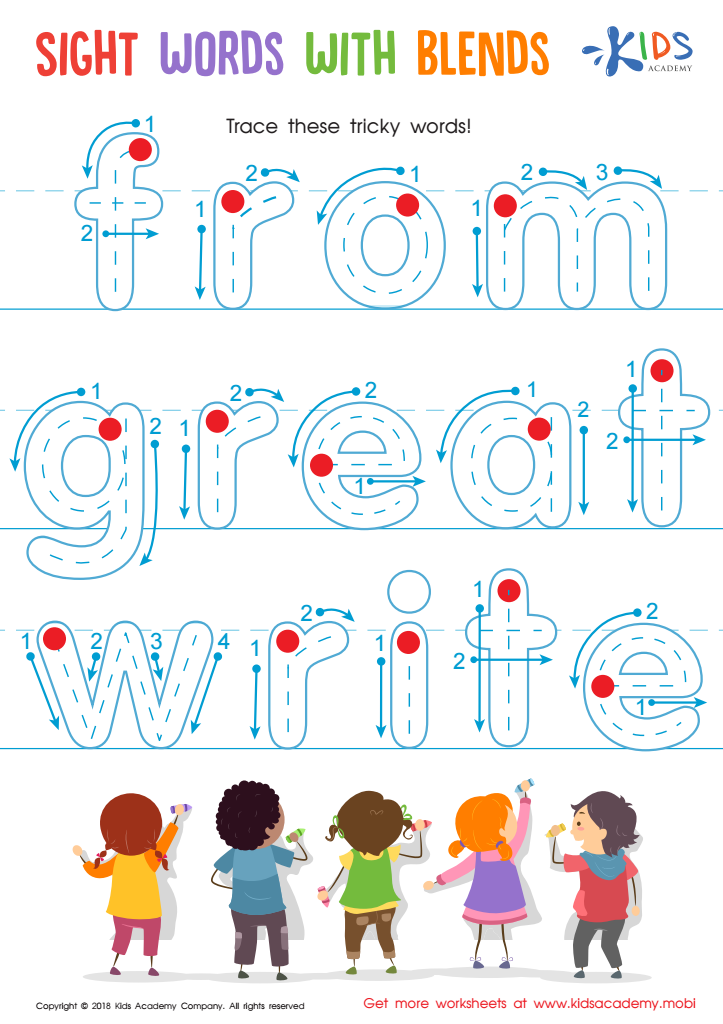
Sight Words with Blends Worksheet
 Assign to My Students











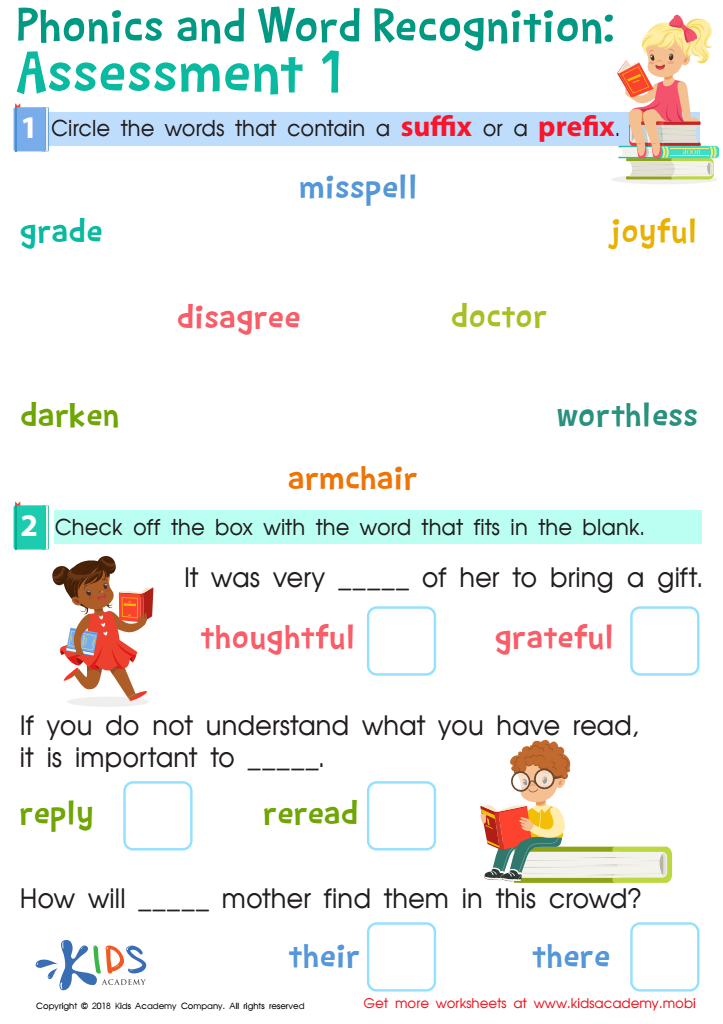
Phonics and Word Recognition: Assessment 1 Worksheet
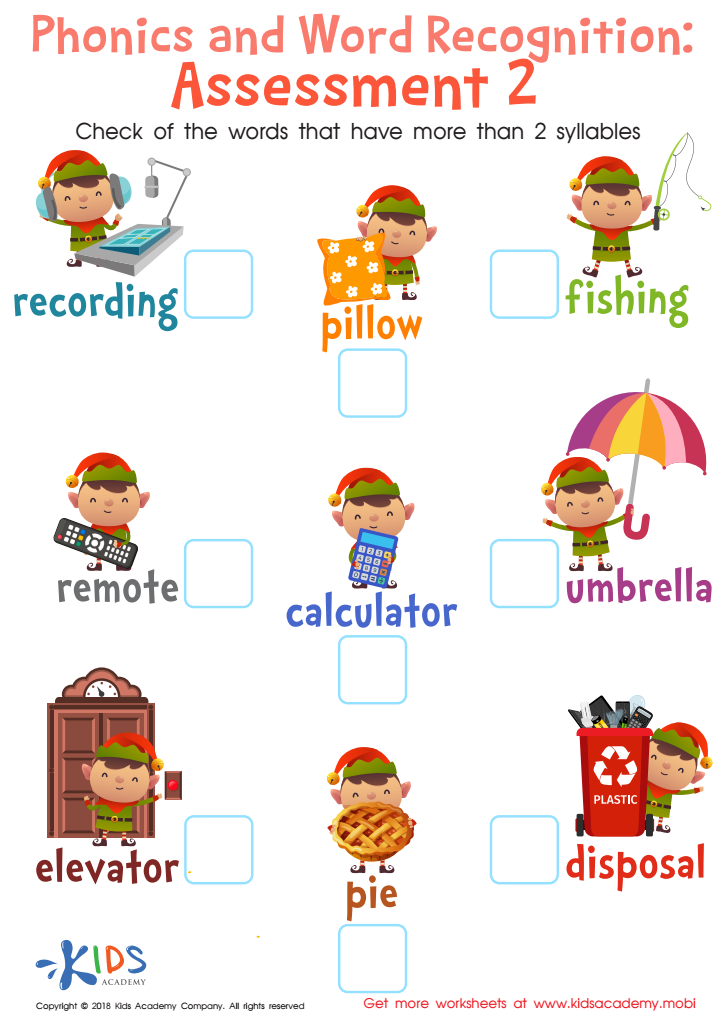
Phonics and Word Recognition: Assessment 2 Worksheet








Phonics recognition and vocabulary building for children ages 4-9 hold tremendous importance in early education. During these formative years, children transition from recognizing letters and sounds to decoding and understanding complex words. Phonics recognition is the foundation of this process. It involves teaching children the relationships between letters and sounds, which helps them decipher words in reading activities. Early proficiency in phonics equips children with the tools to read independently, greatly enriching their problem-solving skills, comprehension, and confidence.
By mastering phonics, children can decode new words seamlessly, making reading less frustrating and more enjoyable. This enthusiasm for reading fosters a lifelong love for learning and exploration. On the vocabulary building front, a robust vocabulary is associated with better comprehension and communication skills. Understanding a wide range of words allows children to articulate thoughts, ideas, and emotions more effectively.
For parents and teachers, focusing on phonics and vocabulary creates a strong educational base. It supports academic achievement across all subjects, as reading proficiency is often linked to overall scholastic performance. Care in this area reduces reading difficulties and educational inequalities, giving all children the fair start they deserve. Hence, phonics and vocabulary instruction are crucial, bridging the gap towards academic success and cognitive development in early learners’ lives.








