Verb identification Normal Building Vocabulary Worksheets for Ages 4-9
3 filtered results
-
From - To
Enhance your child's vocabulary with our engaging Verb Identification Normal Building Vocabulary Worksheets, designed for ages 4-9! These interactive worksheets provide a fun and effective way for young learners to recognize and understand verbs in various contexts. By incorporating lively illustrations and age-appropriate exercises, children will develop essential language skills while enjoying the learning process. Each worksheet focuses on different verb types, encouraging critical thinking and enhancing comprehension. Perfect for homeschooling, classroom use, or after-school practice, these resources are tailored to foster a strong foundation in vocabulary and grammar. Help your child master verbs and boost their confidence in reading today!
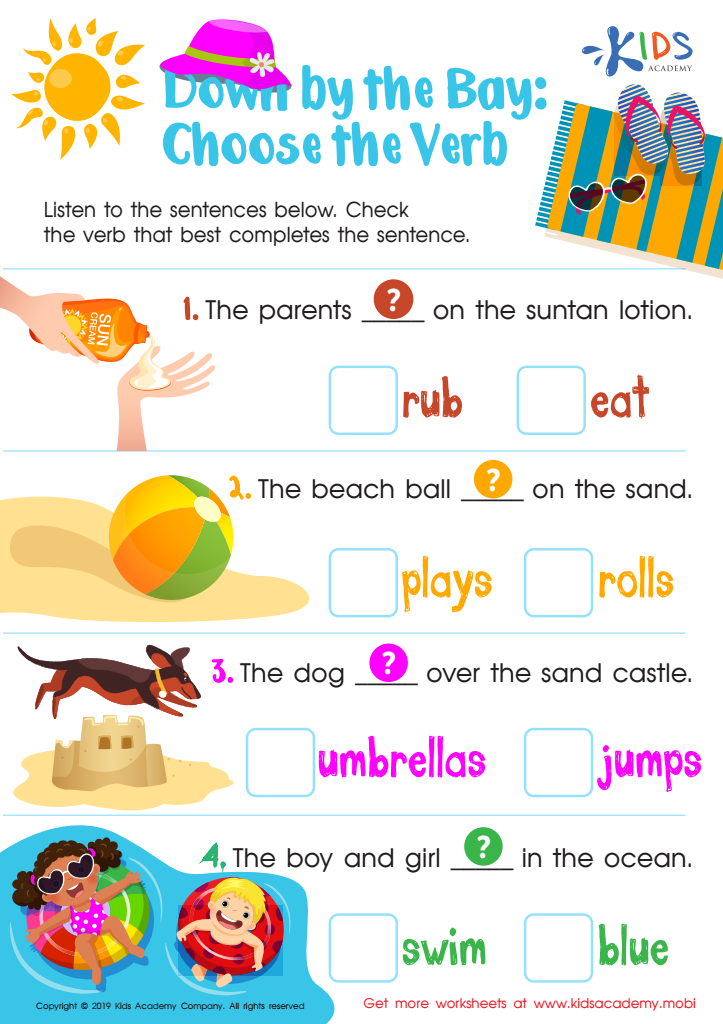
Down by the Bay: Choose the Verb Worksheet
 Assign to My Students











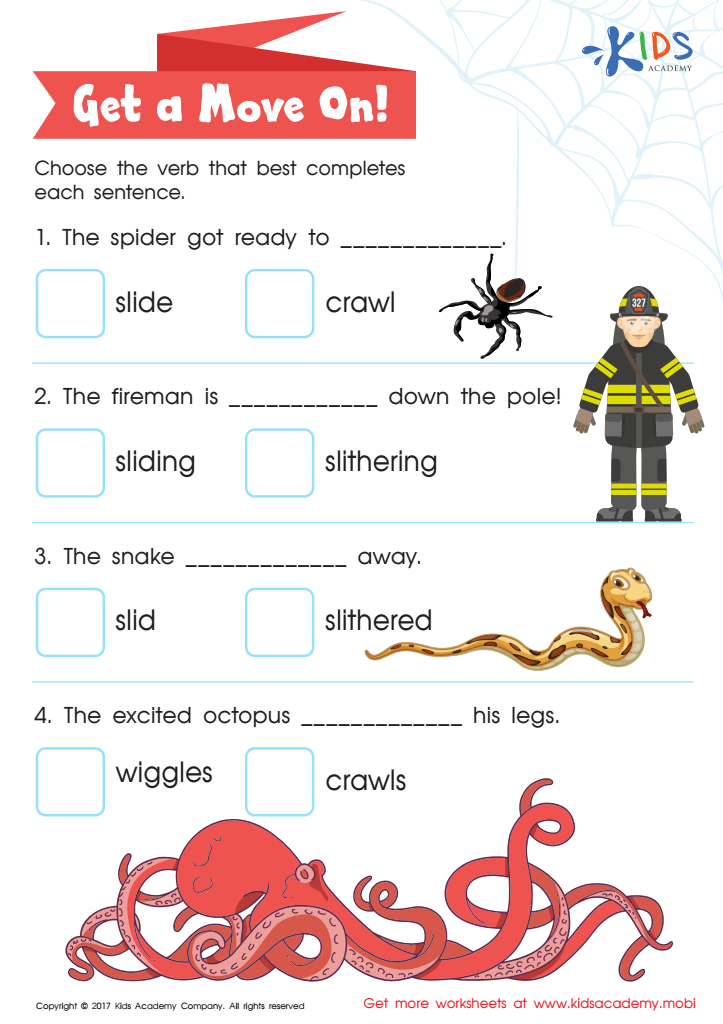
Verb Worksheet
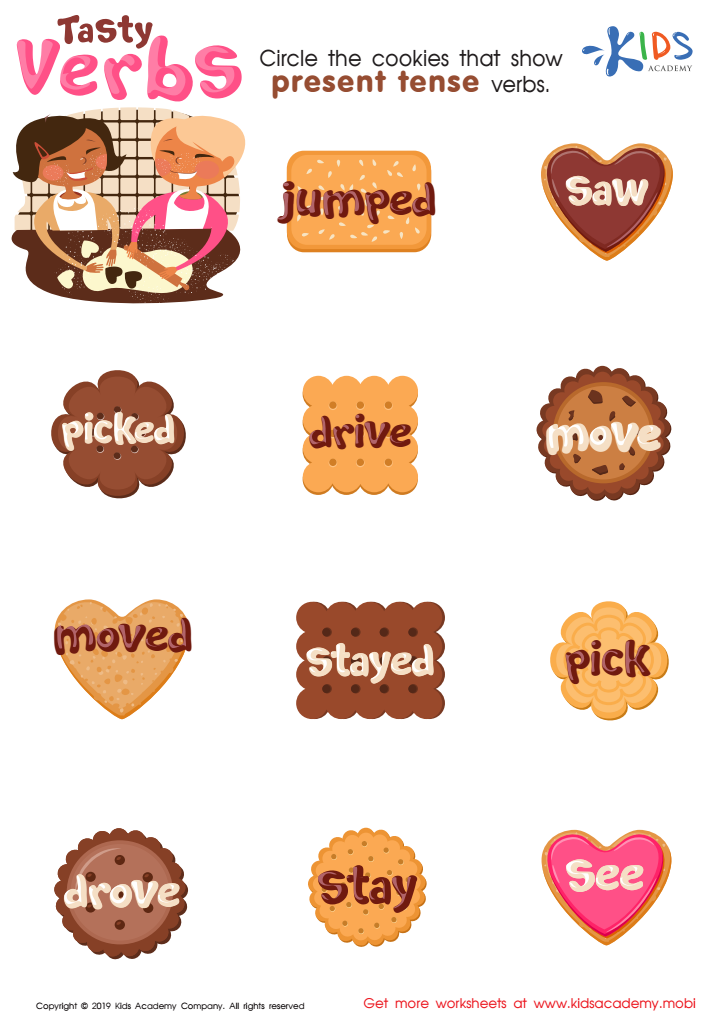
Tasty Verbs Worksheet








Verb identification and vocabulary building are essential components of early literacy for children ages 4-9, and parents and teachers should prioritize them for several reasons. Firstly, verbs are crucial for understanding sentence structure. Help children recognize action words enables them to grasp how sentences function. This foundational skill is key as they advance in reading and writing.
Additionally, expanding a child's vocabulary enhances their ability to express themselves. A rich vocabulary allows them to communicate effectively, share ideas, and develop their thoughts. Since verbs are action-oriented, mastering these words supports children in describing their experiences, leading to increased confidence in both verbal and written communication.
Moreover, strong vocabulary skills correlate with academic success. As children progress in school, a robust collection of verbs and other words improves comprehension across subjects, facilitating better understanding of texts and concepts.
Lastly, engaging with verbs can be fun and interactive, promoting a love for language. Activities like verb games, storytelling, or action-based learning not only enhance vocabulary but also nurture cognitive and social development. Thus, parents and teachers play a vital role in supporting verb identification and vocabulary enrichment, setting the stage for lifelong learning and effective communication.








