Moral understanding Normal Reading Worksheets for Ages 4-9
5 filtered results
-
From - To
Explore our engaging "Moral Understanding Normal Reading Worksheets" designed for children ages 4 to 9! These worksheets aim to enhance young learners’ comprehension of moral lessons through captivating stories and activities. Kids will develop critical thinking skills as they analyze character choices, identify right from wrong, and explore empathy and kindness in relatable contexts. Perfect for both home and classroom use, these resources provide a fun and interactive way for children to grasp essential values while improving their reading abilities. Download our worksheets today and help your child cultivate a strong moral foundation through nurturing storytelling and meaningful discussions!
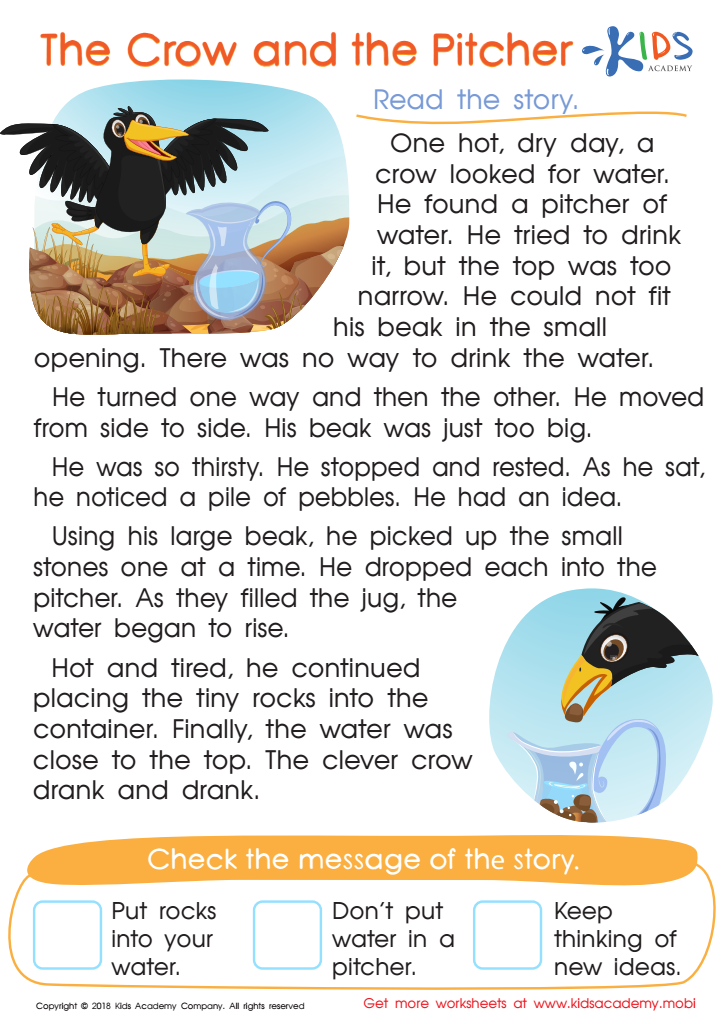
The Crow and the Pitcher Worksheet
 Assign to My Students
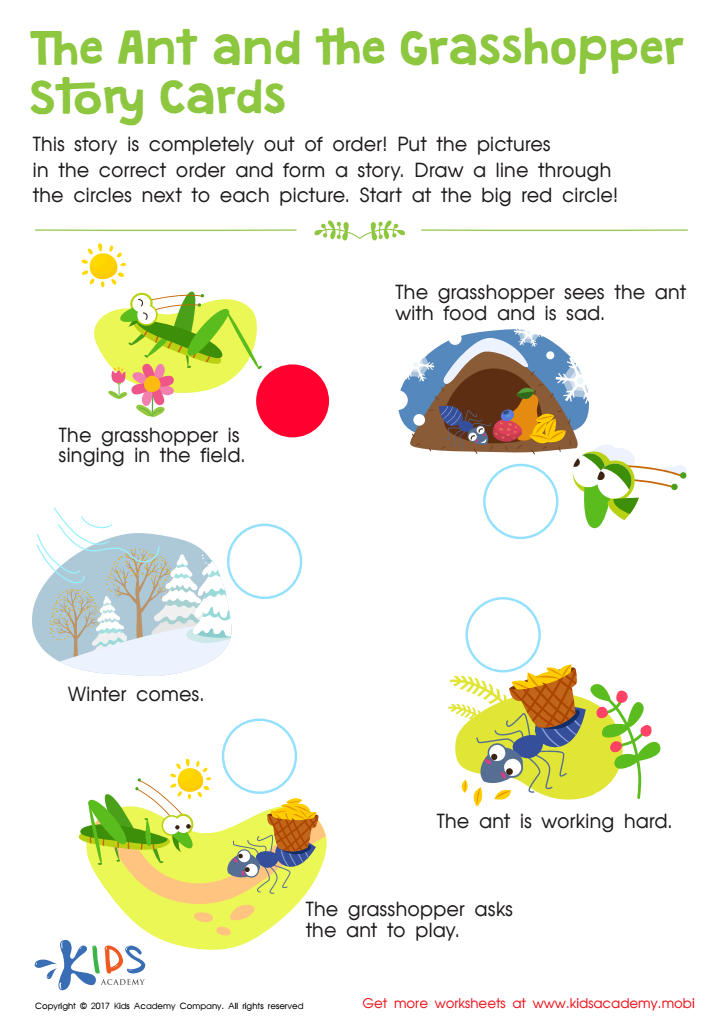
The Ant and The Grasshopper Worksheet
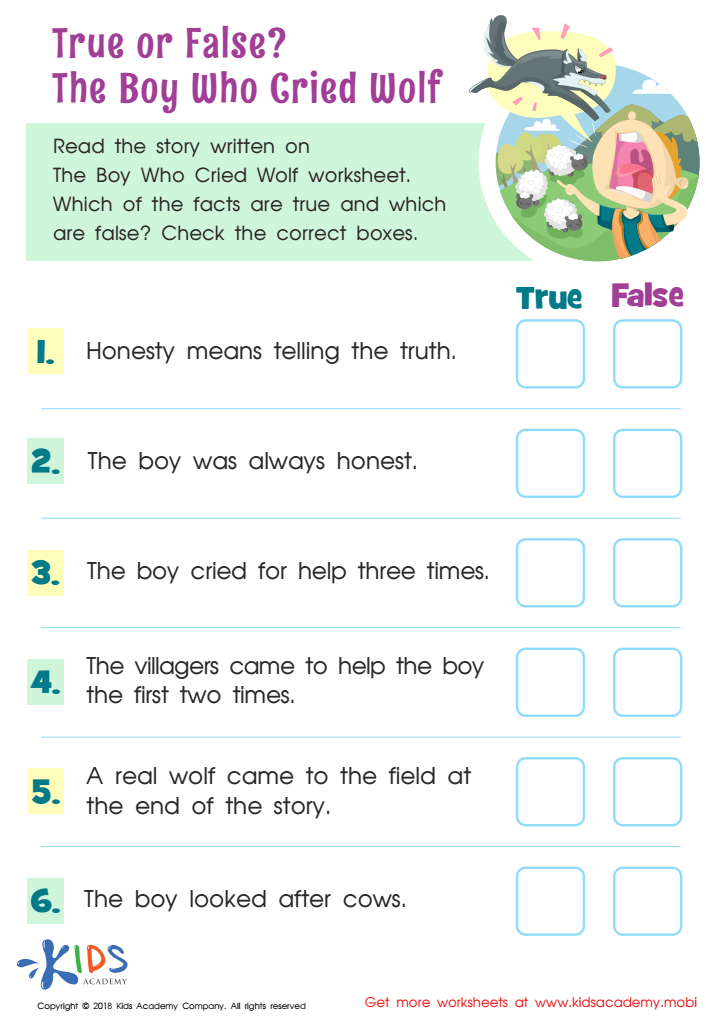
True or False? The Boy Who Cried Wolf Worksheet
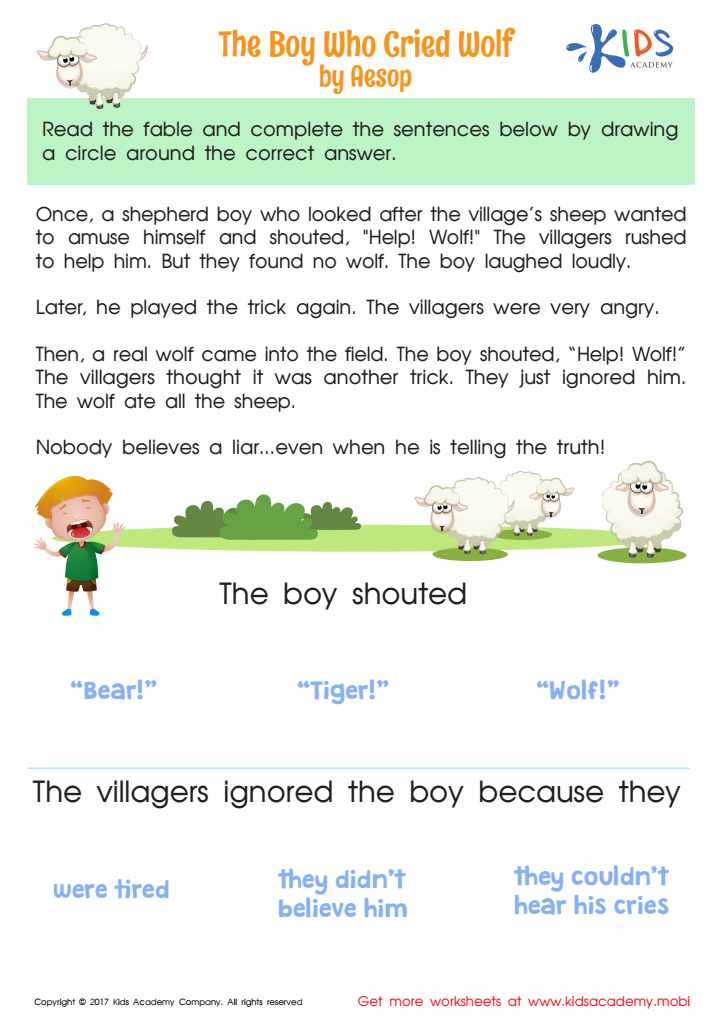
The Boy Who Cried Wolf Worksheet
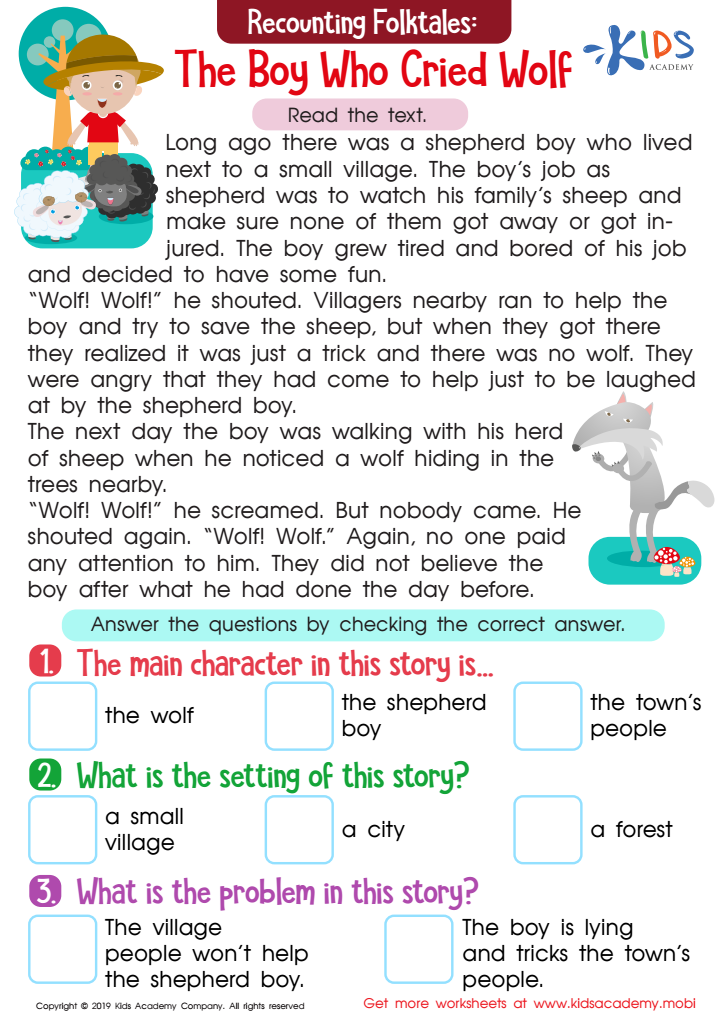
The Boy Who Cried Wolf Part 1 Worksheet







Parents and teachers should care about moral understanding in early readers aged 4 to 9 because this is a crucial period for building the foundation of values and ethical reasoning. At this age, children are highly impressionable and often absorb lessons from stories and interactions around them. Engaging with books that present moral dilemmas and ethical decisions helps them develop empathy, compassion, and critical thinking skills.
Reading about characters facing choices allows children to explore different perspectives and understand the consequences of actions. As they encounter stories with themes of kindness, honesty, and friendship, kids learn to recognize and embrace these values in their daily lives. This enhances their social skills and emotional literacy, essential for effective communication and relationship-building.
Moreover, moral understanding helps create a positive classroom and home environment. When children grasp the importance of good behavior and responsibility, it reinforces cooperation and respect with peers and adults. By prioritizing moral narratives and discussions, parents and teachers can nudge children towards becoming conscientious, ethical individuals. Ultimately, fostering this awareness nurtures a generation that values integrity, kindness, and social responsibility—attributes that contribute to a cohesive and caring society.








