Understanding Sequences Normal Reading Comprehension Worksheets for Ages 4-9
3 filtered results
-
From - To
Discover engaging reading comprehension worksheets designed to enhance understanding of sequences for children aged 4 to 9. Our accessible materials encourage young learners to develop vital skills by identifying the order of events in stories and everyday situations. With a variety of worksheets tailored to foster curiosity and comprehension, children will learn to recognize patterns and anticipate outcomes. Each activity promotes critical thinking and nurtures a love for reading. Perfect for classrooms or home learning, these resources support early literacy by making learning fun and interactive, ensuring that children grasp the importance of sequences in their reading journey.
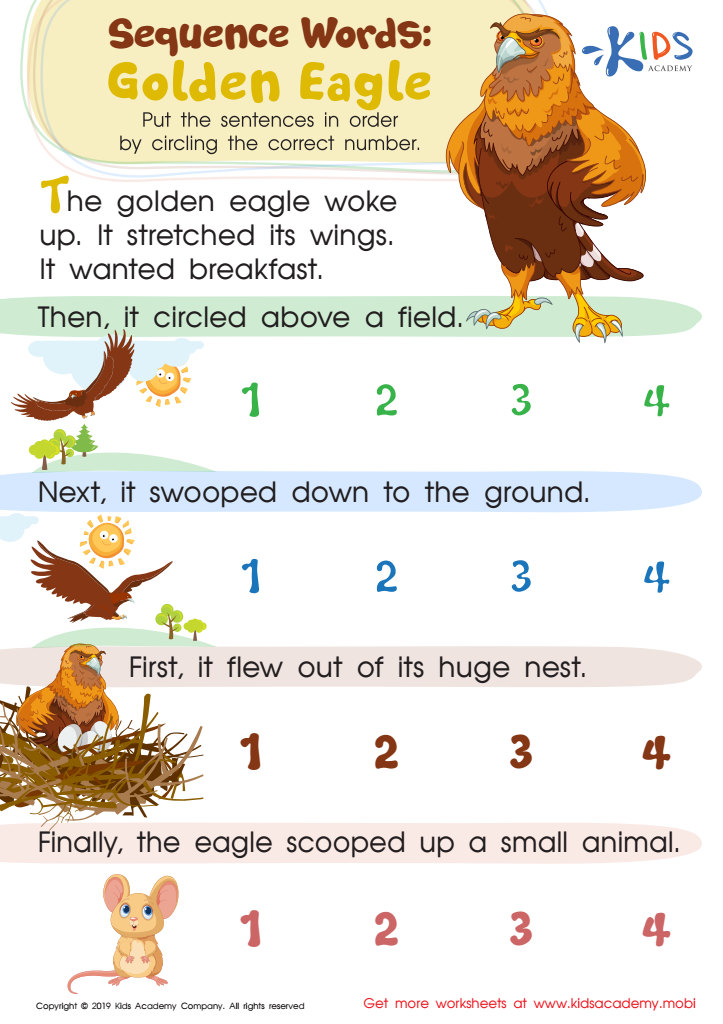
Sequence Word Eagle Worksheet
 Assign to My Students
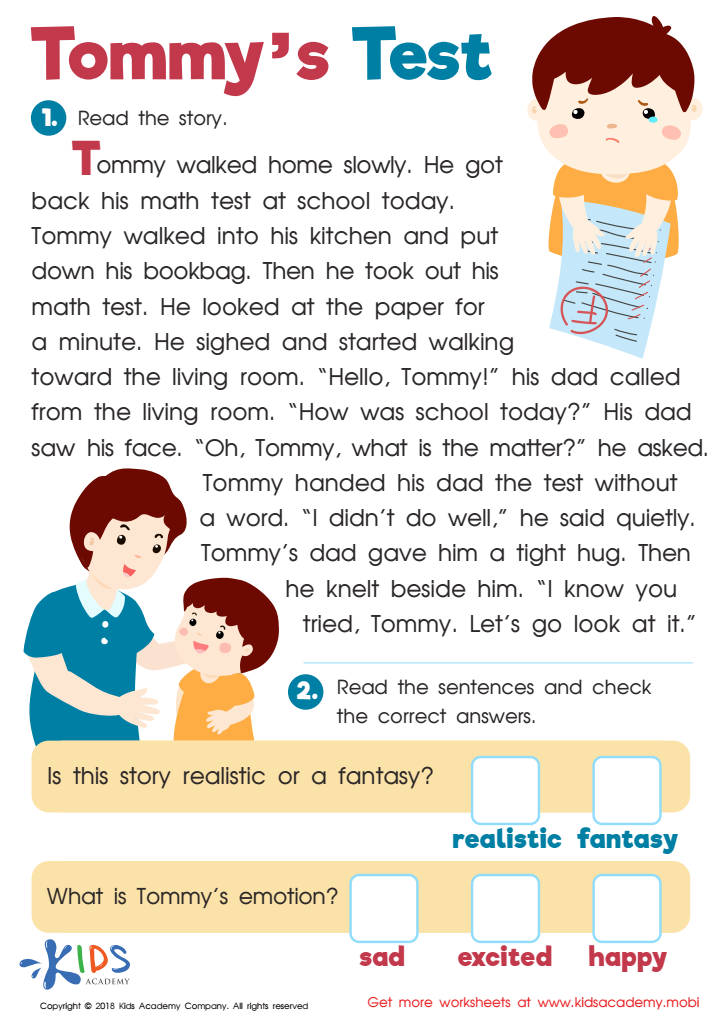
Tommys Test Worksheet
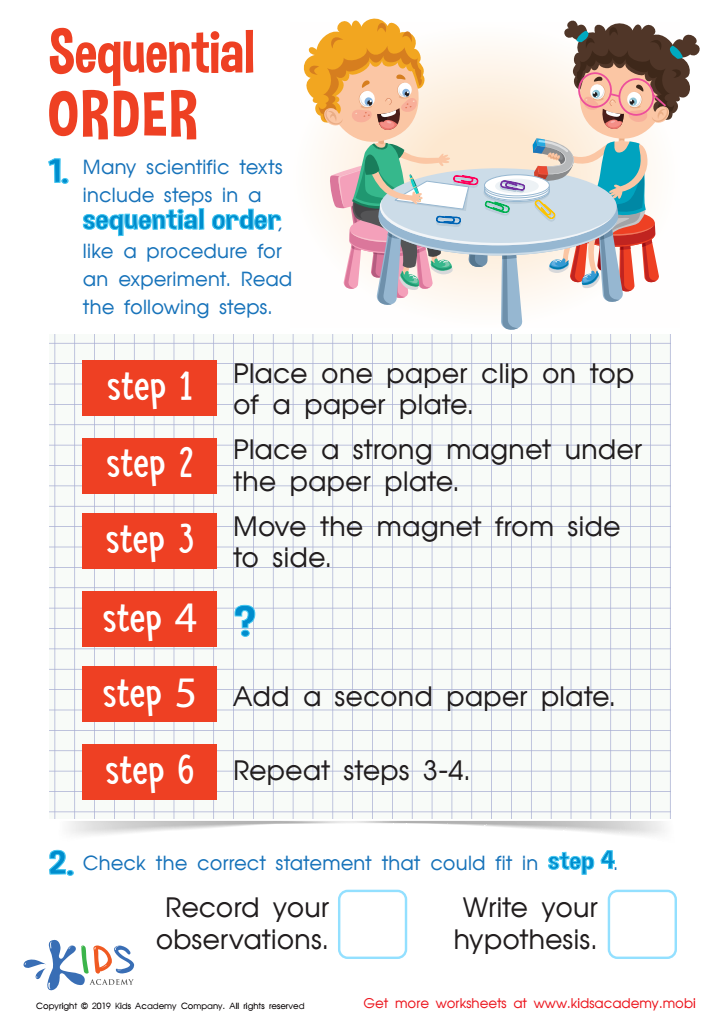
Sequencential Order Worksheet








Understanding sequences is a crucial component of reading comprehension for children aged 4-9. For both parents and teachers, recognizing the significance of sequences can greatly enhance a child's educational journey. Sequences help children grasp the structure of stories, allowing them to follow the progression of events logically. This skill is foundational in developing critical thinking, as it fosters the ability to predict outcomes and understand cause-and-effect relationships.
When children can identify sequences, they are better equipped to comprehend the material, as they can visualize and organize information more effectively. This not only improves their reading but also assists in their writing, as they learn to structure their thoughts coherently. As reading becomes a collaborative experience with caregivers and educators, discussing sequences related to narratives encourages richer conversations and deeper engagement with texts.
Furthermore, a solid understanding of sequences supports academic success across subjects, as many concepts—like math, science, and social studies—involve recognizing patterns and chronological order. Therefore, by supporting children's grasp of sequencing, parents and teachers play a vital role in cultivating confident readers and critical thinkers who can approach more complex materials in the future. Overall, prioritizing this aspect of comprehension lays a resilient foundation for lifelong learning.








