Analytical skills Normal Reading Fiction Worksheets for Ages 4-9
5 filtered results
-
From - To
Enhance your child's reading journey with our "Analytical Skills Normal Reading Fiction Worksheets" designed specifically for ages 4-9. These engaging worksheets foster critical thinking by encouraging young learners to analyze characters, plot, and settings in fiction stories. Each worksheet promotes comprehension and inference skills through fun activities and thought-provoking questions. Children will enjoy exploring various fictional contexts while developing their analytical abilities, setting them up for success in reading and beyond. Perfect for home or classroom use, these worksheets will not only spark imagination but also lay the foundational skills necessary for understanding and interpreting texts thoughtfully. Start nurturing your child's analytical prowess today!
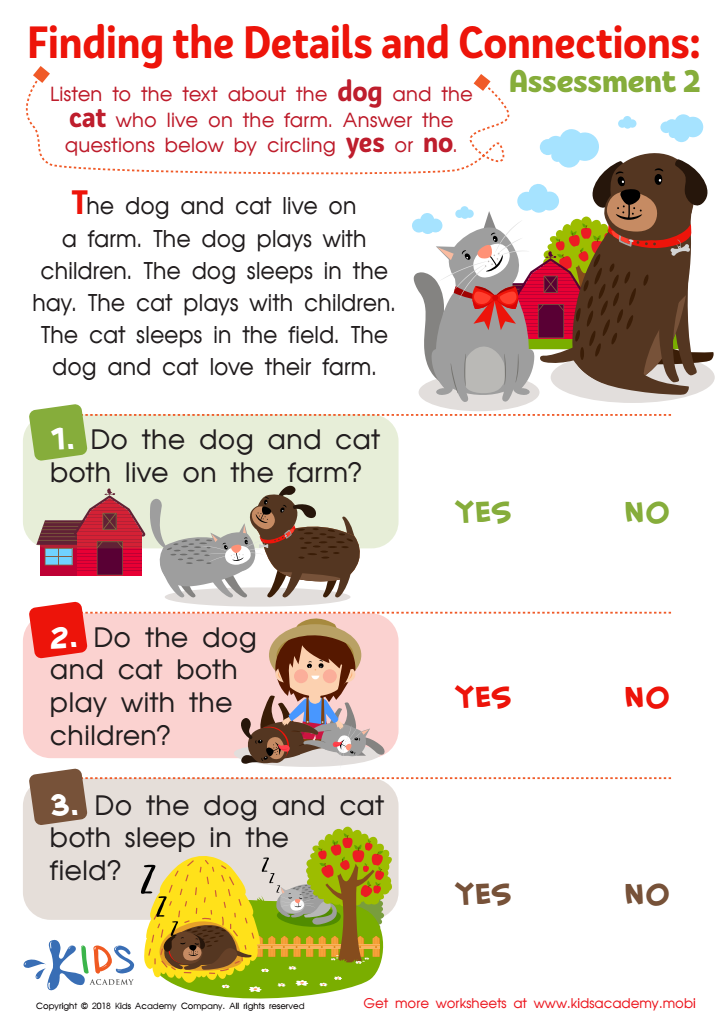
Finding the Details and Connections: Assessment 2 Worksheet
 Assign to My Students
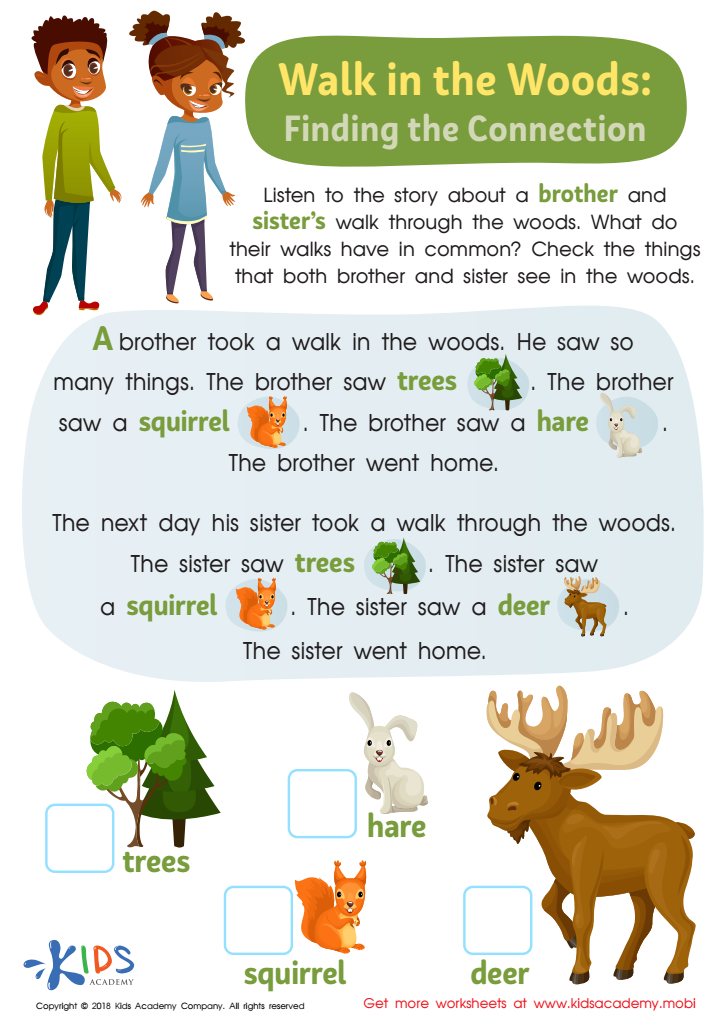
Walk In the Woods: Finding Connections Worksheet
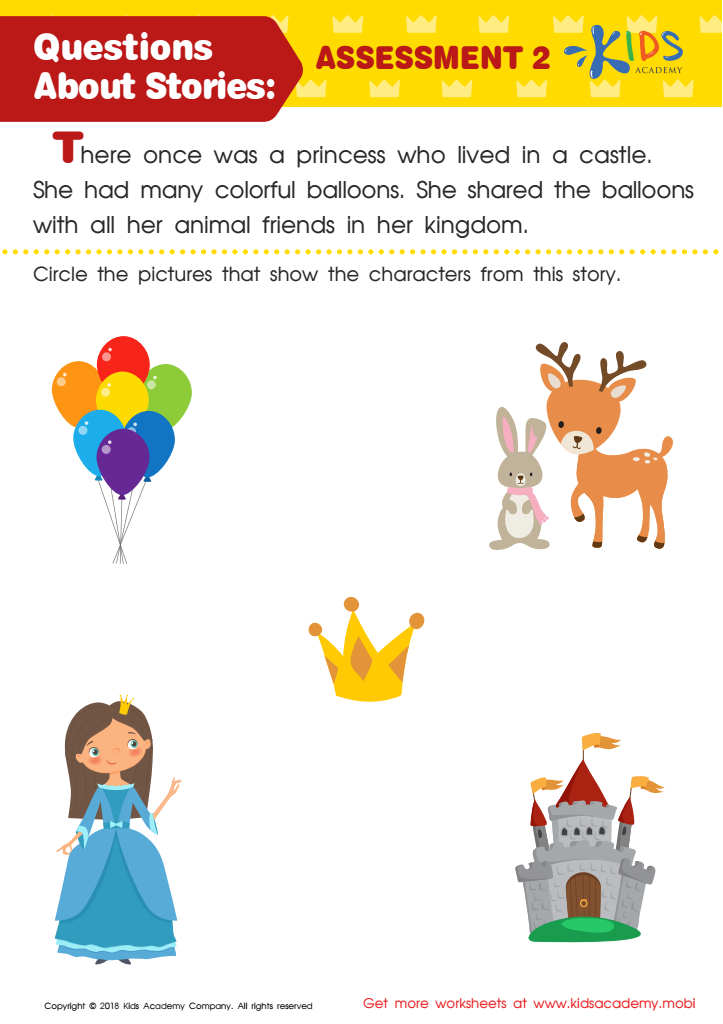
Questions About Stories: Assessment 2 Worksheet
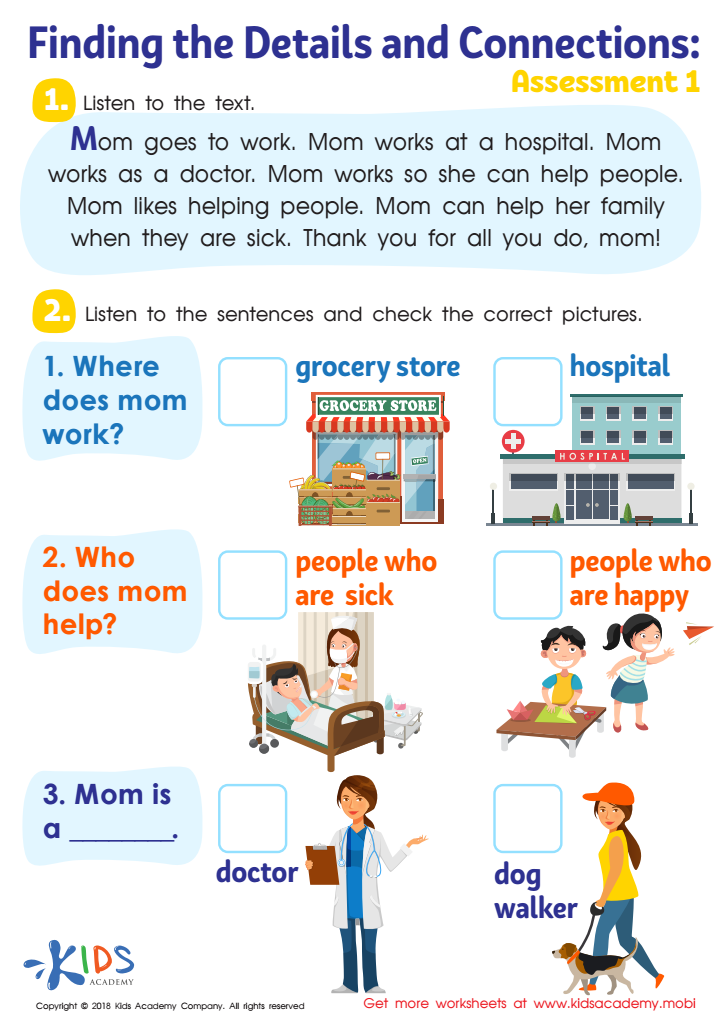
Finding the Details and Connections: Assessment 1 Worksheet
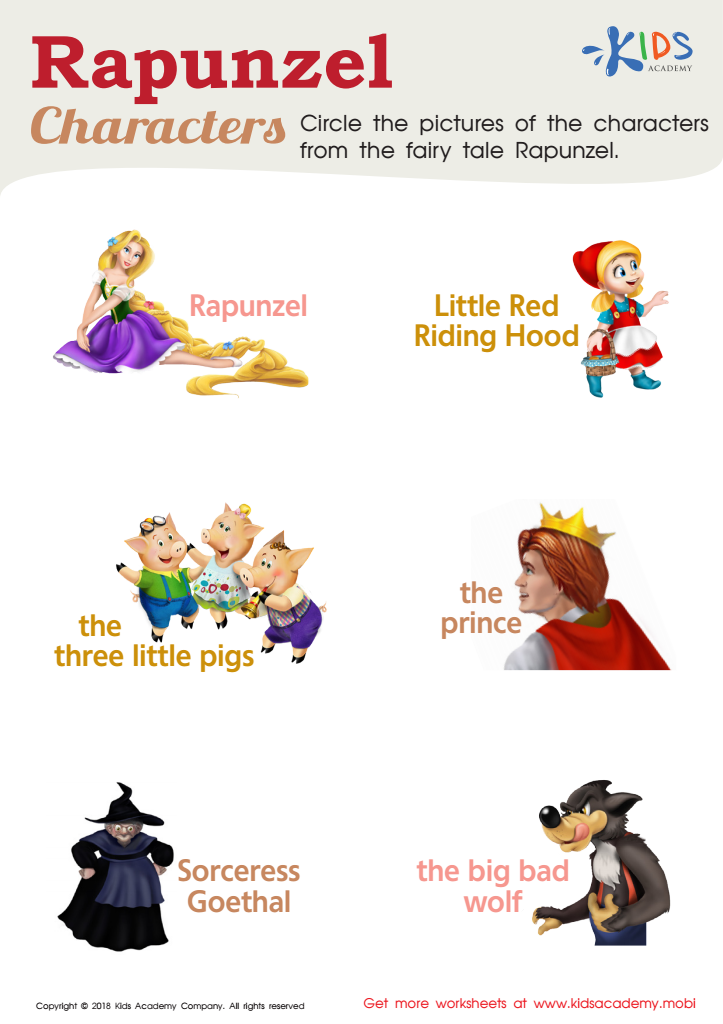
Rapunzel Characters Worksheet



.jpg)




Analytical skills are crucial for young children's cognitive development, particularly when it comes to reading fiction. For children ages 4-9, strong analytical abilities enhance their understanding of stories, characters, and plots, aiding them in making connections and drawing inferences. This skill set empowers children to think critically about what they read, fostering a deeper level of engagement with the text.
Parents and teachers should prioritize fostering analytical skills in their young readers because early exposure sets the foundation for lifelong learning. These skills not only help children to comprehend narrative structures but also encourage creativity and imagination, allowing them to envision different outcomes and perspectives. As children analyze the motivations behind characters' actions and comprehend underlying themes, they develop empathy and emotional intelligence, which are essential for social interactions.
Furthermore, children with strong analytical skills are more likely to excel academically, as they can apply these skills across subjects. In an era where information literacy is vital, nurturing analytical faculties through fiction can shape thoughtful, inquisitive individuals. Overall, investing in children's analytical skills through reading enriches their educational journey and prepares them for future challenges.







