Identifying story elements Normal Reading Fiction Worksheets for Ages 4-9
3 filtered results
-
From - To
Discover the "Identifying Story Elements" Normal Reading Fiction Worksheets, designed specifically for children aged 4-9. These engaging worksheets help young learners grasp essential story components such as characters, settings, and events. Through fun activities, children develop critical thinking and comprehension skills, making reading an enjoyable adventure. Each worksheet features colourful illustrations and age-appropriate texts that will captivate young minds. Perfect for classroom or home use, these resources encourage creativity and enhance literacy skills. Foster a love for reading while ensuring a solid understanding of narrative structures. Start your child's literary journey today with our interactive worksheets!
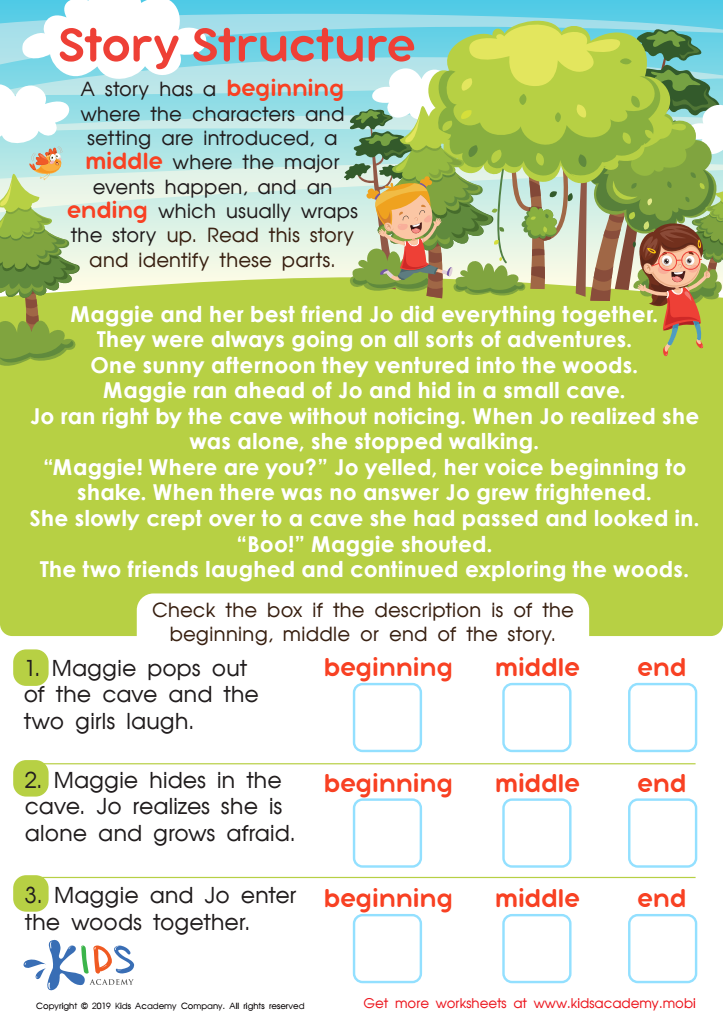
Story Structure Worksheet
 Assign to My Students
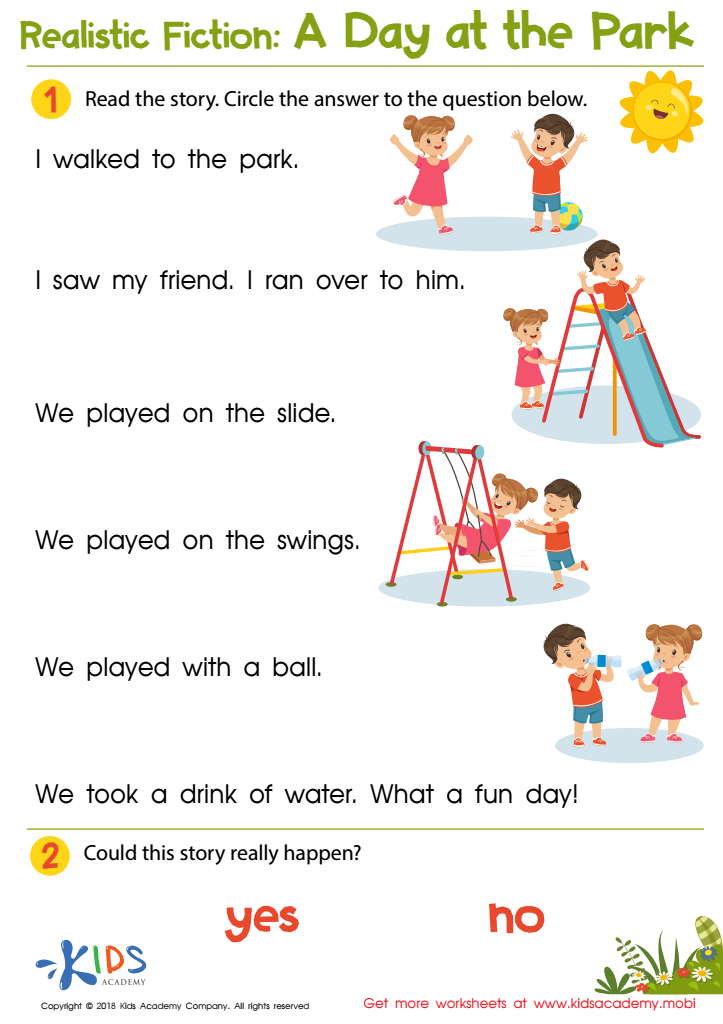
A Day at the Park Worksheet
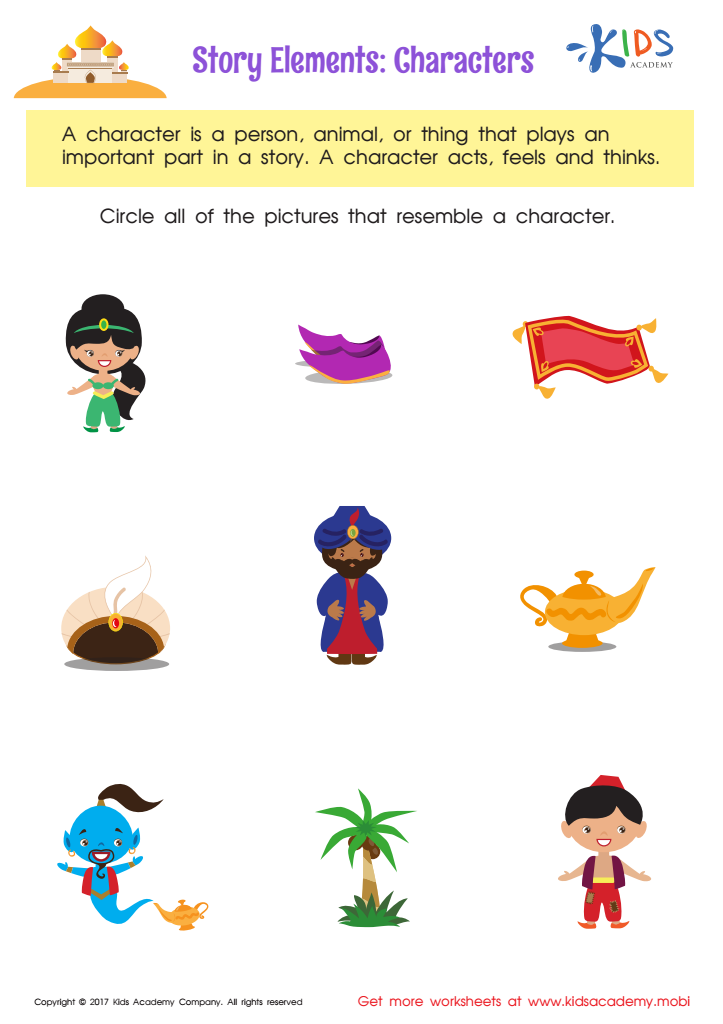
Story Elements Printable







Identifying story elements in fiction is crucial for young readers aged 4-9, as it lays the foundation for literacy development and comprehension skills. Parents and teachers play a pivotal role in nurturing this understanding, as it enhances children's ability to engage with texts thoughtfully.
Story elements include characters, setting, plot, conflict, and resolution. Recognizing these components helps children grasp the structure of stories, making it easier for them to predict outcomes and enhance their imagination. When children can identify characters, they learn to connect with emotions and understand different perspectives, fostering empathy.
Moreover, mastering these elements boosts children's critical thinking. Describing a story's setting cultivates observational skills, while following the plot encourages sequencing abilities. Additionally, as they practice discussing conflicts and resolutions, children develop problem-solving skills that are valuable both academically and socially.
By focusing on these elements, parents and teachers can create rich dialogues around stories. This involvement fosters a love for reading and encourages children to express their thoughts creatively. Ultimately, identifying story elements empowers children, building confidence in their reading abilities and equipping them with essential skills that will benefit them throughout their academic journey and beyond.







