Logical thinking Normal Reading Fiction Worksheets for Ages 4-9
3 filtered results
-
From - To
Enhance your child's logical thinking skills with our engaging Normal Reading Fiction Worksheets, designed for ages 4-9. These worksheets combine fun and educational activities that promote critical analysis, problem-solving, and comprehension through captivating stories. Tailored to ignite creativity and imagination, each worksheet challenges young learners to predict outcomes, make connections, and draw conclusions from the narratives. Our resourceful platform provides a perfect balance of entertainment and learning, empowering children to improve their reading skills while thinking logically. Whether at home or in the classroom, these worksheets are a valuable tool for nurturing confident and analytical readers. Explore and download today!

The Dog and His Bone Worksheet
 Assign to My Students
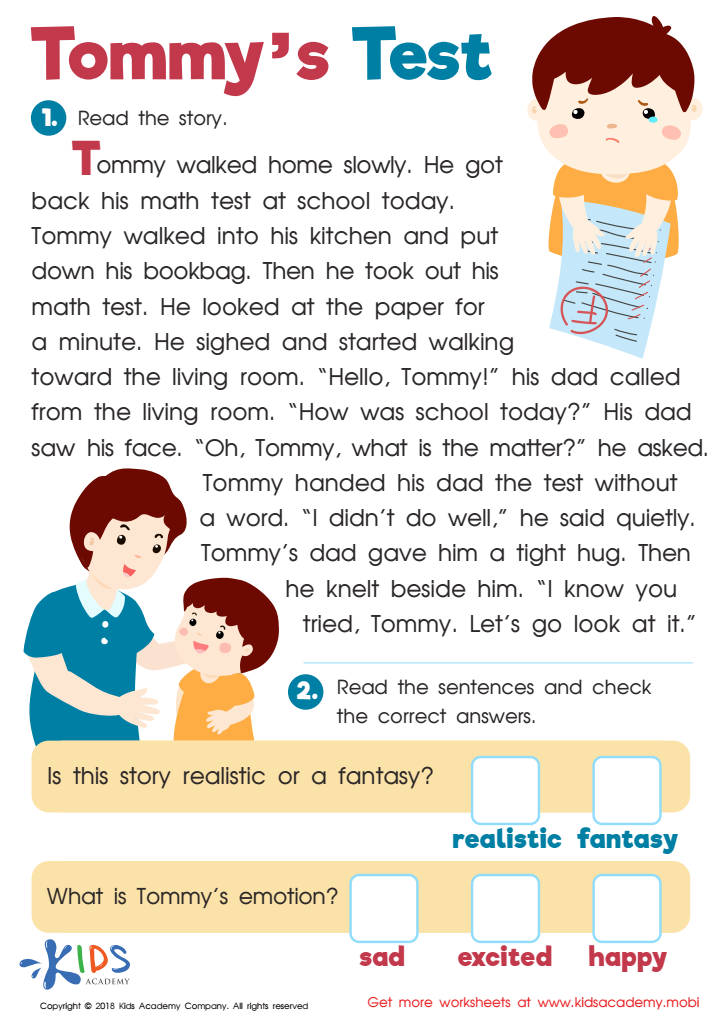
Tommys Test Worksheet
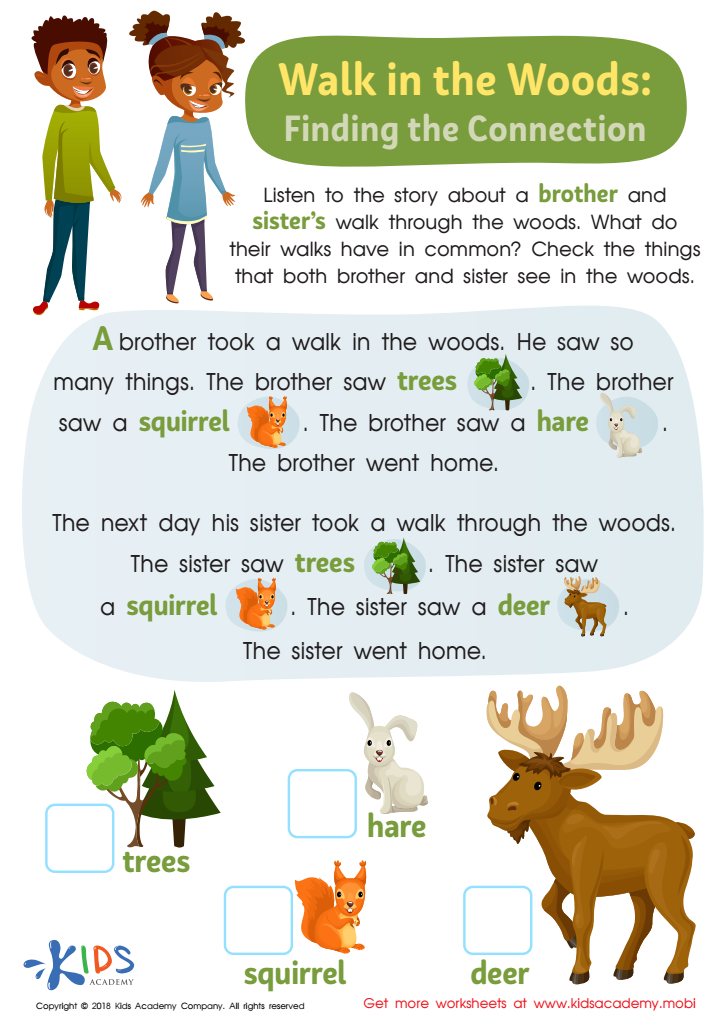
Walk In the Woods: Finding Connections Worksheet







.jpg)
Logical thinking and reading are crucial components of early childhood development, especially for children aged 4-9. At this stage, children are highly impressionable and actively developing cognitive skills. Logical thinking, which involves the ability to analyze information, solve problems, and make reasoned decisions, is foundational for their educational journey. Parents and teachers should care about fostering these skills as they enhance children's ability to understand the world around them, build friendships, and navigate daily challenges.
Integrating reading fictional stories that require logical thinking encourages imaginative play and critical reasoning. When children engage with narratives, they often have to infer character motivations, predict outcomes, and analyze plots. These activities stimulate their cognitive abilities and enhance their comprehension skills, making it easier for them to tackle more complex material in later years.
Moreover, a love for reading at an early age has been linked to improved language skills and academic performance. Parents can model logical thinking by asking open-ended questions about stories, prompting discussions that prompt reasoning and evaluation. Teachers can incorporate logical puzzles tied to fictional narratives to build classroom engagement. Ultimately, nurturing these skills in children prepares them for lifelong learning and success in an increasingly complex world.







