Moral understanding Normal Reading Fiction Worksheets for Ages 4-9
5 filtered results
-
From - To
Introduce your child to the captivating world of fiction while cultivating essential moral lessons! Our curated collection of Moral Understanding Normal Reading Fiction Worksheets for Ages 4-9 at Kids Academy helps young readers build comprehension skills, all while learning valuable life lessons. Through engaging stories, children explore concepts like honesty, kindness, and responsibility in a way that’s accessible and enjoyable. Each worksheet is designed to foster critical thinking and moral reasoning, encouraging kids to reflect on actions and consequences within the narratives. Download our printable worksheets today to inspire your child’s reading growth and character development!
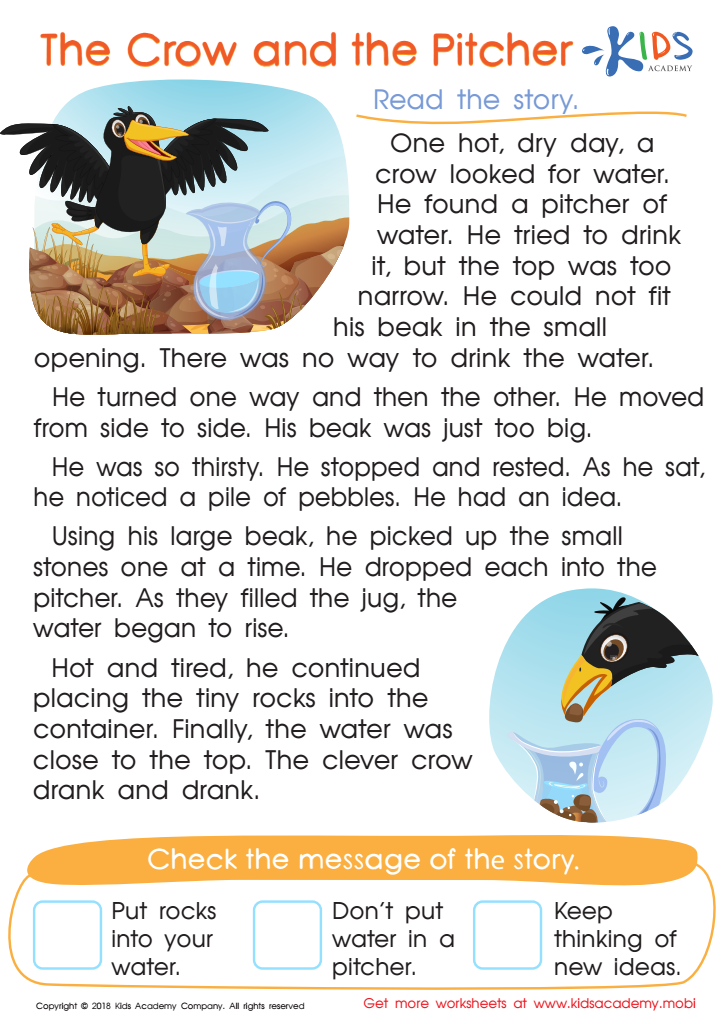
The Crow and the Pitcher Worksheet
 Assign to My Students
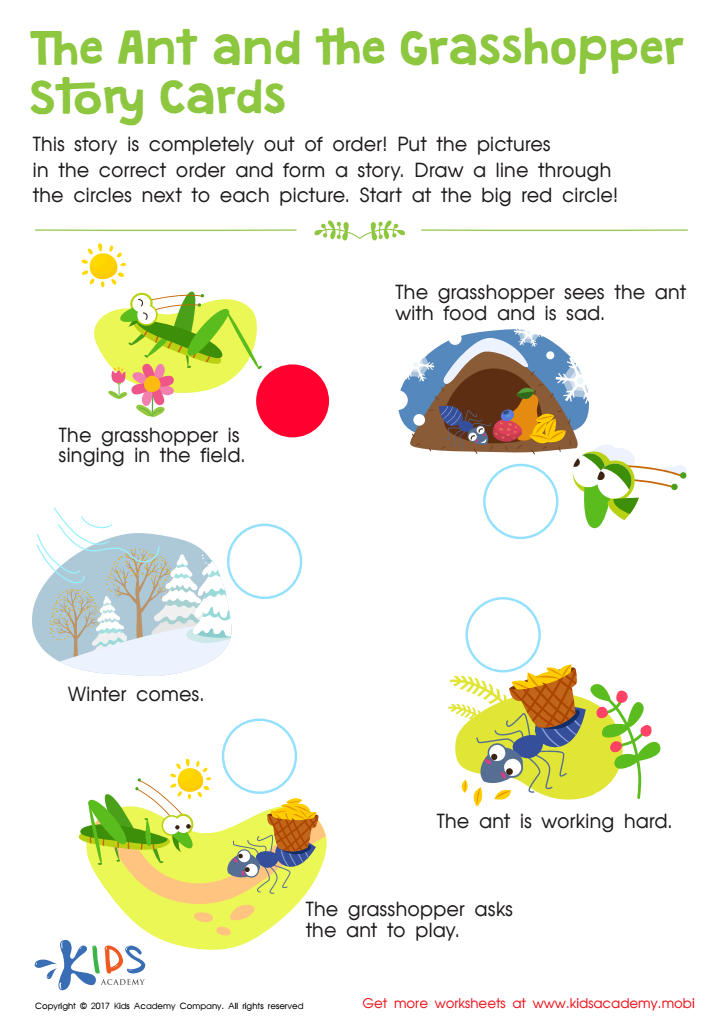
The Ant and The Grasshopper Worksheet
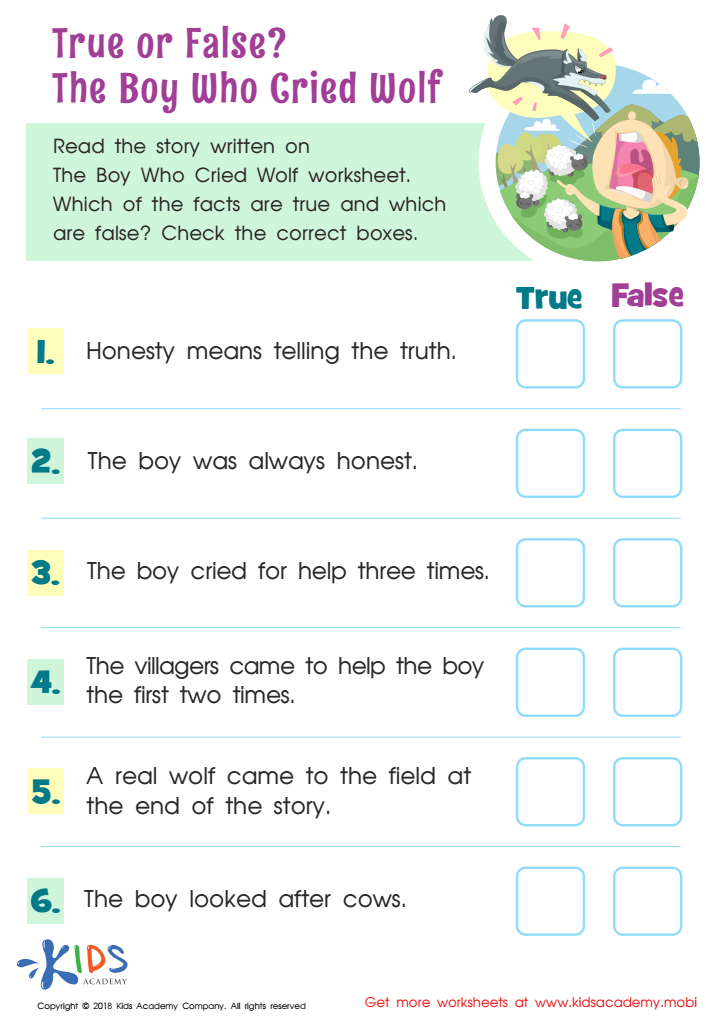
True or False? The Boy Who Cried Wolf Worksheet
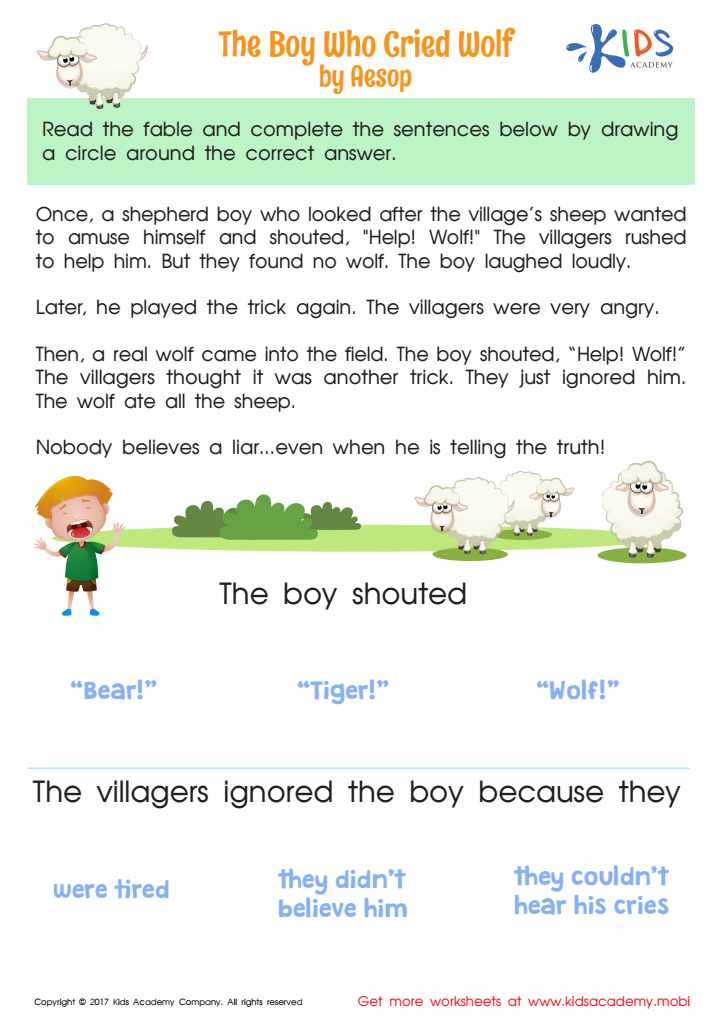
The Boy Who Cried Wolf Worksheet
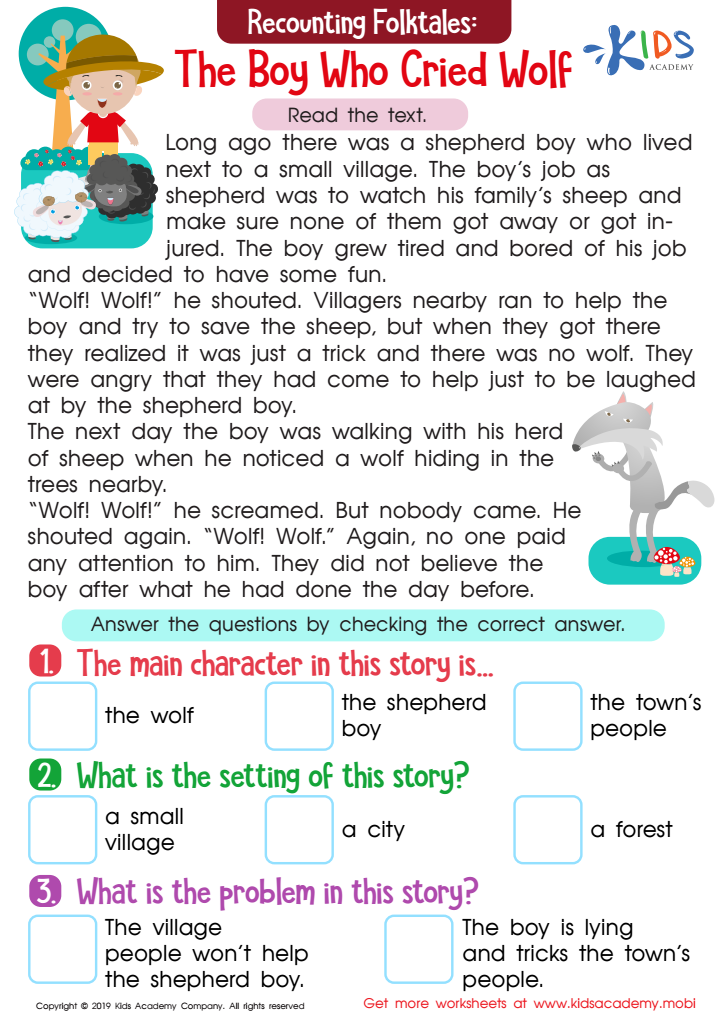
The Boy Who Cried Wolf Part 1 Worksheet








Parents and teachers should care about moral understanding and encouraging normal reading of fiction for children aged 4-9 due to the profound developmental benefits these activities offer. This critical period in a child's life is when foundational skills and values are being established. Reading fiction exposes children to diverse characters and scenarios that cultivate empathy, listening skills, and broadened perspectives, fostering their social and emotional intelligence. Through engaging stories, children learn to distinguish between right and wrong, enhancing their moral compass mettle as they witness characters face ethical dilemmas and consequences.
Moreover, indulging in regular reading habits enhances language skills, vocabulary acquisition, and comprehension, essential for academic success. The immersive nature of fiction nurtures imagination and creativity, encouraging children to visualize and think critically. Parents and teachers play a vital role by choosing age-appropriate, value-laden books, discussing storylines, and relating them to real-life experiences.
Furthermore, structured reading time reinforces a routine, promoting attention span and concentration. Discussing the moral lessons within stories builds reasoning abilities and introduces children to problem-solving frameworks. Caring about these aspects greatly enriches children's cognitive and emotional development and shapes them into thoughtful, compassionate, well-rounded individuals. By championing fiction reading and moral understanding, adults lay a vital groundwork for lifelong learning and ethical awareness in young minds.







