Understanding perspectives Normal Reading Fiction Worksheets for Ages 4-9
3 filtered results
-
From - To
Enhance your child's reading skills with our "Understanding Perspectives" worksheets, designed for ages 4-9. These engaging resources provide young readers with the tools to explore and interpret various viewpoints in fiction. By analyzing characters' feelings, motivations, and circumstances, children will develop empathy and critical thinking skills essential for literacy and personal growth. Our worksheets feature interactive activities and vibrant illustrations, making learning fun and effective. Ideal for classrooms or home use, these resources align with educational standards and cater to various learning styles. Start your child's journey in understanding complex narratives and cultivating a love for reading today!
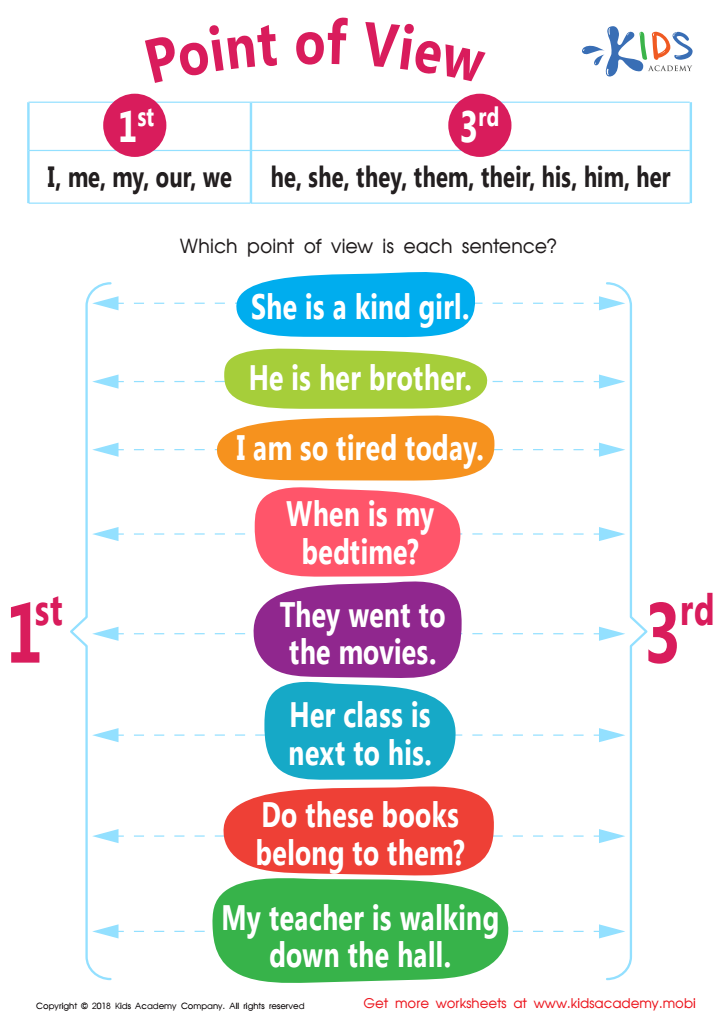
Point of View Worksheet
 Assign to My Students
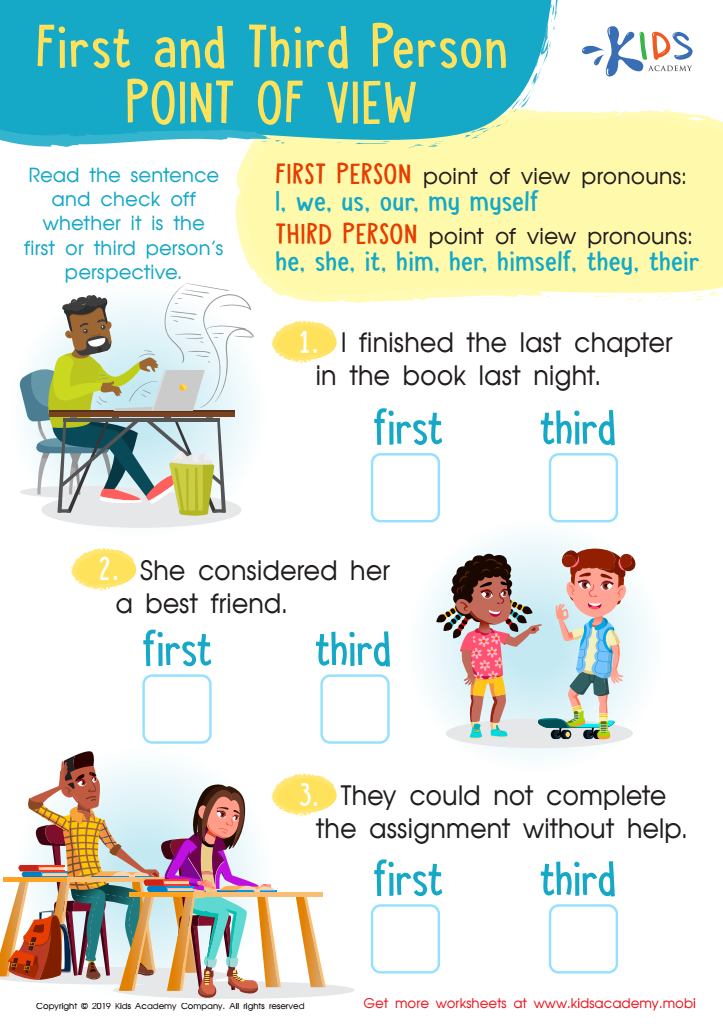
First and Third Person Point of View Worksheet
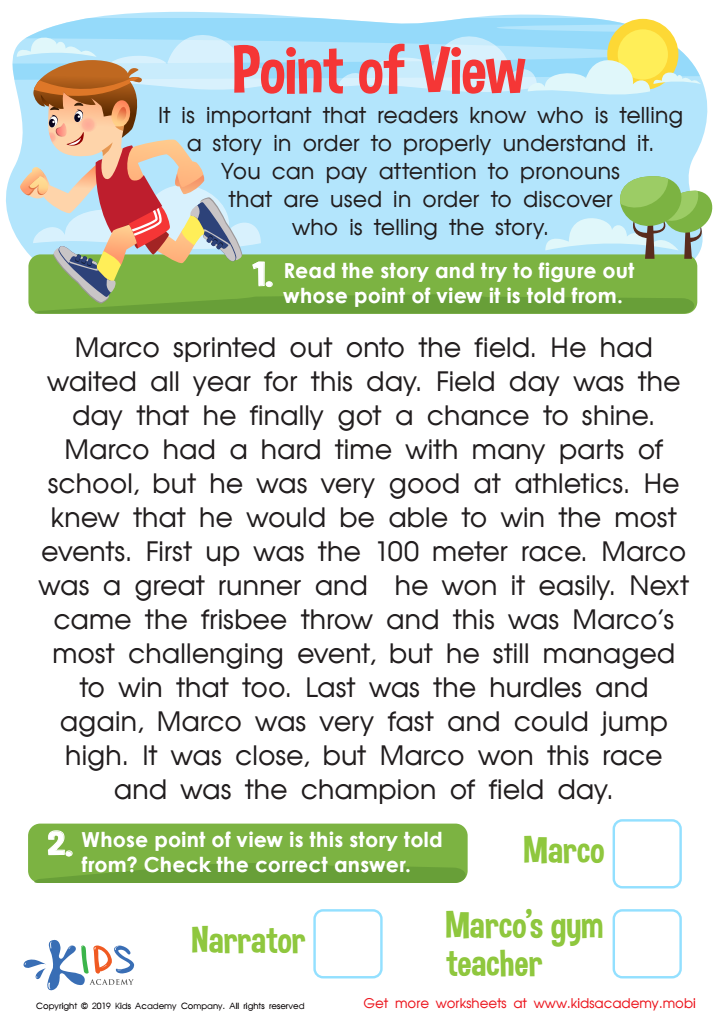
Point of View Worksheet







Understanding perspectives in normal reading fiction is crucial for children aged 4-9 as it fosters critical thinking, empathy, and social skills. At this developmental stage, children are beginning to grasp that other people have feelings, thoughts, and experiences different from their own. Engaging with diverse characters and narratives allows them to step into someone else's shoes, promoting compassion and respect for diversity.
Teaching children to recognize and understand multiple viewpoints enhances their comprehension and ability to interpret stories more deeply. It also encourages open-mindedness, an essential trait in today’s multicultural world. When parents and teachers emphasize perspective-taking through reading, children learn to navigate their social environments more effectively, improving their collaboration and conflict-resolution skills.
Furthermore, understanding perspectives can significantly influence children's emotional literacy. By discussing characters’ emotions and motives, we illuminate the complexities of human relationships, nurturing well-rounded individuals. This skill is particularly vital as they encounter varying social dynamics at school and beyond. Ultimately, cultivating the ability to understand perspectives enriches children’s reading experiences, making literature a powerful tool for personal and social development, and laying the groundwork for successful, empathetic adults. Thus, investing in this understanding equals investing in a child's future.







