Animal identification Normal Reading Non-Fiction Worksheets for Ages 4-9
3 filtered results
-
From - To
Explore our engaging "Animal Identification Normal Reading Non-Fiction Worksheets for Ages 4-9." These worksheets are designed to enhance reading skills while introducing young learners to the fascinating world of animals. Each worksheet presents facts and descriptions about various animals, helping kids develop their ability to identify and understand different species. Perfect for early grade students, these activities combine reading practice with fun learning, fostering a love for wildlife and nature. Customize your teaching strategies with our high-quality resources and inspire curiosity in young minds today. Boost literacy and knowledge seamlessly with Kids Academy worksheets!
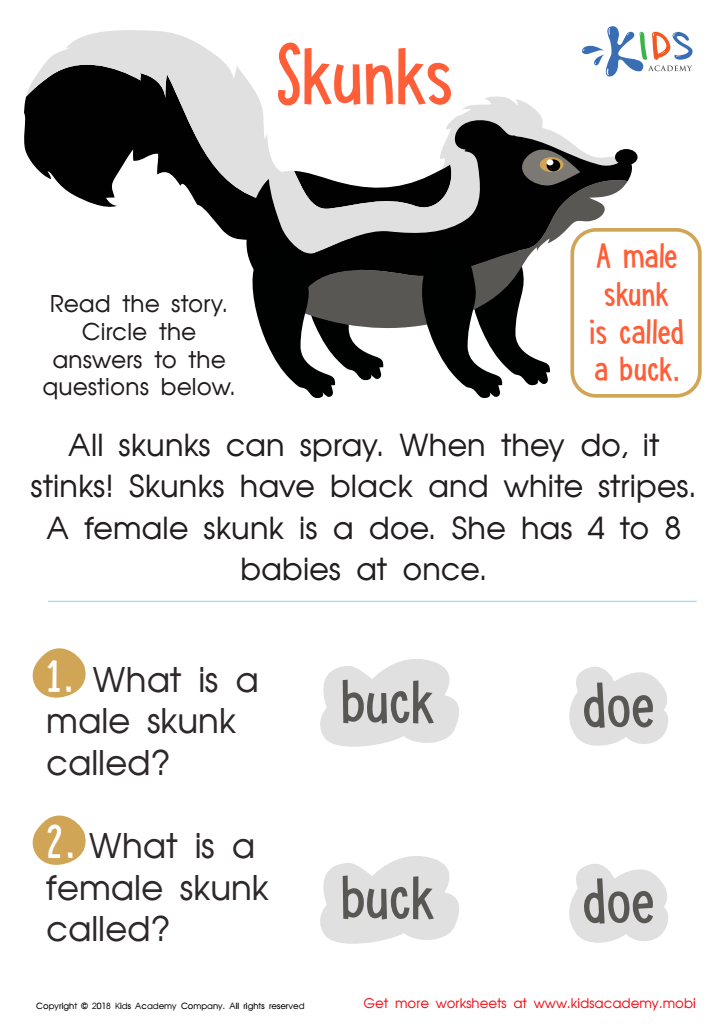
Skunks Worksheet
 Assign to My Students
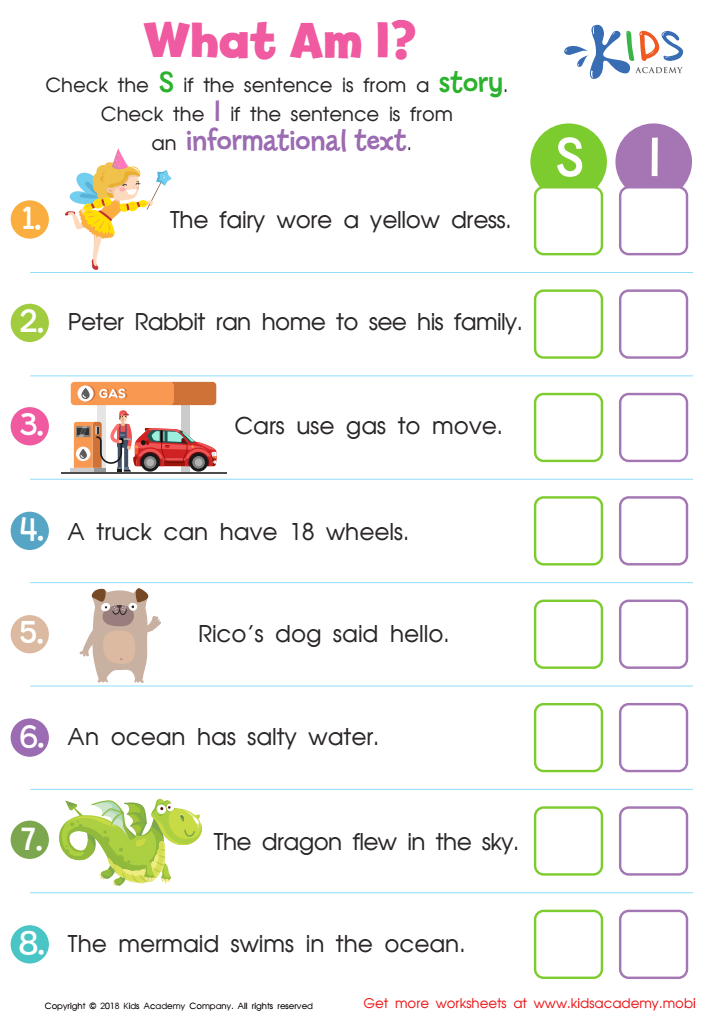
What Am I? Worksheet
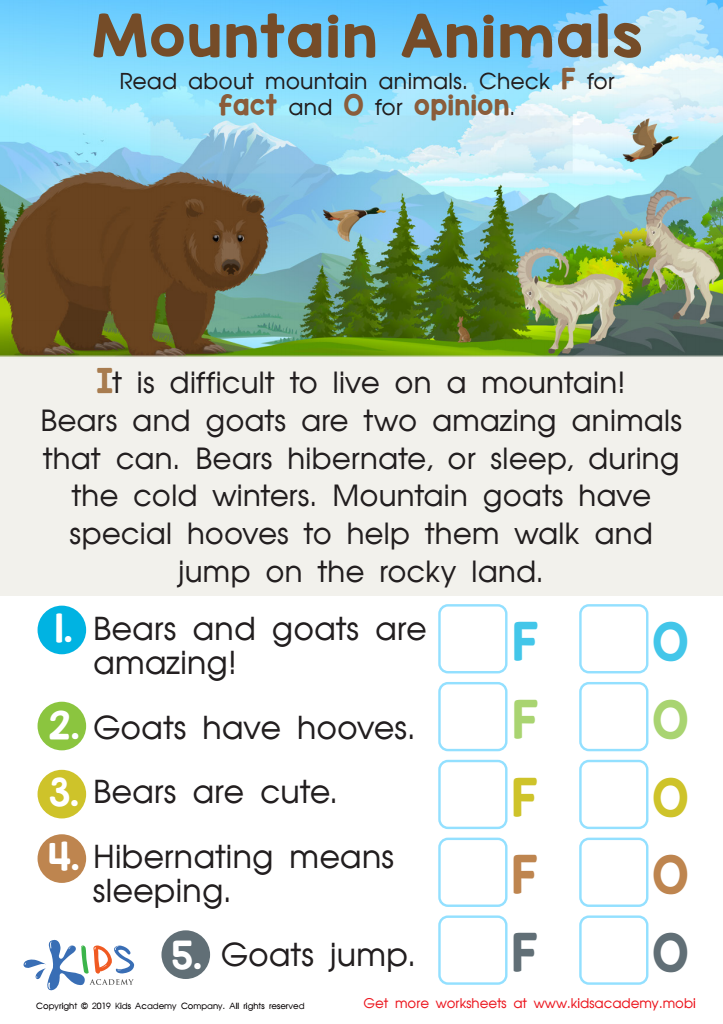
Mountain Animals Worksheet








Parents and teachers should embrace Animal Identification Normal Reading non-fiction for young children as it serves multiple developmental and educational benefits. Firstly, such books promote literacy and a love for reading at an early age, integral aspects of personal growth. They capture a child's natural curiosity about animals and use engaging facts and vivid illustrations to create an interactive learning experience.
Furthermore, learning about animals nurtures empathy and respect for other living creatures, fostering a sense of environmental stewardship. Understanding different species and their habitats encourages children to care about the world around them and promotes discussions about science and nature. This kind of knowledge expands their understanding beyond their immediate surroundings, cultivating a broader worldview.
Additionally, confidently identifying animals improves critical thinking skills as children learn to categorize and differentiate based on observable traits. It also supports vocabulary development through the introduction of specific terms and detailed descriptions that can enhance language skills. For children aged 4-9, engaging in animal identification activities pairs fun with education, paving the way for lifelong learning and nurturing a balanced academic foundation. Therefore, parents and teachers should prioritize such non-fiction to stimulate intellectual, emotional, and social growth in young learners.