Developing observation skills Normal Science Worksheets for Ages 4-9
3 filtered results
-
From - To
Enhance your child’s observation skills with our engaging "Developing Observation Skills" science worksheets designed for ages 4-9! These thoughtfully crafted worksheets encourage young learners to explore their surroundings, recognize patterns, and make valuable connections. Through a variety of interactive activities, children will sharpen their attention to detail while cultivating critical thinking abilities. Perfect for classroom use or at-home learning, these worksheets serve as an enjoyable way to spark curiosity and foster a love for science. Download and print now to support your child’s development in observational skills, paving the way for lifelong learning and discovery!
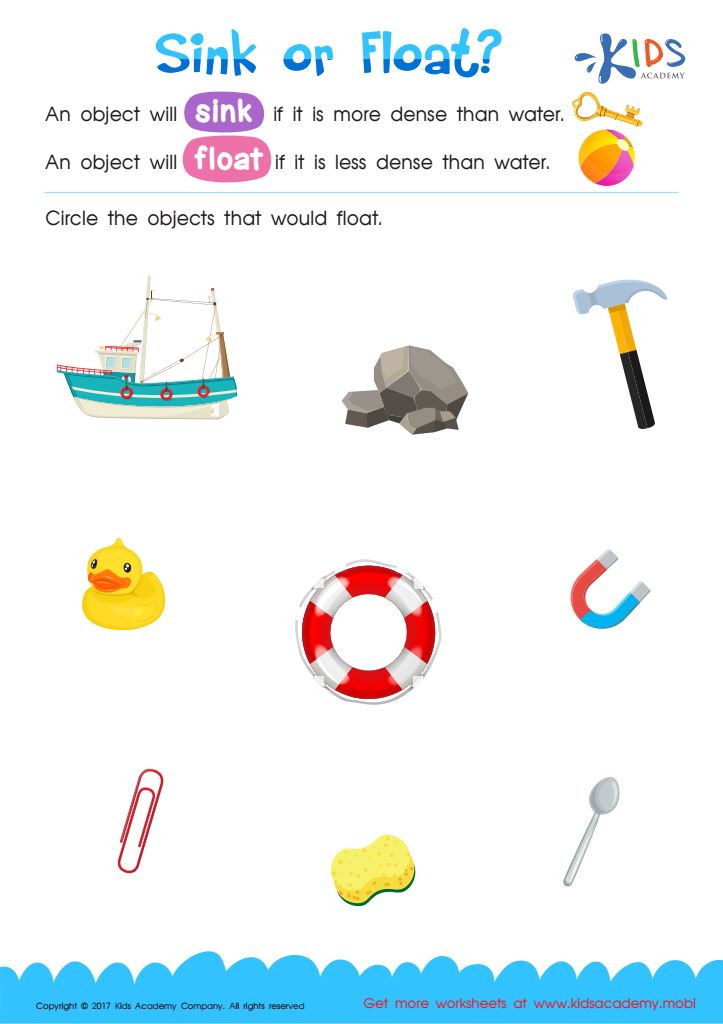
Sink or Float Printable
 Assign to My Students
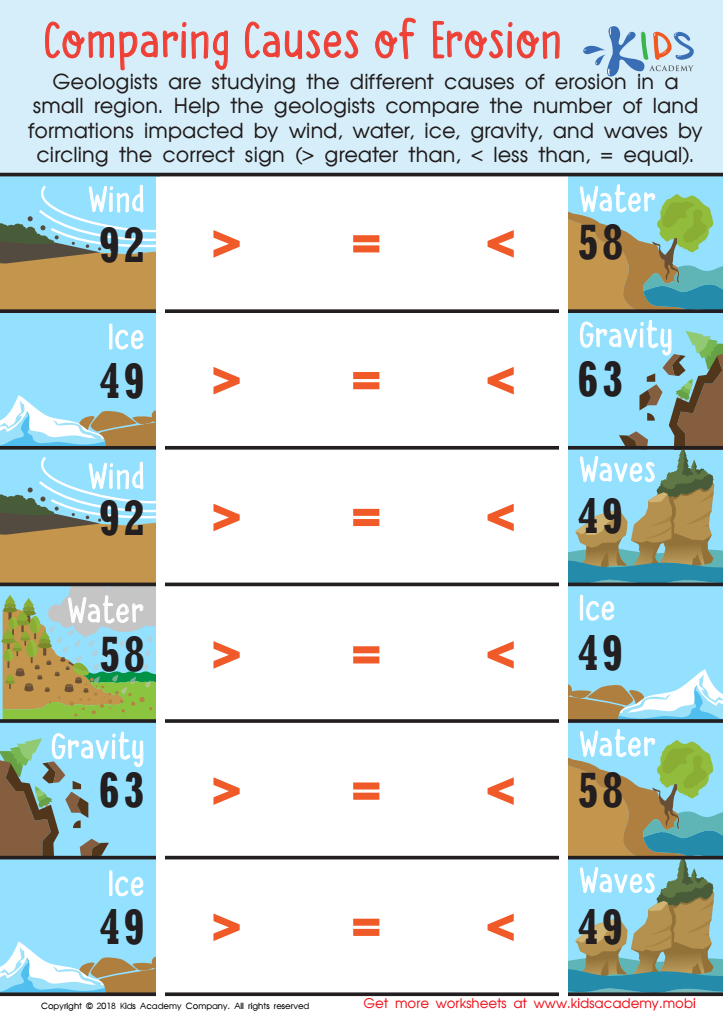
Comparing Causes of Erosion Worksheet
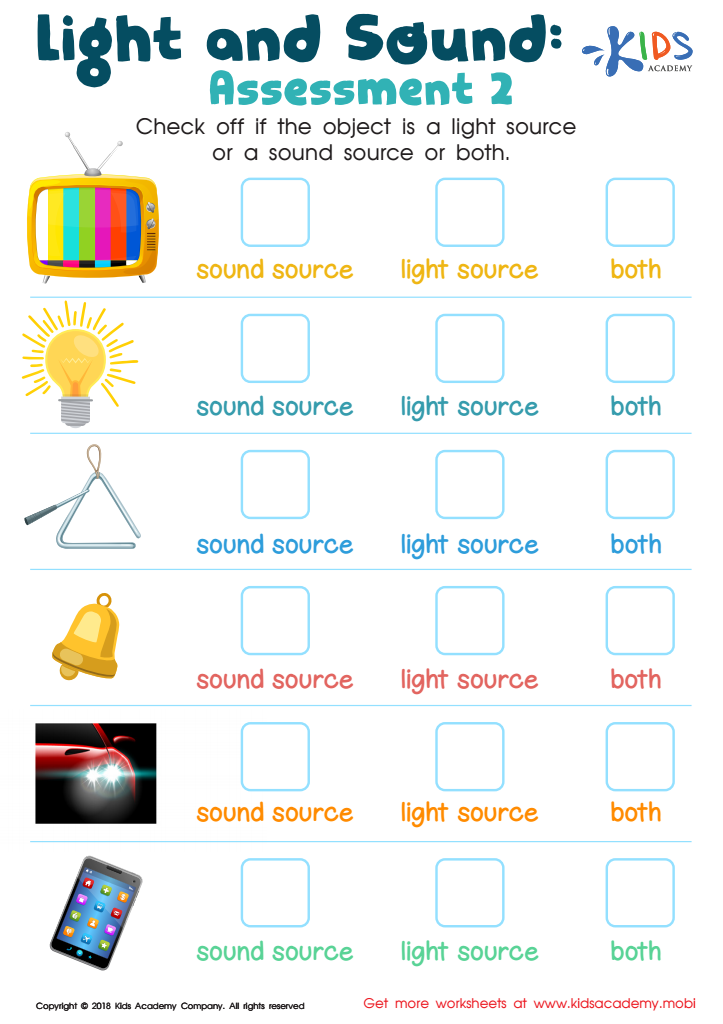
Light and Sound: Assessment 2 Worksheet







Developing observation skills in children aged 4-9 is crucial for both parents and teachers as it lays the foundation for critical thinking and problem-solving abilities. During these formative years, children are naturally curious about the world around them. By cultivating observation skills, caregivers can enhance children's engagement and understanding of scientific concepts.
Observation encourages children to carefully notice details, ask questions, and make connections. This fosters a sense of inquiry and exploration, essential components of the scientific method. When children learn to observe, they become better equipped to collect evidence, draw conclusions, and express their ideas clearly.
Moreover, sharpening these skills can lead to increased academic success later on. Cumulative research indicates that students with strong observational skills tend to excel in areas such as mathematics, reading comprehension, and scientific reasoning. For parents and teachers, supporting the development of these skills means nurturing a generation of innovative thinkers.
Finally, instilling such skills promotes a lifelong love for learning, empowering children to become more observant and flexible adults who can adapt to their constantly changing environment. In a world increasingly focused on STEM—science, technology, engineering, and mathematics—these foundational skills are not just beneficial but essential for future success.







