Information retention Normal Science Worksheets for Ages 4-9
3 filtered results
-
From - To
Unlock your child's potential with our Information Retention Normal Science Worksheets for ages 4-9. Designed to enhance understanding and memory, these engaging worksheets cover essential science topics. From the basics of life cycles to the wonders of space, each worksheet combines fun activities with serious learning to improve retention and comprehension. Perfect for the classroom or at-home learning, our carefully crafted worksheets make science accessible and enjoyable. Help your child build a strong foundation in science and develop skills that will benefit them throughout their educational journey. Visit Kids Academy now to explore our vast collection of resources!
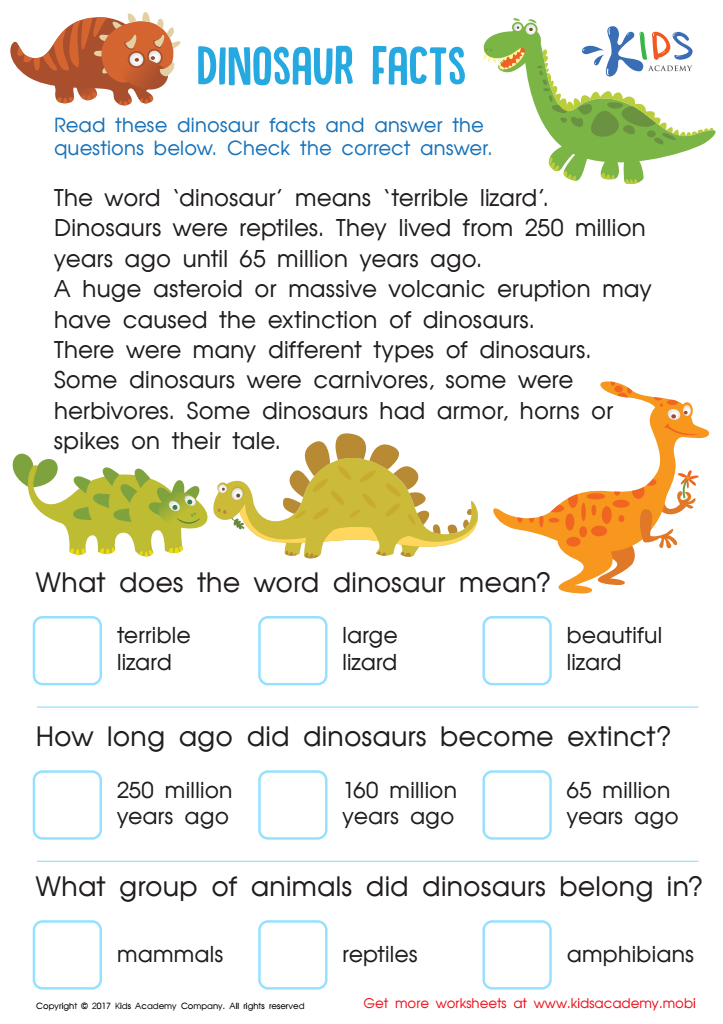
Dinosaur Facts Worksheet
 Assign to My Students
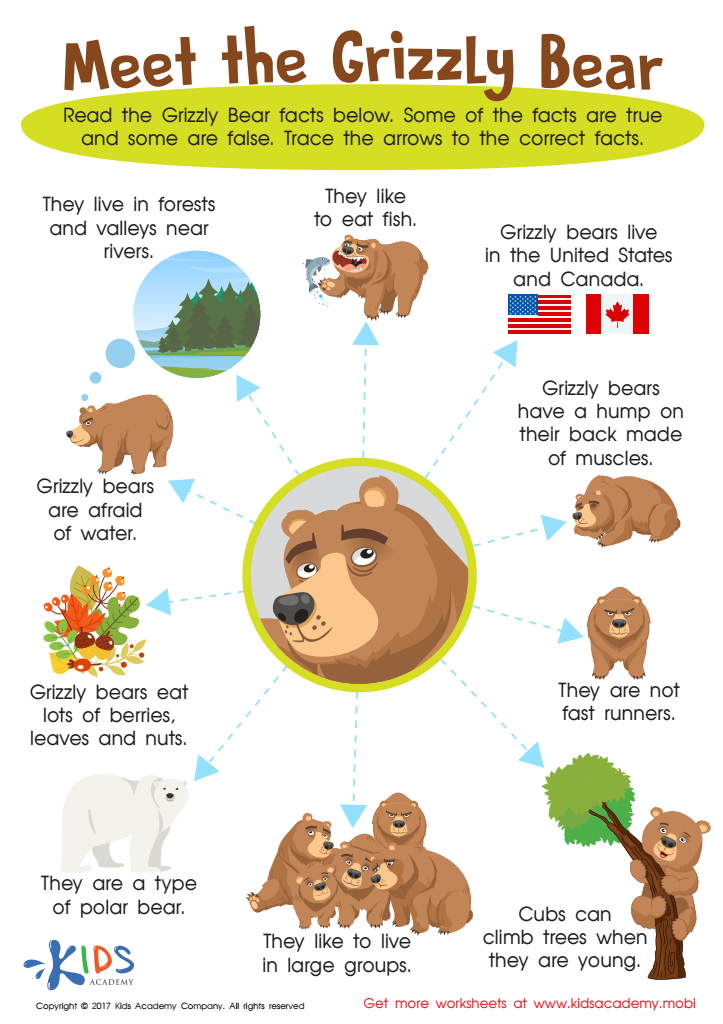
Grizzly Bear Facts Worksheet
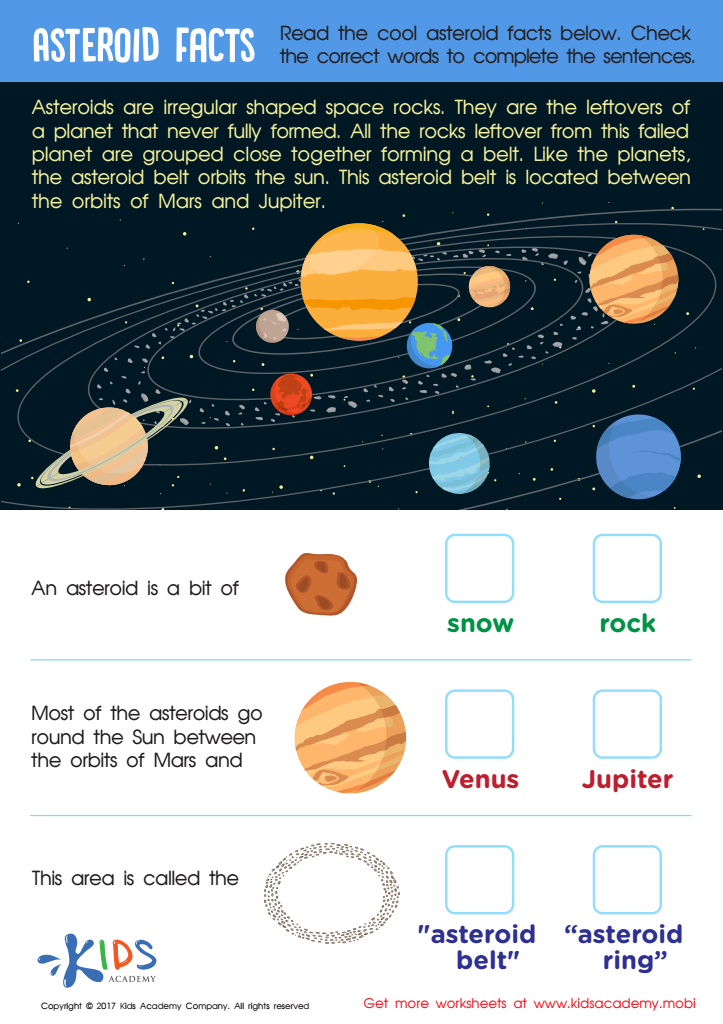
Asteroid Facts Worksheet






.jpg)

Parents and teachers play a pivotal role in fostering early cognitive development, which is critical for information retention in children ages 4-9. At this developmental stage, children's brains are highly plastic, meaning they can create and strengthen neural connections more easily. Information retention is fundamental for young learners because it serves as the foundation upon which future learning is built.
For subjects like normal science, understanding basic concepts early on not only nurtures curiosity but also builds critical thinking skills and a methodical approach to problem-solving. When children's initial experiences with learning are positive, they are more likely to develop a lifelong love for discovery and education. Effective information retention techniques, such as using visual aids, hands-on experiments, and repetitive activities, help solidify these foundational scientific principles.
Parents and teachers collaborating to create engaging and supportive learning environments can significantly boost retention. For instance, discussing the day's lessons at home can reinforce school learning. Capturing these critical "windows of opportunity" ensures that children can understand and recall key concepts, bridging the gap between merely being exposed to information and actually comprehending it.
Therefore, caring about information retention in early science education sets the stage for more advanced learning, critical thinking, and the ability to integrate new information into existing knowledge frameworks, essential skills for success in all areas of life.







