Categorizing objects Normal Physical Science Worksheets for Ages 4-9
3 filtered results
-
From - To
Explore our engaging "Categorizing Objects" Normal Physical Science Worksheets designed for children ages 4-9. These interactive and fun worksheets enhance young learners' skills in grouping and sorting different objects based on their attributes. With colorful illustrations and age-appropriate activities, children will discover the principles of categorization while developing critical thinking and observational skills. Perfect for both classroom and at-home learning, our worksheets encourage exploration and curiosity about the physical world. Download today to provide your child with a solid foundation in science through hands-on learning experiences that ignite their imagination and foster a lifelong love for discovery!
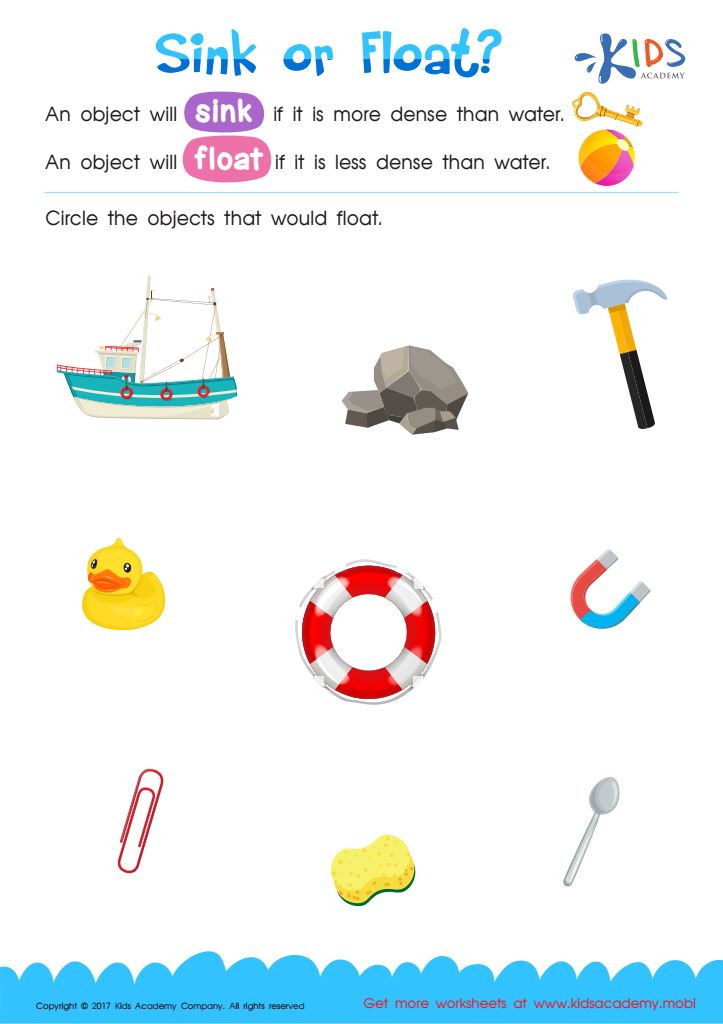
Sink or Float Printable
 Assign to My Students
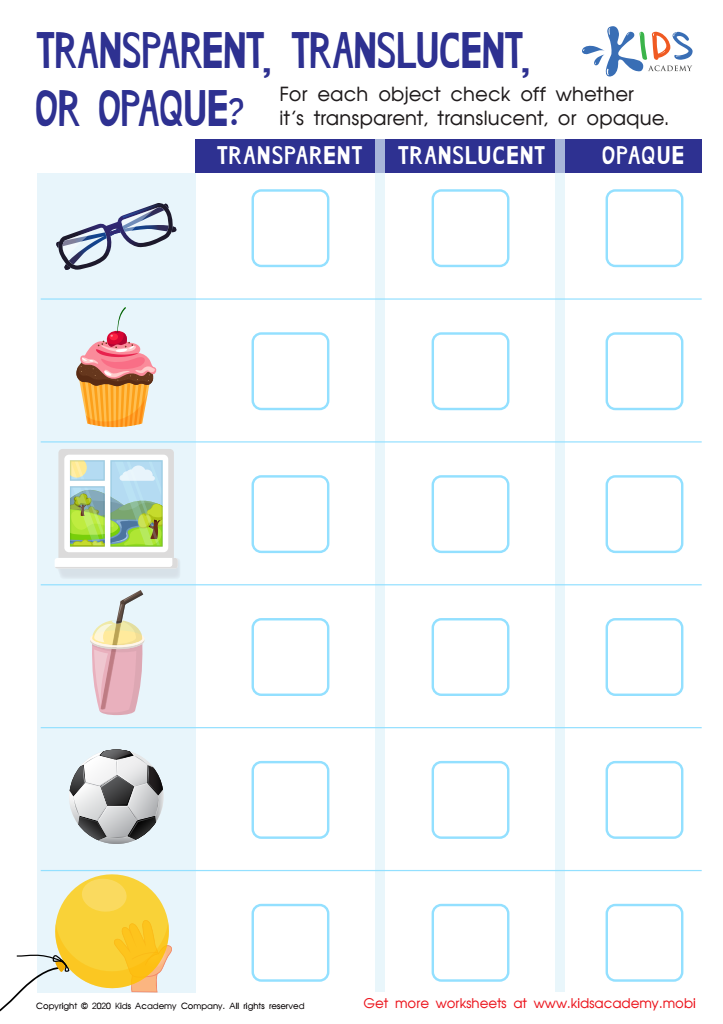
Transparent, Translucent, or Opaque Worksheet
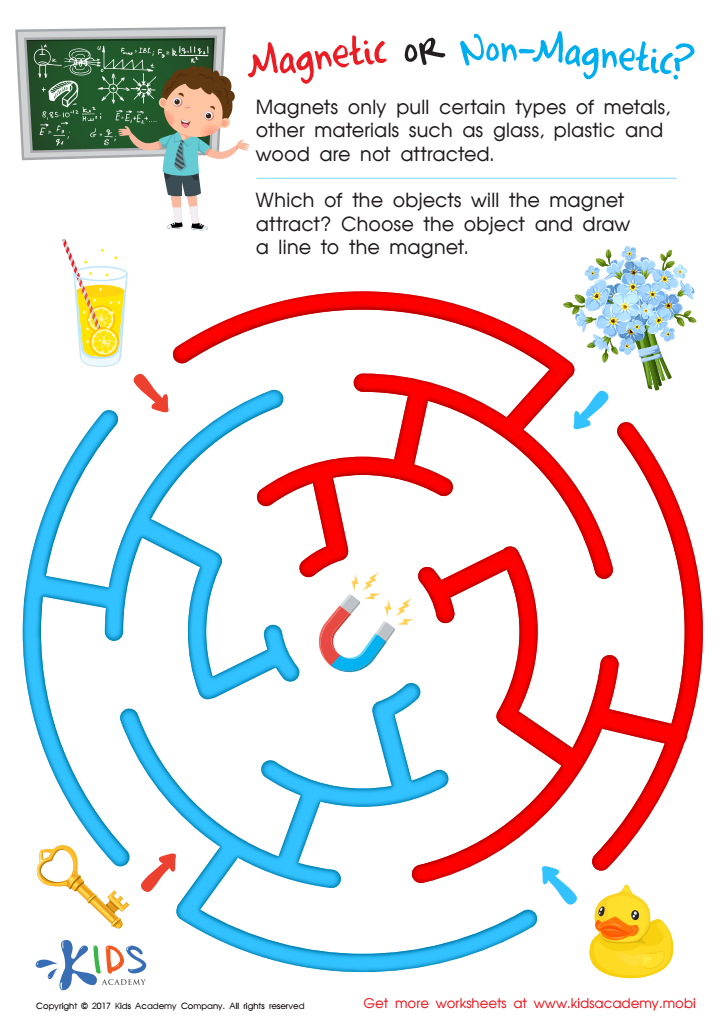
Magnetic or Non–Magnetic Worksheet





.jpg)


Categorizing objects in early childhood education, particularly within Normal Physical Science, is crucial for children aged 4-9 as it lays the foundation for critical thinking and cognitive development. At this age, children are naturally curious about the world around them. Engaging in categorization helps them make sense of their environment and understand relationships between different objects.
When parents and teachers guide children in sorting and classifying items by size, shape, color, or function, they enhance their observational skills and promote analytical thinking. For example, grouping fruits by color or animals by habitat allows children to recognize patterns and differences. This foundational skill not only enriches their vocabulary but also encourages scientific inquiry.
Furthermore, categorization promotes social learning as kids collaborate in group activities, sharing their reasoning and decision-making processes. This interaction fosters communication skills, teamwork, and respect for others' ideas—even if they differ from their own.
In summary, supporting the development of categorization skills in early education has long-term benefits, equipping children with the tools they need for scientific exploration and lifelong learning while simultaneously enhancing their social abilities. Parents and teachers play a vital role in nurturing these skills, helping ensure that children grow into informed, inquisitive individuals.







