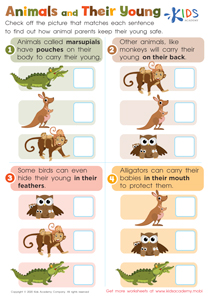
Vocabulary expansion Normal Plants Worksheets for Ages 4-9
3 filtered results
-
From - To
Enhance your child's vocabulary with our engaging "Normal Plants Worksheets" designed specifically for ages 4-9. These worksheets introduce young learners to essential plant-related terms, fostering a deeper understanding of the botanical world around them. Each activity is crafted to encourage exploration and discovery, using vibrant illustrations and interactive tasks that make learning fun. As children work through these carefully curated exercises, they'll expand their language skills while developing a foundational knowledge of plants and their environments. Perfect for home or classroom use, these worksheets are an excellent resource to motivate young minds and nurture a love for science and nature.
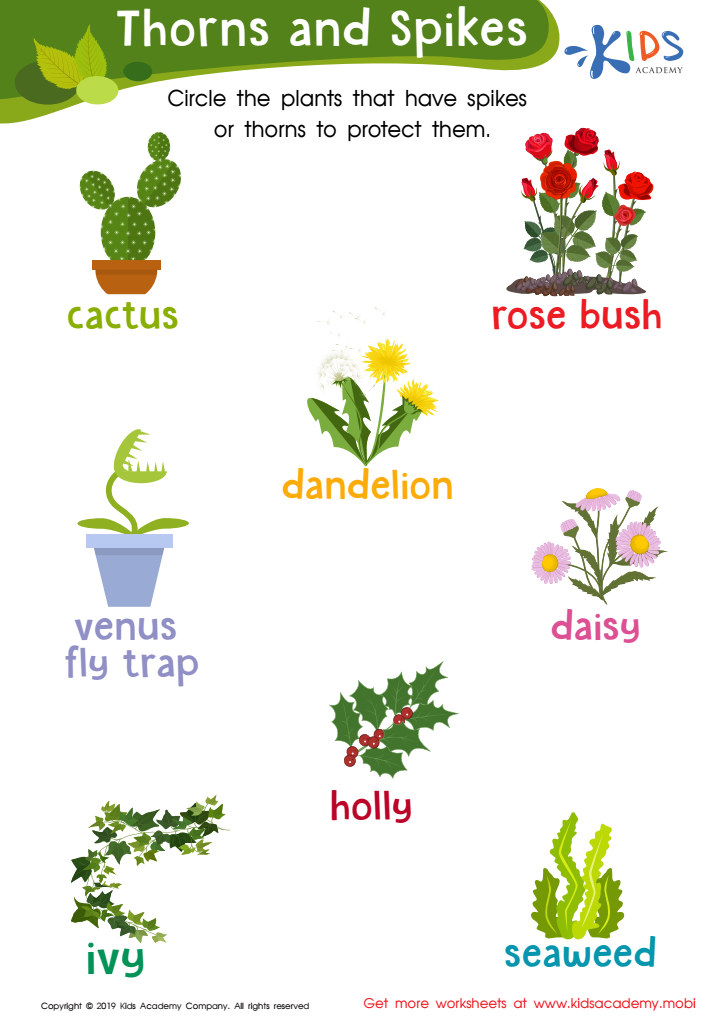
Thorns and Spikes Worksheet
 Assign to My Students






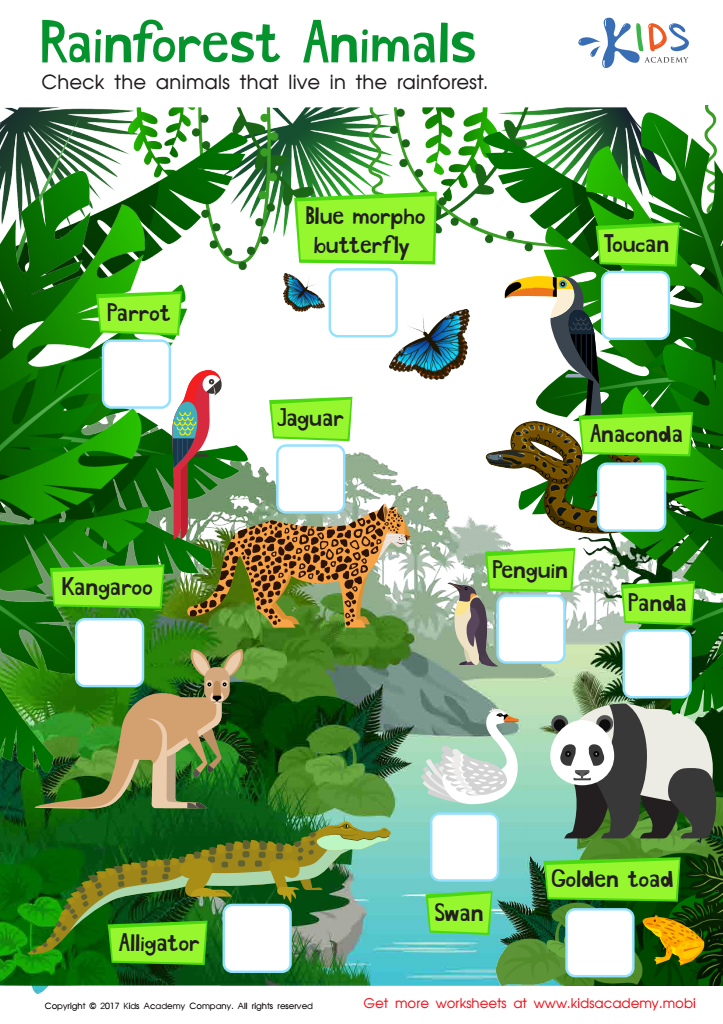
Rainforest Animals Worksheet
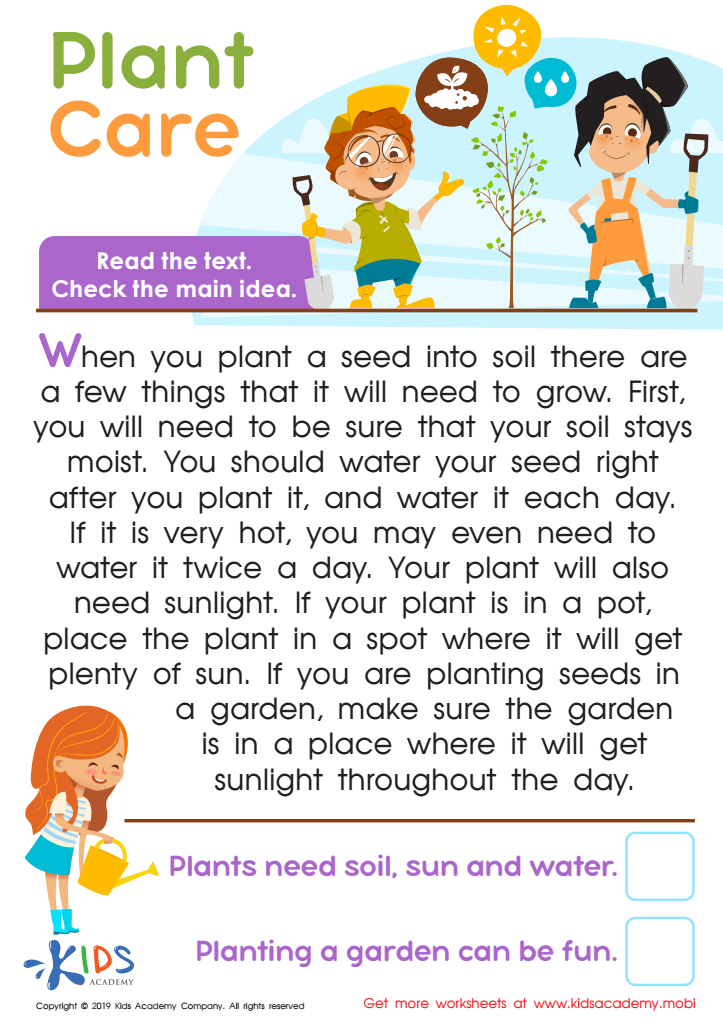
Plant Care Worksheet








Vocabulary expansion is crucial for children aged 4-9, especially in the context of learning about normal plants. At this developmental stage, children are naturally curious and eager to explore the world around them. Teaching them vocabulary related to plants not only enhances their language skills but also fosters their understanding of nature and science. Words like "photosynthesis," "root," "stem," and "leaf" help build a foundation for more complex scientific concepts later on.
Moreover, expanding vocabulary improves reading comprehension and boosts communication skills, which are essential for academic success. When children can accurately express their thoughts about plants, they become more engaged learners and can better articulate their observations and experiences.
By caring about vocabulary expansion related to plants, parents and teachers also promote critical thinking and environmental awareness. Children learn the importance of biodiversity, ecosystems, and conservation, cultivating a sense of responsibility towards the environment.
Incorporating vocabulary related to everyday plants into playful activities, storytelling, and discussions makes learning enjoyable, reinforcing knowledge while fostering a lifelong appreciation for nature. Ultimately, investing time and effort into vocabulary expansion sets children on a path toward academic excellence and literacy, equipping them with essential tools for their future learning journeys.