Understanding moon phases Normal Space Worksheets for Ages 4-9
3 filtered results
-
From - To
Explore the fascinating world of moon phases with our "Understanding Moon Phases" worksheets, specially designed for children ages 4 to 9. These engaging activities encourage young learners to discover how the moon transforms through its cyclical phases, enhancing their knowledge of space and astronomy. Filled with vibrant illustrations and simple explanations, our worksheets cater to various learning styles, making learning fun and interactive. Perfect for home or classroom use, these materials promote observational skills, critical thinking, and a love for science. Empower your child's curiosity about the universe and spark lifelong learning with our thoughtfully crafted moon phases worksheets!
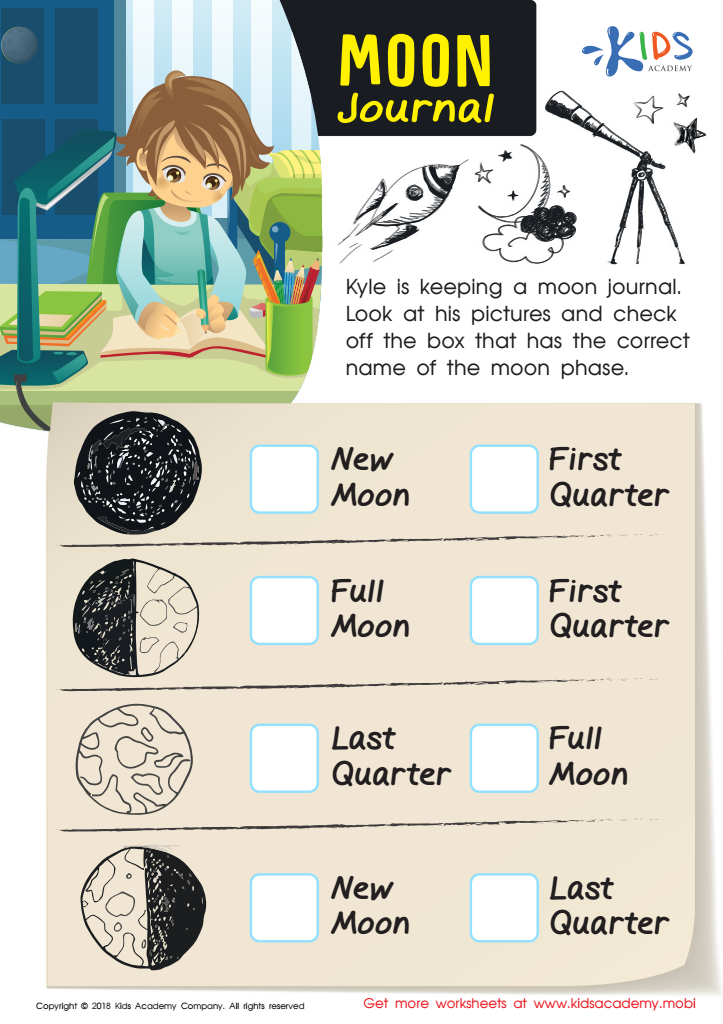
Moon Journal Worksheet
 Assign to My Students
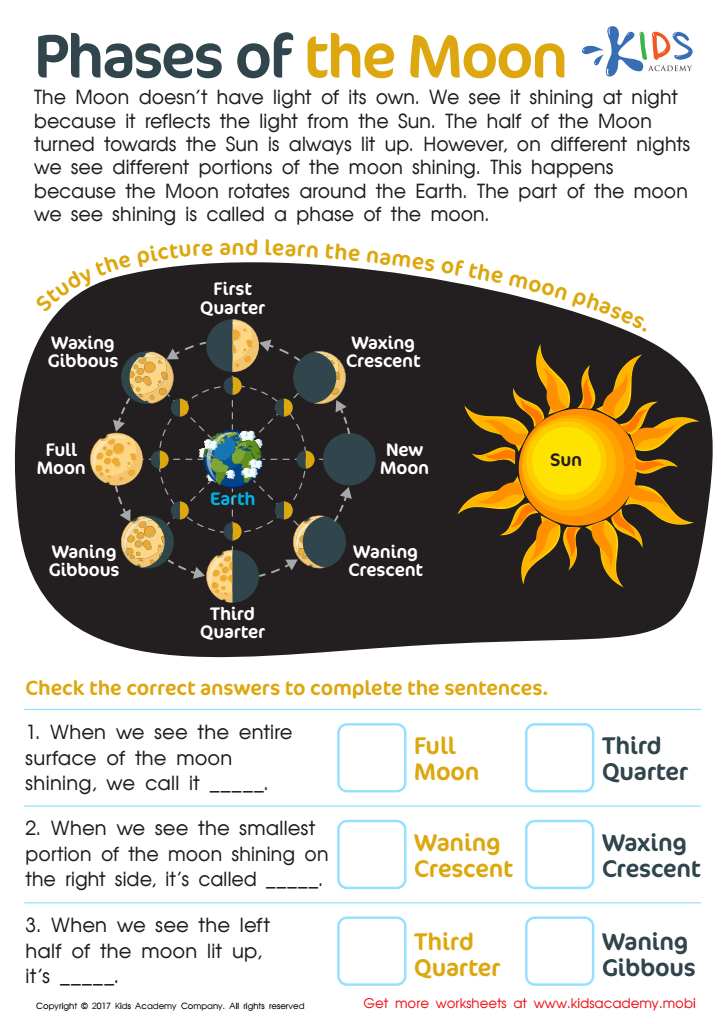
Phases of The Moon Worksheet
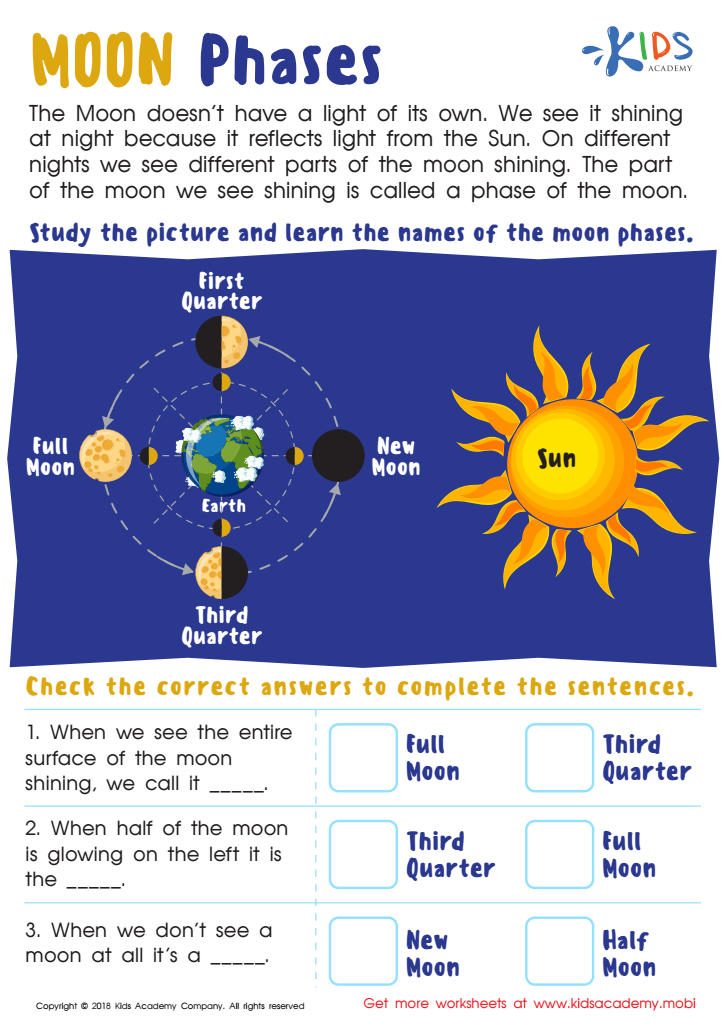
Moon Phases Worksheet





.jpg)

Understanding moon phases is essential for children aged 4-9 as it helps spark their curiosity about the natural world. During these formative years, kids are naturally observational and ask questions about their surroundings. Engaging them in topics like moon phases can nurture their innate sense of wonder, promoting scientific thinking and exploration.
Teaching young learners about the moon's phases connects them to the broader cosmos and introduces fundamental scientific concepts, like cycles and patterns. This knowledge encourages critical thinking and reasoning skills, as children learn to observe and predict changes based on known information.
Moreover, understanding moon phases allows for rich storytelling and cultural connections. Many traditional tales and folklore incorporate celestial themes, creating opportunities for parents and educators to integrate literature, art, and cultural studies into lesson plans.
Furthermore, discussing the moon phases fosters a sense of responsibility and observation. It encourages children to engage with nature, inspiring them to go outside at night, observe the moon, and share their findings with family and friends, thereby enhancing social skills.
Overall, investing time in teaching moon phases cultivates a love of learning and curiosity and equips young learners with foundational knowledge about the universe and their place within it.







