Building vocabulary Normal Community Worksheets for Ages 4-9
3 filtered results
-
From - To
Boost your child's language skills with our "Building Vocabulary Normal Community Worksheets for Ages 4-9." Designed by education experts, these engaging worksheets immerse young learners in community-related vocabulary through fun, interactive exercises. With a focus on real-world context, children will master new words and concepts essential for understanding the world around them. Ideal for both classroom and home use, these worksheets foster critical thinking and communication skills, preparing kids for lifelong learning. Explore our collection today and help your child develop a strong vocabulary foundation, making learning meaningful and exciting!
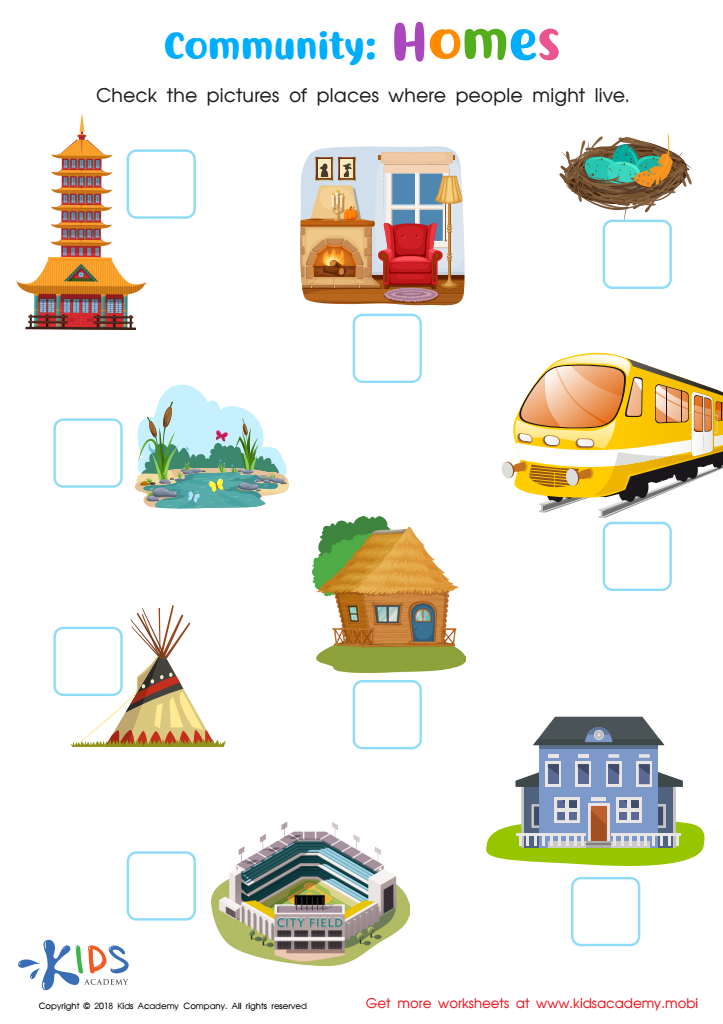
Community: Homes Worksheet
 Assign to My Students
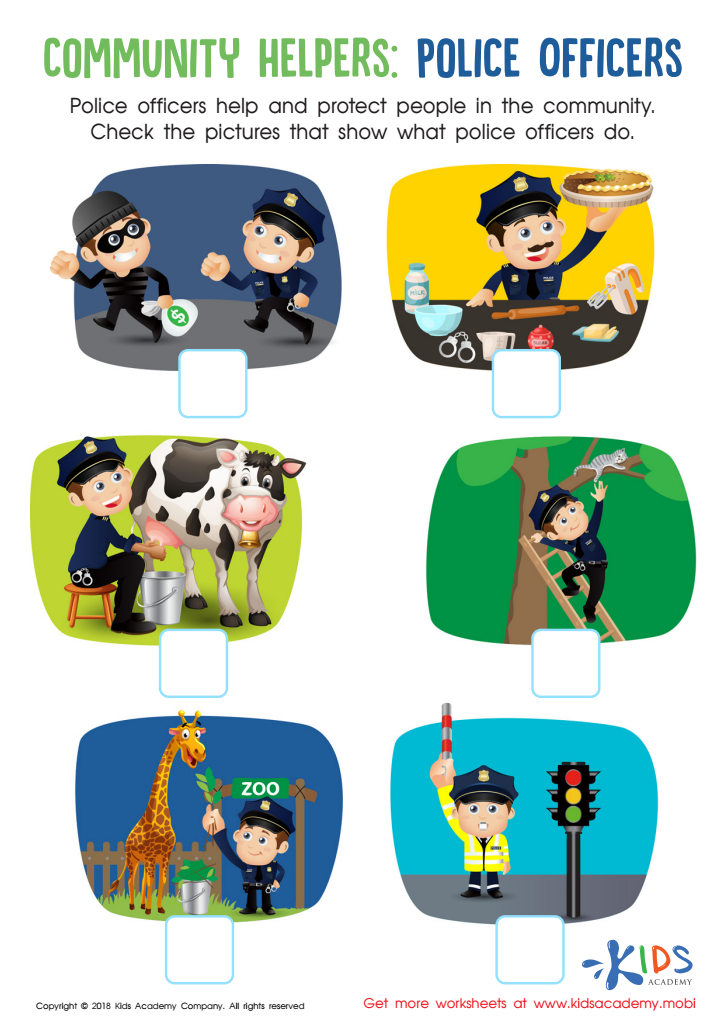
Police Officers Community Helpers Worksheet
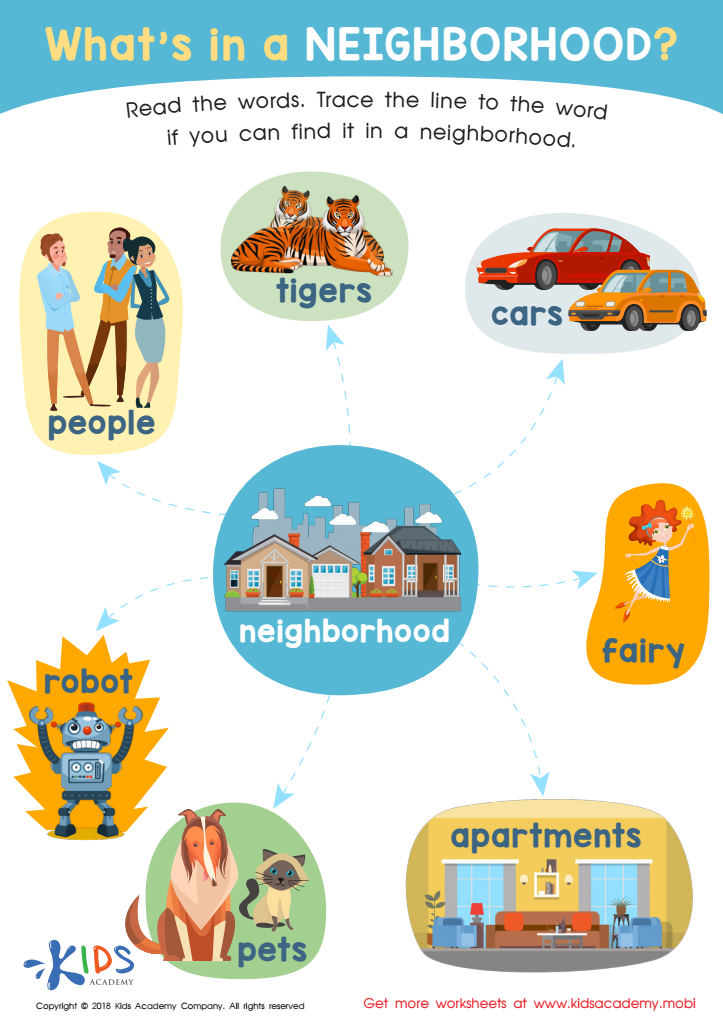
What's in a Neighborhood? Worksheet








Building vocabulary in young children is crucial for their overall development and future academic success. For ages 4-9, vocabulary growth directly influences reading comprehension, communication skills, and cognitive development. When parents and teachers invest in vocabulary building, they lay a solid foundation for children to understand and interpret the world around them.
First, a strong vocabulary aids reading proficiency. The more words children know, the easier it is for them to decode new words and grasp the meaning of texts they encounter. This enhances their reading enjoyment and fuels a positive cycle of continuous learning and curiosity.
Second, communication skills benefit significantly. With an expanded vocabulary, children can express themselves more clearly, listen actively, and engage in richer conversations. This not only improves social interactions but also builds their confidence in diverse settings.
Third, cognitive development is accelerated through vocabulary-rich environments. Exposure to a wide range of words enhances memory, reasoning, and critical thinking skills. It encourages children to form connections between concepts and ideas, boosting their problem-solving abilities.
Incorporating vocabulary building activities into everyday routines, storytelling, reading, and interactive play can make a significant difference. This commitment fosters a love of learning, equipping children with tools they need for future academic challenges and life experiences.